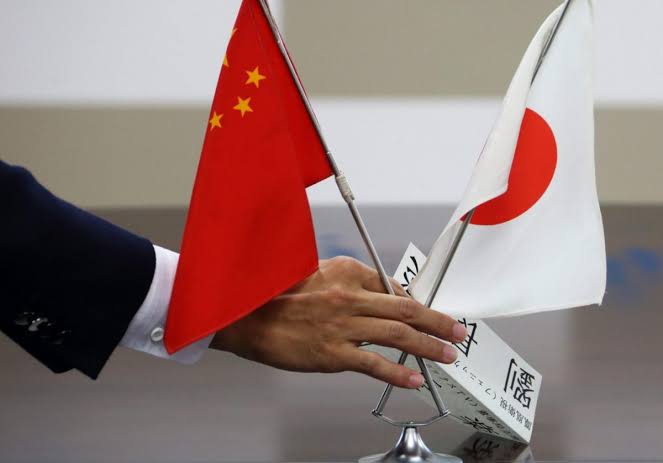
TOKYO — Japan’s government said it delivered a “stern demarche” to Beijing on Monday after China’s top foreign policy official accused unnamed “far‑right forces” in Tokyo of seeking to resurrect militarism and warned that such a path would bring “self‑destruction.”
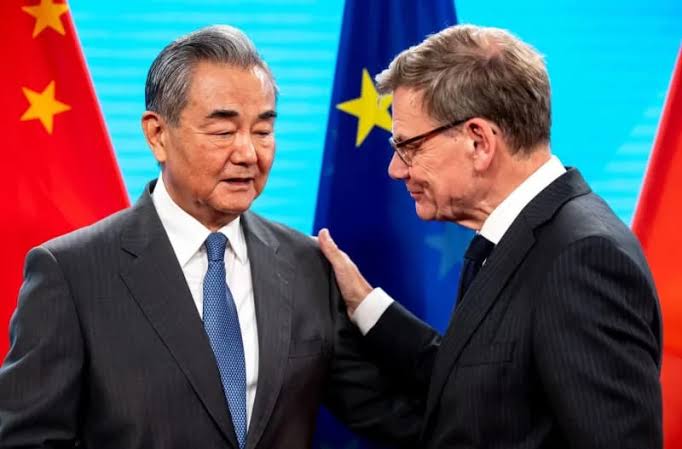
The Japanese Ministry of Foreign Affairs registered a formal protest through diplomatic channels following comments by Chinese Foreign Minister Wang Yi at the Munich Security Conference in Germany.
Wang’s remarks, made in the Bavarian capital on Saturday and reported by state media, marked a rare and pointed intervention by Beijing in Japan’s domestic political discourse.
At the Munich forum, Wang weighed in on bilateral ties between Tokyo and Beijing — relations that have been under mounting strain following a series of provocative statements by Japan’s prime minister, Sanae Takaichi, since she took office in October.
Japan’s foreign ministry responded to Wang’s comments on Sunday, dismissing them as “factually incorrect and ungrounded” and reaffirming Tokyo’s defense policy posture.
“Japan’s efforts to strengthen its defense capabilities are in response to an increasingly severe security environment and are not directed against any specific third country,” the ministry said in a post on X, formerly Twitter.
It added that some members of the international community had been expanding their military capacities in “a non‑transparent manner,” a veiled reference to China, but made clear that Japan opposed such moves and “distances itself from them.”
Read Also: Japan PM And BOJ Chief Meet As Rate Hike Speculation Mounts
Wang’s comments at the Munich conference came amid heightened regional tensions over Taiwan, a self‑ruled democracy that Beijing claims as its territory and has vowed to bring under control by force if necessary.
Speaking alongside senior diplomats from Europe, the United States and other Asian countries, Wang said that “Japanese people should no longer allow themselves to be manipulated or deceived by those far‑right forces, or by those who seek to revive militarism.”
“All peace‑loving countries should send a clear warning to Japan: if it chooses to walk back on this path, it will only be heading toward self‑destruction,” Wang was quoted as saying.
Tokyo’s rebuttal underscored a sharp divergence in how the two capitals view Japan’s defense policy and regional security dynamics.
Foreign Minister Toshimitsu Motegi reiterated Japan’s stance at a separate panel during the Munich conference, emphasizing that Tokyo’s military posture was defensive in nature and driven by changes in its strategic environment, including China’s expanding military footprint.
Following Motegi’s remarks, Japan’s foreign ministry said it lodged a diplomatic protest with the Chinese embassy in Tokyo and conveyed its objections to Beijing through the Japanese foreign service in Europe.
The ministry did not release details of the demarche but described it as “stern,” indicating the seriousness with which Tokyo viewed Wang’s public criticism.
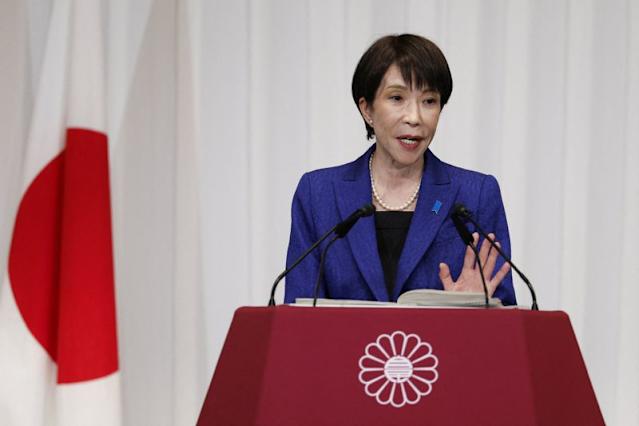
Wang’s intervention comes just months after Takaichi, who served as a senior ruling party lawmaker for more than two decades before becoming Japan’s first female prime minister, made her most controversial comments on Taiwan.
Read Also: Japan PM Takaichi Wins Historic Majority In Snap Vote
In November, only weeks into her premiership, Takaichi stated that Japan would be prepared to engage militarily to defend Taiwan if the island were attacked.
The remarks drew swift condemnation from Beijing, which regards Taiwan as a breakaway province and has ramped up military exercises near the island.
China’s foreign ministry lodged its own protest at that time, calling Takaichi’s comments an “error” and a dangerous signal that undermined peace and stability in the Taiwan Strait.
Japan has long walked a delicate line in balancing its alliance with the United States — which has a mutual defense treaty with Tokyo — with efforts to manage a complex and competitive relationship with China, its largest trading partner.
Tokyo hosts roughly 60,000 U.S. military personnel across several bases, including key installations in Okinawa, and has been moving to deepen military cooperation with Washington and other partners in response to perceived threats from Beijing’s expanding naval and missile forces.
Takaichi’s government has taken a firmer public stance on defense issues than many of her predecessors.
In a speech last week, she said that Japan would bolster its defensive capabilities and “steadfastly protect” its territory against any threat. Takaichi’s comments have been interpreted as an effort to reassure allies and domestic audiences at a time of rising regional tensions.
Over the decades, successive governments have gradually expanded the role and capabilities of Japan’s Self‑Defense Forces, prompting debate at home and skepticism abroad about the limits of Tokyo’s military ambitions.
Wang’s remarks at Munich appeared to tap into those historical sensitivities, framing Japan’s defense initiatives as a resurgence of militarism.
Tokyo, for its part, has sought to project its defense policy as reactive rather than revisionist.
Motegi and other Japanese officials have repeatedly underscored that Tokyo’s initiatives are aimed at deterring aggression, securing stable conditions in East Asia and upholding international norms.
Officials in Tokyo have said they are prepared to discuss a range of issues with Beijing, including trade, climate change and regional stability, but that remarks perceived as interference in domestic affairs cross a line.