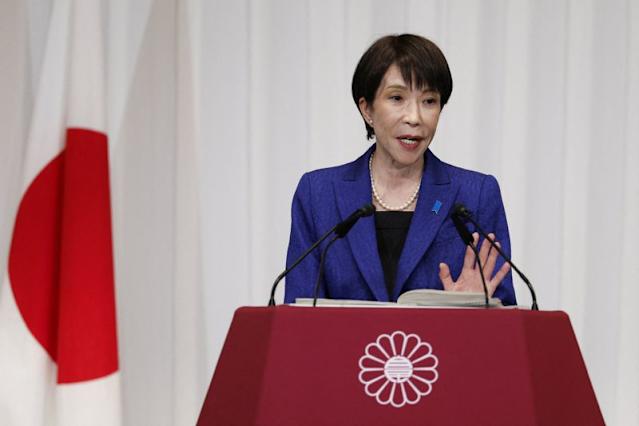
Bank of Japan Governor Kazuo Ueda meets Japan’s newly empowered Prime Minister Sanae Takaichi on Monday in their first bilateral session since she led the ruling Liberal Democratic Party to a historic parliamentary supermajority, a meeting the two sides described as a routine exchange but which markets are closely watching for signals on the pace of future interest rate increases.
The session, scheduled for 5:00 p.m. at the prime minister’s office in Tokyo, is the second time Ueda and Takaichi have met since she became premier in October and the first since the LDP’s landslide election victory on February 8. The two are expected to exchange views on economic and price conditions and recent financial market developments, including yen movements and rising domestic interest rates. The encounter arrives at a critical juncture for Japanese monetary policy. The BOJ raised its short-term benchmark rate to 0.75 percent in December, its highest level since 1995, and held it steady at the January 23 policy meeting. At that January gathering, board member Hajime Takata proposed raising rates for a second consecutive meeting, finding no support among colleagues but signaling the hawkish undercurrent within the institution. Markets have priced in roughly an 80 percent probability of another quarter-point increase by April.
The political and monetary context for Monday’s meeting is considerably more complex than it was when the two first met in November. At that earlier session, the yen was weakening sharply on expectations that Takaichi would resist BOJ tightening, and the premier’s response was cautious. Ueda said afterward she had “seemed to have acknowledged” his explanation that the central bank was raising rates gradually to achieve a smooth path toward its inflation target. A month later, the BOJ proceeded with the December hike.
Since Takaichi took office in October, the yen has weakened more than 2.5 percent against the dollar, pressured by concerns that her expansionary fiscal platform would worsen Japan’s already strained public finances and dampen the case for monetary tightening. Her pledge to suspend the 8 percent sales tax on food has stoked fears of additional debt issuance and contributed to a spike in Japanese government bond yields. The yen staged a sharp recovery last week, gaining nearly 3 percent in its largest weekly rise since November 2024, pulling the dollar back from a near breach of the psychologically significant 160 yen level seen in January. The dollar stood at 152.66 yen in Asian trading Monday. The yen’s rebound may reduce the urgency for a near-term hike, though analysts cautioned the currency’s recent gains could quickly reverse.
Read Also: Sanae Takaichi Pushes For More Women’s Toilets In Parliament
The BOJ faces a particular challenge in calibrating communication between its mandate to normalize policy and the political environment created by Takaichi’s spending commitments. The central bank must project hawkish credibility to keep yen bears at bay while avoiding rhetoric that accelerates the bond yield rises that Takaichi’s fiscal expansion has already exacerbated.
Inflation in Japan has exceeded the BOJ’s 2 percent target for nearly four years. The central bank revised its core consumer inflation forecast for fiscal 2026 upward to 1.9 percent at its January meeting, while maintaining that the economy remains on course for moderate recovery. BOJ projections suggest headline inflation may temporarily fall below 2 percent in the first half of 2026 as government energy subsidies take effect and rice prices stabilize, but core inflation excluding fresh food and energy is expected to remain well above target for a considerable period.
Japan’s spring wage negotiations, which begin shortly and will set pay increases across the economy for the coming year, will be closely monitored as one of the BOJ’s key indicators. Several major labor unions have set wage goals comparable to last year’s above-5 percent increases, suggesting that wage momentum underpinning the BOJ’s normalization case remains intact.
Takaichi’s public position on BOJ policy has shifted since she took office. During the LDP leadership race, she openly opposed rate increases, arguing that premature tightening would derail Japan’s economic recovery.
Since becoming prime minister, she has said little publicly about monetary policy. Her election mandate, the largest the LDP has secured in decades, strengthens her political position but does not formally give her authority over the BOJ, which maintains legal independence.
Read Also: Sanae Takaichi Faces Criticism Over Trump Diplomacy
However, Takaichi this year has the authority to fill two vacant seats on the BOJ’s nine-member policy board, a power that could gradually shift the board’s disposition on future rate decisions if she selects candidates aligned with her preference for looser monetary conditions.
The BOJ chief meets with the prime minister approximately once per quarter in sessions that inform both sides of the other’s current thinking without constituting formal policy coordination. Whether Monday’s exchange produces any signal about the likelihood and timing of an April hike will be reflected in currency and bond markets within hours of the session’s conclusion.