European governments are quietly exploring closer nuclear deterrence discussions with France amid growing uncertainty over the long-term reliability of United States security guarantees, signalling a shift in how some Western allies are reassessing collective defence arrangements.
While no country has publicly sought formal protection under France’s nuclear forces, senior leaders in Germany and Poland have acknowledged ongoing consultations with Paris about deeper strategic co-operation, including the potential role of France’s nuclear arsenal in reinforcing European security.
The discussions come as political rhetoric in Washington and broader geopolitical tensions prompt renewed debate within NATO about deterrence credibility.
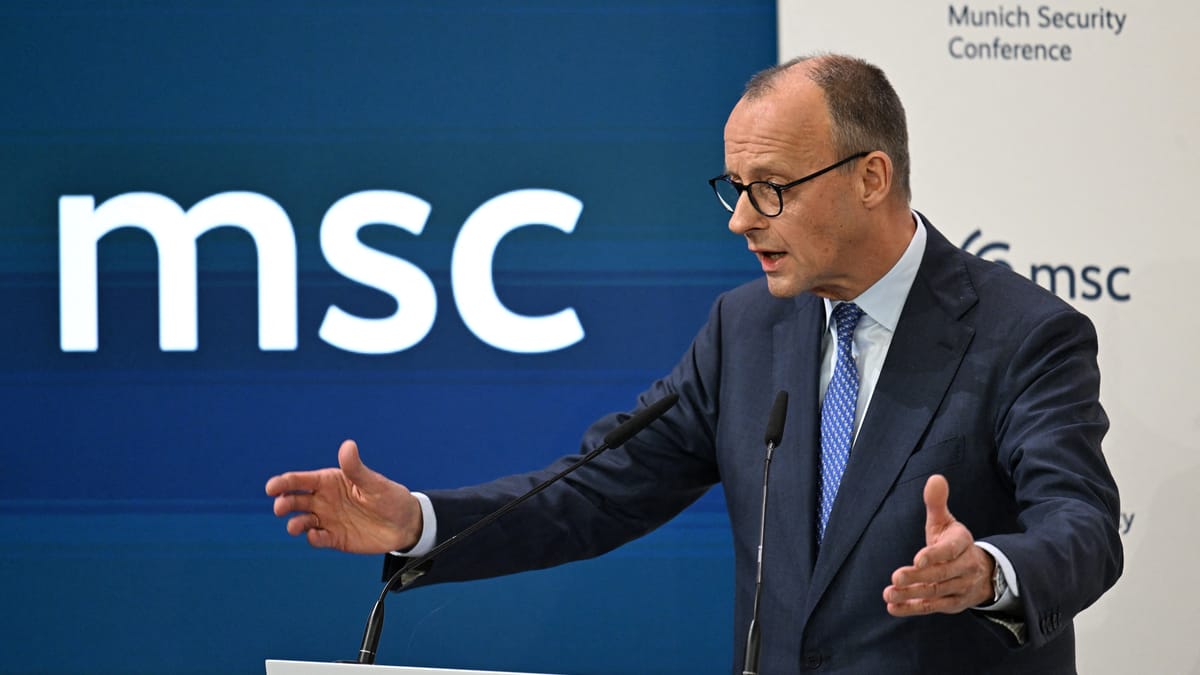
German Chancellor Friedrich Merz confirmed in late January that Berlin had opened exploratory talks with France on deterrence matters, describing the discussions as preliminary.
Speaking in Berlin, Merz said the dialogue involved “strategic and military-political decisions” that would require careful consideration and stressed that any future arrangement would complement — rather than replace — existing U.S. commitments to NATO allies.
Read Also: Trump, Netanyahu Hold Talks On Iran Nuclear Diplomacy
France maintains one of Europe’s two independent nuclear forces, alongside the United Kingdom, but unlike Washington it does not extend a formal nuclear umbrella to partner countries.
French nuclear weapons remain under exclusive national authority, a principle successive governments in Paris have treated as central to national sovereignty.
President Emmanuel Macron has nonetheless indicated a willingness to consult European partners on how France’s deterrent could contribute to broader continental security.
Addressing the Munich Security Conference, Macron urged Europe to strengthen its capacity to act as a “geopolitical power” and confirmed plans to launch a structured strategic dialogue with allies later this year that would include nuclear deterrence considerations.
French officials have repeatedly emphasised limits to such discussions. Paris has ruled out arrangements that would dilute presidential authority over nuclear decision-making.
Former defence officials describe France’s doctrine as requiring a clear chain of command centred on the president, rejecting any model in which multiple governments would jointly decide whether nuclear weapons should be used during a crisis.
Analysts say the current consultations are therefore more about political signalling than operational change.
Any expanded role for France’s deterrent would likely remain informal and declaratory rather than codified in treaties comparable to NATO’s long-standing nuclear sharing arrangements led by the United States.
The renewed interest in European nuclear options reflects broader anxiety among allies following statements by U.S. political leaders questioning defence commitments.
Read Also: Iran Slams Israel’s “Doctrine of Domination” Amid Nuclear Talks
Although Washington has not formally altered its NATO obligations, remarks by President Donald Trump suggesting the United States might not defend allies that fail to meet defence spending targets have unsettled policymakers across Europe. U.S. Defence Secretary Pete Hegseth also said in early 2025 that shifting strategic priorities limited Washington’s ability to remain primarily focused on European security.
A report released alongside the Munich conference warned that Europe must prepare for the possibility of reduced American nuclear backing.
The authors said Europe had entered what they described as a “new nuclear era,” cautioning that risks could emerge gradually through ambiguity rather than a clear U.S. withdrawal. Mixed political signals or delayed responses during a crisis, they argued, could weaken deterrence by creating doubt about allied resolve, potentially encouraging adversaries to test NATO cohesion.
Although the report focuses primarily on European security, its conclusions carry implications for NATO members beyond the continent, including Canada, which has historically relied on U.S. nuclear guarantees while contributing conventional forces to alliance operations.
Canada’s precise role in the evolving debate remains unclear.
Prime Minister Mark Carney’s early diplomatic visits to France and the United Kingdom — Europe’s only nuclear-armed Western powers — drew attention among observers, particularly amid tensions with Washington following economic threats linked to U.S. political rhetoric about closer integration with Canada. Canadian officials have not indicated any shift in nuclear policy.
Retired general Wayne Eyre, Canada’s former chief of the defence staff, recently said during a panel discussion in Ottawa that Canada should keep “options open” regarding nuclear deterrence, though he did not elaborate.
Defence specialists note that seeking security assurances differs significantly from pursuing an independent nuclear arsenal, a path Canada abandoned decades ago despite possessing technological capacity.
Michael Byers, a professor of international law and defence policy expert, said acquiring nuclear weapons would represent a decades-long undertaking requiring extensive infrastructure and political consensus.
Byers added that debates about nuclear protection risk overlooking NATO’s broader strength as a collective security alliance built on combined conventional forces.
The alliance’s deterrent effect, he said, derives not solely from nuclear weapons but from integrated military capabilities and shared commitments among member states.
European governments have increased defence spending and accelerated military modernisation efforts since Russia’s 2022 invasion, but questions remain about how responsibilities would be shared if U.S. engagement in European security were reduced over time.
Further consultations among European allies are expected in the coming months as France begins the strategic dialogue outlined by Macron, with outcomes likely to focus on political coordination and deterrence messaging rather than formal treaty changes.