Canada’s military space commander has sounded an alert over the potential for Russia to target satellites with nuclear weapons, warning that such a move could disrupt global communications and navigation systems.
Brigadier-General Christopher Horner, who leads the 3 Canadian Space Division, told CBC’s The House that the country “should absolutely be” concerned about Moscow’s capabilities.
“Everything that we have come to rely on from a communications platform level or from a GPS level — if Russia were to deploy a capability like that and then detonate it — would be wiped out,” Horner said during the interview with host Catherine Cullen.
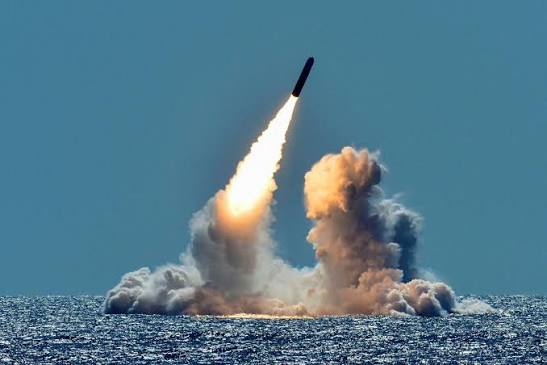
Horner’s remarks come amid rising international apprehension about the militarization of space, with NATO and other world leaders expressing concern over the possible deployment of nuclear weapons in orbit.
In December, NATO Secretary General Mark Rutte said a Russian strike on satellites would breach the 1967 Outer Space Treaty, which prohibits the placement of weapons of mass destruction in outer space.
The warning follows years of friction between the United States and Russia at the United Nations over space-based weaponry.
In 2024, Russia vetoed a U.S.-drafted UN Security Council resolution urging countries to prevent an arms race in outer space. At the time, Russia’s UN Ambassador Vassily Nebenzia dismissed the resolution as “a joke,” while then-deputy U.S. ambassador Robert Wood said Russia’s opposition “makes you wonder whether they’re hiding something.”
Read Also: Europe and Canada Reassess Nuclear Deterrence Amid Challenges
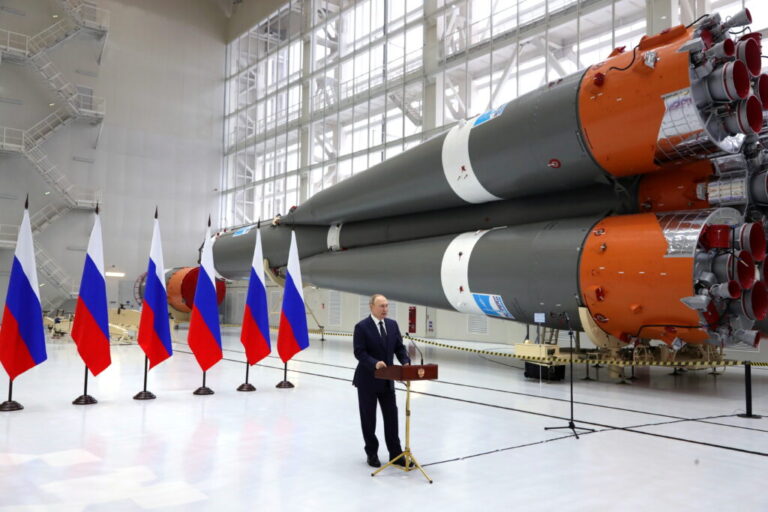
Russian President Vladimir Putin has stated that Moscow opposes deploying nuclear weapons in space, telling reporters that the country has “always been categorically against and are now against the deployment of nuclear weapons in space.” Despite this public stance, Horner said the scale of the potential threat has prompted continued international concern.
“From a military perspective, I only offer that advice that we really should put pressure on them not to put a nuclear weapon in space, because that would be a horrendously terrible thing for so many reasons,” Horner said.
He emphasized that Canada would work through diplomatic channels and with international partners to reduce the risk of such a development. “We will work as a middle power with our partners globally to ensure that type of thing doesn’t happen and to really put the diplomatic pressures where they’re needed to get down that road,” he said.
Experts say satellites are critical to modern military, economic, and civilian infrastructure. Communications, navigation, weather monitoring, and intelligence rely heavily on space-based assets.
Destruction of these systems could create cascading effects across global supply chains, aviation, financial networks, and military operations.
Horner stressed that the warning should be understood as a preventive measure rather than a statement of intent by Russia.
The Canadian Space Division, which operates under the Canadian Armed Forces, monitors space developments and coordinates with allies to detect potential threats to satellites and other orbital assets.
Canada’s interest in space defense has grown alongside developments in allied nations.
The United States and European partners have publicly debated defensive measures against orbital attacks, including anti-satellite systems and international agreements to prevent weaponization.
Read Also: DP World Under Scrutiny As Canada, UK Freeze New Deals
Horner’s comments reflect a broader concern that treaties like the Outer Space Treaty may not be sufficient to deter aggressive actions in space.
Historically, the issue of militarizing space has been contentious.
During the Cold War, both the United States and the Soviet Union pursued anti-satellite technologies, though both nations refrained from deploying nuclear weapons in orbit.
The topic resurfaced in recent years as satellite technology has become more central to national security and civilian infrastructure alike.
The 1967 Outer Space Treaty, ratified by more than 100 nations, explicitly bans the placement of nuclear weapons and other weapons of mass destruction in orbit, on celestial bodies, or in outer space in general.
Violations could trigger diplomatic crises, sanctions, or, in extreme cases, military responses.
Analysts say enforcement is difficult, as verification relies on observation satellites and international monitoring, and breaches could be difficult to prove immediately.
Horner also noted that Canada’s role as a “middle power” allows it to influence international negotiations without the extensive military reach of larger powers. By leveraging diplomatic pressure, joint exercises, and collaboration with allies, Canadian officials aim to reinforce norms against weaponizing space.
The Canadian military has been expanding its space capabilities over the past decade. The 3 Canadian Space Division, headquartered in Ottawa, manages satellite operations, space surveillance, and coordination with allied space commands.
Its mandate includes both defensive monitoring and support to other Canadian Forces operations dependent on orbital technology.
While Russia has repeatedly asserted its opposition to nuclear arms in space, ongoing geopolitical tensions have prompted vigilance among NATO members, the United States, and Canada.
Officials in Ottawa and allied capitals say that maintaining situational awareness and diplomatic pressure is key to preventing any escalation.
Canada’s next steps will focus on continued coordination with NATO partners and engagement with the United Nations on arms control measures for space.
As global reliance on satellites continues to grow, Canada and its allies face the challenge of deterring potential threats while maintaining compliance with international law.