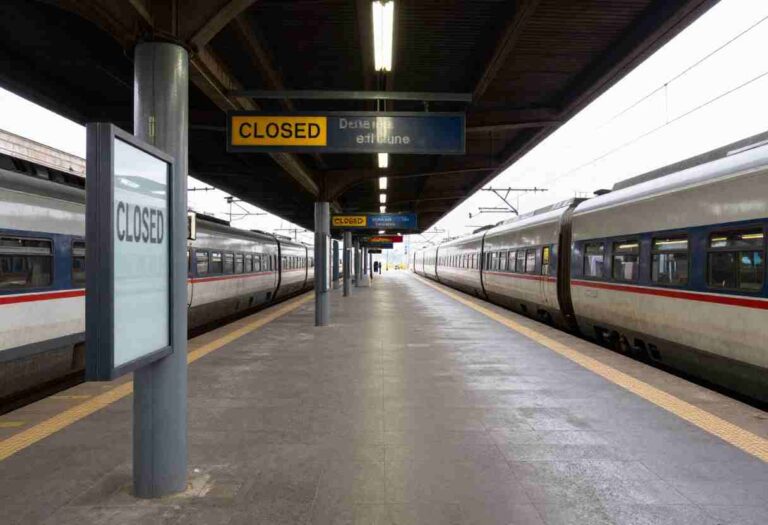
Train drivers across Spain are set to launch a three-day nationwide strike starting Monday, escalating pressure on the government after two deadly rail accidents in January raised urgent questions about safety on the country’s rail network.
The strike, called by the Semaf train drivers’ union, follows a pair of crashes that together killed at least 47 people and injured dozens more. Union leaders say the incidents exposed deep-rooted safety risks and staffing shortages, despite official assurances that Spain’s rail infrastructure is modern and well-funded.
The walkout is expected to disrupt passenger and freight services nationwide at the start of the workweek, affecting commuter lines, long-distance routes, and high-speed services. It also comes days before Prime Minister Pedro Sánchez is due to face lawmakers in parliament over what went wrong—and what comes next.
The most serious accident occurred on January 18 near Adamuz in southern Spain, when a high-speed train derailed and collided with another train traveling in the opposite direction. Forty-six people were killed, making it Spain’s deadliest rail disaster in more than a decade.
A preliminary investigation by Spain’s rail accident investigation commission (CIAF) found evidence suggesting a fracture in the track before the derailment. According to the report, grooves detected on the wheels of the derailed train—and on three trains that had passed earlier—indicate the damage existed before the crash, not as a result of it.
Read Also: Spain Train Crash Compensation Set At €20 Million
Just two days later, a second accident struck in Catalonia. A local train derailed after a wall collapsed as the train was passing. A trainee driver was killed, and at least 37 passengers were injured, most of them traveling in the first carriage.
Rail officials said the wall appeared to give way at the moment the train passed, striking the driver’s cab before causing extensive damage to the lead carriage. The back-to-back tragedies rattled public confidence in a rail system long praised for its high-speed network and technical sophistication.
Semaf, which represents Spain’s train drivers, says the crashes marked a breaking point. The union argues that years of operational strain have left the network vulnerable, despite headline investment figures.
“These collisions represent a turning point,” the union has said, calling for “all necessary actions to be taken to guarantee the safety of railway operations.”
The union’s demands include hiring more staff, increasing routine maintenance, and committing to sustained investment across the network—not just on flagship high-speed lines. Semaf has warned of what it describes as the “constant deterioration of the rail network,” pointing to safety checks conducted after the crashes that uncovered faults and maintenance issues on multiple routes.
Union leaders say drivers have repeatedly raised concerns about workload, aging components on some lines, and the pace of inspections.
They argue that while Spain has invested heavily in expanding its high-speed rail footprint, everyday maintenance and staffing levels have not kept pace with the system’s growing complexity.
The Socialist-led government has pushed back strongly against claims of underinvestment. Transport Minister Óscar Puente has rejected suggestions that poor maintenance or outdated infrastructure caused the accidents.
Read Also: Italy, Spain Send Warships To Shield Gaza Aid Flotilla
“We’re not looking at a problem of lack of maintenance, we’re not looking at a problem of obsolete infrastructure, and we’re not looking at a problem of lack of investment,” Puente said, responding to mounting criticism.
Government officials note that €700 million (about $760 million) has been invested in upgrading the Madrid–Andalusia rail line in recent years. The stretch of track where the Adamuz crash occurred was included in that renovation, according to the transport ministry.
Even so, the CIAF’s preliminary findings have fueled debate over whether recent upgrades were sufficient and whether inspection regimes were rigorous enough to detect early signs of track failure. Final conclusions from the investigation are expected to take months.
The strikes land at a politically sensitive moment. Prime Minister Sánchez is scheduled to be questioned in parliament later this week about the failures exposed by the accidents and the government’s broader rail safety strategy.
Opposition lawmakers have seized on the crashes to challenge the government’s infrastructure priorities, arguing that safety oversight should match the ambition of Spain’s rail expansion. Spain boasts one of Europe’s largest high-speed rail networks, a point of national pride that has drawn international attention and investment.
During the three-day strike, Spain’s rail operators are expected to run reduced services under minimum service requirements set by the government. However, delays and cancellations are likely, particularly on regional and commuter lines.
Transport authorities have urged passengers to check schedules in advance and consider alternative travel where possible. Business groups have warned that prolonged disruption could have knock-on effects for tourism and logistics, especially if labor tensions persist.
Semaf has not ruled out further industrial action if talks with the government fail to produce concrete commitments. Union officials say safety guarantees—not short-term concessions—are the core issue.
Spain’s rail network stands at a crossroads. The January crashes shattered the perception that serious accidents were a thing of the past, forcing a national reckoning over safety, staffing, and oversight.