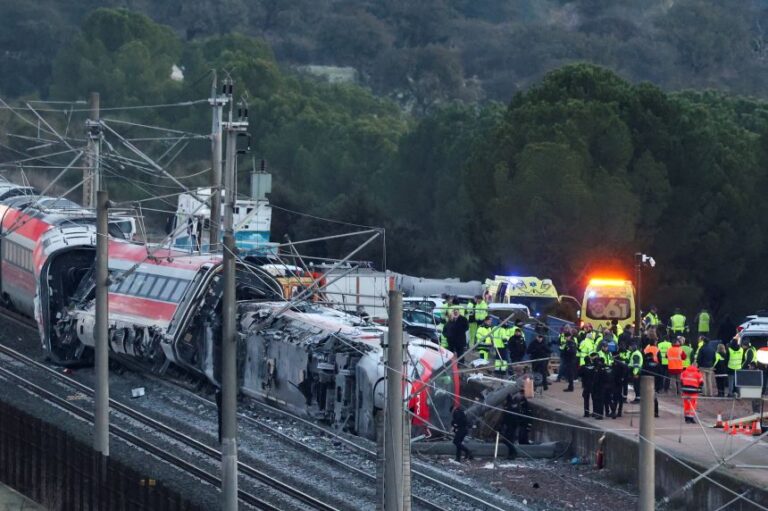
Spain will allocate €20 million in compensation to victims of last week’s deadly high-speed train crash in southern Andalusia, the government said Tuesday, as the country continues to grapple with one of its worst rail disasters in more than a decade.
Transport Minister Óscar Puente announced the payout following the January 18 derailment near Adamuz, outside the city of Córdoba, which killed 45 people and injured more than 150 others.
Under the compensation plan, families of those killed will receive €216,000 per victim, with payments expected within three months, Puente said.
The amount includes €72,000 in tax-exempt government aid, €72,000 as an advance from the train operator’s insurance, and another €72,000 from Spain’s mandatory passenger travel insurance scheme.
Read Also: Lover’s Harassment: Spain’s Former King Appeals For Immunity
Puente said the government was accelerating the process to avoid adding financial hardship to families already facing immense loss.
“We know that ordinary procedures and legal timelines do not always respond to the urgency of a tragedy like this,” the minister said, adding that victims “cannot afford to wait years” for support. “Economic uncertainty cannot be compounded on top of emotional pain.”
Passengers who survived the crash will also receive financial support, with compensation ranging from €2,400 to €84,000, depending on the severity of injuries and long-term medical needs, according to the transport ministry.
Authorities said the payments are intended as immediate relief and do not preclude additional legal claims as investigations into the crash continue.
Read Also: Spain Battles Raging Wildfires As Heatwave Finally Eases
The Adamuz derailment marked Spain’s deadliest train accident since 2013 and ranks among the most fatal rail disasters in recent European history.
The tragedy has intensified scrutiny of Spain’s rail system and placed Puente under mounting political pressure. The opposition People’s Party (PP) has called for his resignation, citing not only the Adamuz crash but a series of rail incidents reported the same week.
These included the death of a train driver in Catalonia and two additional accidents that did not result in fatalities.
Asked about his political future, Puente told reporters he was acting “with a calm conscience,” saying he had carried out his duties responsibly and communicated transparently with the public.
The crash occurred amid broader turbulence for Spain’s rail network. Last week, commuter rail services in Catalonia, operated under the Rodalies system, experienced major disruptions after numerous drivers refused to work, citing safety concerns.
Thousands of passengers were stranded, and rail traffic control was further disrupted on Monday by a software failure that temporarily shut down operations at a key control center.
The incidents have fueled public debate over infrastructure investment, safety oversight, and staffing conditions across Spain’s transport system.
Spanish authorities are continuing to investigate the cause of the Adamuz derailment, examining track conditions, signaling systems, and operational procedures. Officials have said findings will be made public once technical reviews are completed.