Ukraine’s foreign minister says the final and most difficult hurdles to ending the war with Russia can only be resolved by a face-to-face meeting between the two countries’ leaders, and that U.S. President Donald Trump holds unique leverage to broker an agreement. The comments underscore Kyiv’s push to accelerate peace efforts amid renewed U.S.-brokered diplomacy and a narrow window before political timelines in Washington complicate negotiations.
Speaking in Kyiv on Friday, Foreign Minister Andrii Sybiha said momentum has built in recent weeks through trilateral talks involving Ukraine, Russia, and the United States, but warned that progress could stall without decisive leadership. “Only Trump can stop the war,” Sybiha told Reuters, arguing that Washington’s influence remains central to resolving the conflict nearly four years after Russia’s full-scale invasion.
Ukraine is seeking to capitalize on the current diplomatic opening, Sybiha said, before external pressures—most notably campaigning ahead of the U.S. congressional midterm elections in November—begin to crowd out sustained attention on peace talks.
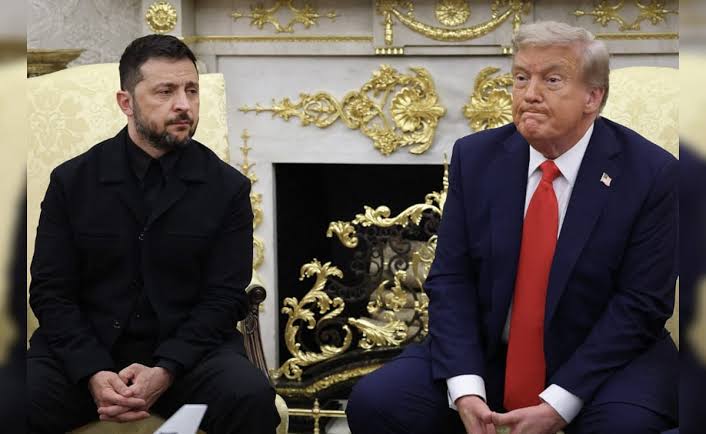
According to Sybiha, negotiators have worked through most elements of a 20-point peace framework that has guided recent discussions. Only “a few” issues remain unresolved, he said, but they are the most sensitive and politically charged—matters that, in Kyiv’s view, can only be settled by Ukrainian President Volodymyr Zelensky and Russian President Vladimir Putin themselves.
“The most sensitive and most difficult [issues are] to be dealt with at the leaders’ level,” Sybiha said, stressing that technical negotiators have reached the limits of what they can accomplish without top-level decisions.
Those comments come after a second round of trilateral talks in Abu Dhabi this week ended without a breakthrough. Still, the talks yielded a tangible humanitarian outcome: an exchange of 314 prisoners of war on Thursday, the first swap of its kind since October. Both sides described the exchange as a confidence-building step, even as core political disputes remain unresolved.
Read Also: Ukraine Moldova Blackout Disrupts Power In Kyiv, Chisinau
Zelensky said on Saturday that the United States had proposed another round of talks in Miami within a week, an offer Kyiv accepted. While details of the agenda were not disclosed, Ukrainian officials have framed the proposed meeting as part of an effort to maintain diplomatic momentum.
Despite the narrowing of differences on procedural and humanitarian issues, the two sides remain far apart on fundamental questions of territory and sovereignty. Russia continues to demand that Ukraine cede the remaining 20% of the eastern Donetsk region that Moscow has not managed to occupy despite years of grinding, attritional fighting. Kyiv has repeatedly and publicly rejected any territorial concessions as a condition for peace.
Ukraine is also pressing for control of the Zaporizhzhia nuclear power plant, Europe’s largest, which lies in Russian-occupied territory. The facility has been a persistent source of international concern, with global watchdogs warning of safety risks stemming from military activity in and around the site.
Sybiha acknowledged the depth of these disagreements but argued that sustained U.S. engagement could help bridge the gap. In his assessment, Washington’s role as both mediator and security partner gives it leverage unmatched by other international actors.
“My assessment is we have momentum, that’s true,” said Sybiha, who has served as foreign minister since 2024. “We need consolidation or mobilisation of these peace efforts, and we’re ready to speed up.”
Nearly four years after Russia launched its invasion in February 2022, the war has settled into a grinding conflict with limited territorial movement. Analysts say Russian forces have gained roughly 1.3% of Ukrainian territory since early 2023, a modest advance achieved at high cost. Moscow currently occupies almost a fifth of Ukraine, including Crimea and parts of eastern regions seized before and after the 2022 invasion.
The conflict has devastated Ukraine’s infrastructure, particularly its electricity and heating networks, which have been repeatedly targeted by Russian strikes. As winter conditions strain civilians and public services, Ukrainian officials are eager to secure a diplomatic path that could halt further destruction.
Read Also: Ukraine Peace Negotiators Arrive In US For Russia War Talks
Zelensky said on Saturday that Washington hoped the war could be ended before summer. Ukraine, he added, has proposed a sequencing plan to move talks forward, though he declined to provide details. Reuters reported that Ukrainian and U.S. officials have discussed a tentative timetable that could include a draft agreement with Russia by March, followed by a referendum in Ukraine alongside elections in May.
Western governments have broadly supported Ukraine’s negotiating position, emphasizing that any settlement must respect the country’s sovereignty and territorial integrity. At the same time, the humanitarian toll of the war and its global economic ripple effects have fueled calls for renewed diplomatic efforts.
According to reporting by Reuters and the BBC, the United States has increasingly taken on a more active mediating role, convening talks and encouraging incremental confidence-building measures such as prisoner exchanges. While no comprehensive deal appears imminent, diplomats say maintaining regular dialogue is essential to preventing escalation and keeping open channels for compromise.
For Kyiv, the next steps hinge on whether proposed talks in Miami materialize and whether they can produce enough progress to justify a leader-level summit. Sybiha has made clear that Ukraine is prepared to move quickly if conditions align.
Russia has not publicly committed to a meeting between Putin and Zelensky, and Kremlin officials have continued to insist that Moscow’s territorial demands be addressed. That stance remains the central obstacle to any near-term breakthrough.