
AI

AI & Health: Who Controls the Cure?—Part 3

AI & Health: Who Controls the Cure?—Part 3

The Black Box Clinic

How Opacity in AI Systems Collapses Transparency, Accountability, and Trust.

By Prof. MarkAnthony Nze

When Medicine Stops Explaining Itself

Modern medicine is built on explanation. Diagnosis requires justification, treatment demands rationale, and consent presupposes understanding. Yet AI-assisted healthcare increasingly operates in direct violation of this epistemic foundation. Across hospitals, decision-support systems now issue recommendations that cannot be meaningfully interrogated by clinicians, patients, or regulators. These systems work—but they do not explain.

London (2019) describes this as the central ethical rupture of AI in medicine: accuracy has been prioritized over intelligibility. High-performing models deliver predictions without reasons, …


AI & Health: Who Controls the Cure?—Part 2

AI & Health: Who Controls the Cure?—Part 2

The Data Cartels

Who Owns Health Data, Who Profits, and Who Loses Sovereignty.

By Prof. MarkAnthony Nze

From Clinical Records to Strategic Assets

Healthcare data has crossed a threshold. What was once understood as confidential clinical documentation—ethically stewarded under professional norms of care—has been reclassified as a strategic economic resource. This transformation did not occur through legislative decree or democratic debate. It unfolded incrementally through technical partnerships, cloud migrations, and AI “solutions” introduced under the banners of efficiency, modernization, and innovation.

Morley (2022) identifies this shift as a governance failure rather than a technological inevitability. Health systems, particularly public ones, …

AI & Health: Who Controls The Cure?—PART 1

AI & Health: Who Controls The Cure?—PART 1

The Promise and Peril of AI in Healthcare

Understanding the dual nature of innovation and risk in the age of intelligent medicine.

By Prof. MarkAnthony Nze

The Rise of Algorithmic Medicine

Artificial intelligence has moved from the margins of experimental medicine to the operational core of contemporary healthcare systems. No longer confined to academic laboratories or pilot studies, AI now informs diagnostic imaging, triage decisions, predictive analytics, drug discovery, and even patient–clinician interactions. Hospitals deploy machine-learning models to forecast sepsis, prioritize emergency admissions, and optimize resource allocation, while governments and insurers increasingly rely on algorithmic assessments to guide public

AI & Health: Who Controls The Cure?—Intro

When innovation meets power — who ultimately decides the future of healing?

By Prof. MarkAnthony Nze

In promises of precision and cures, artificial intelligence has captivated the imagination of technologists, clinicians, policymakers, and the public alike. Across the globe, from Silicon Valley boardrooms to academic medical centers, a compelling narrative has taken hold: that AI will transform medicine, obliterate inefficiencies, and usher in a new era of personalized, data-driven care. Yet beneath the glossy rhetoric of innovation lies a more complex truth — one that demands rigorous, evidence-based scrutiny. For AI in healthcare is not merely a story of computing

Google Quietly Backs $5 Billion Shift From U.S. Bitcoin To AI

Google Quietly Backs $5 Billion Shift From U.S. Bitcoin To AI

Credit guarantees tied to Google are reshaping bitcoin miners into AI data center hosts, unlocking bank financing and altering crypto and AI power dynamics.

Google has quietly emerged as a central financial force behind a sweeping transformation in the U.S. bitcoin mining industry, backing billions of dollars in projects that repurpose mining sites into artificial intelligence data centers.

The Alphabet-owned technology giant, rather than buying mining companies outright, is using a credit-based structure that has provided at least $5 billion in disclosed financial backing to support AI infrastructure built on former bitcoin mining campuses, according to company filings and market

Ukraine Computer Guided Drones Help Pilots Beat Heavy Jamming

Ukraine Computer Guided Drones Help Pilots Beat Heavy Jamming

A Ukrainian drone operator known by the call sign Mex says a recent long range strike on what appeared to be a Russian tank succeeded only because his aircraft relied on computer guided targeting after its signal link was disrupted.

Mex, a thirty one year old member of Ukraine’s Fifty Eighth Separate Rifle Brigade, described the twenty kilometre attack as something that would have been impossible using manual control alone. Without the added guidance, we simply could not hit it, he said. Absolutely no way.

The comments highlight how both Ukraine and Russia have shifted toward assisted targeting systems as …

Pichai Warns AI Boom Could Trigger Broad Fallout

Pichai Warns AI Boom Could Trigger Broad Fallout

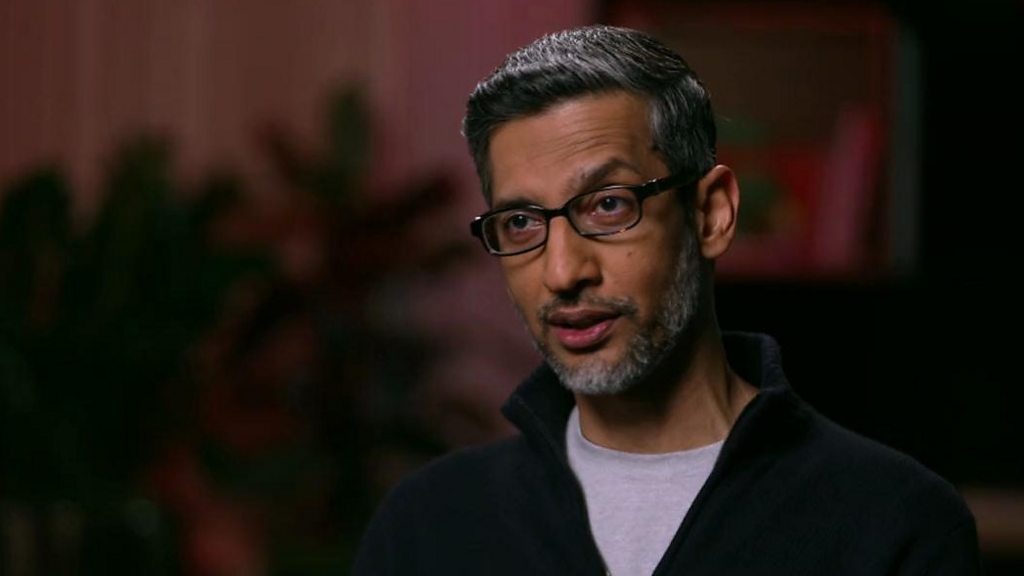
Google chief Sundar Pichai is urging caution as the world races deeper into artificial intelligence, warning that no company — not even one of the industry’s dominant players — would escape unscathed if the AI boom abruptly cools. Speaking at Alphabet’s California headquarters, he said the current surge of investment is extraordinary but tinged with unmistakable “irrationality,” echoing the speculative fever that preceded the dot-com crash two decades ago.

The sector’s explosive growth has pushed valuations to historic heights. Alphabet’s market value has doubled in just seven months, reaching $3.5 trillion as investors rally behind its progress in AI chips …

Cluely Co-founder Lee Says Engineers Can’t Create Viral Success

Cluely Co-founder Lee: “Engineers Can’t Create Viral Success”

Chungin “Roy” Lee, cofounder of AI app Cluely, says most startups fail not from weak products but from poor visibility and lack of viral reach.

Co-founder and CEO of Cluely, an AI app once dubbed a “cheating tool” for job interviews, says most tech startups fail not because their products are bad but because their creators don’t know how to get noticed.

Speaking at “TechCrunch Disrupt 2025” on Wednesday October 29, 2025, Chungin “Roy” Lee argued that engineers, while skilled at building technology, often struggle to make content that resonates online. “Engineers just cannot make good content,” he said. “Every

APEC: South Korea AI Initiative Call For Regional Cooperation

APEC: South Korea AI Initiative Call For Regional Cooperation

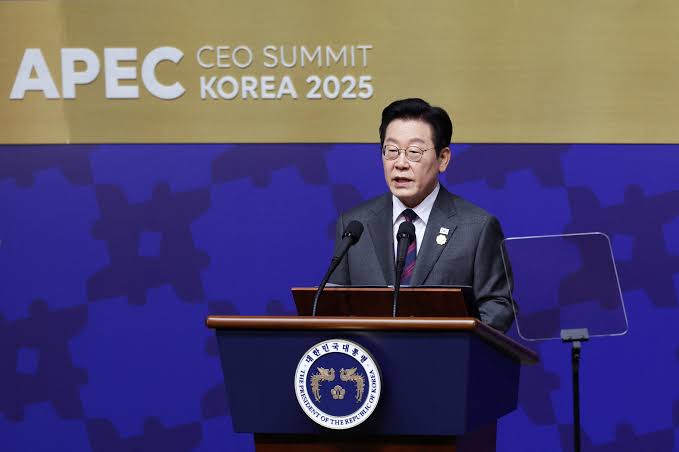
South Korean President Lee Jae Myung on Saturday urged Asia-Pacific nations to strengthen cooperation on artificial intelligence and demographic issues, saying shared innovation and coordinated policies were essential for the region’s stability and growth.

Speaking at the Asia-Pacific Economic Cooperation (APEC) summit in Seoul, Lee said the “APEC AI Initiative,” proposed by South Korea, reflected his government’s goal of turning technological transformation into opportunity. “The APEC AI Initiative is the outcome of our strong will to transform a grand change into an opportunity,” he said at the opening of a session focused on AI and demographic change.

South Korea, the …

AI Chatbots And Healthcare By Charles Ifeanyi Okafor

AI Chatbots And Healthcare By Charles Ifeanyi Okafor

As healthcare systems face growing pressure to deliver accessible, efficient, and patient-centered care, AI-powered chatbots are emerging as digital health assistants, bridging critical gaps in service and support. At the prestigious New York Learning Hub, Mr. Charles Ifeanyi Okafor, a distinguished IT professional and expert in strategic human resources, management, leadership, health and social care, and project management, presented an insightful research paper titled “Digital Health Assistants: Enhancing Patient-Centered Care through AI-Powered Chatbots.” His work sheds light on the role of AI chatbots in transforming healthcare delivery and improving patient experiences across various contexts, including high-resource, global, and underserved environments.