
Opinion

Diseases That Pay: The Global Health Economy—Part 6

When care becomes code, and the body becomes a permanent data source

By Prof. MarkAnthony Nze

The Quiet Displacement of Care

The stethoscope did not disappear.
It was quietly displaced—without resistance, without debate—by something smaller, more intimate, and infinitely more persistent. A phone in the pocket. A sensor on the wrist. A platform that never sleeps. Health no longer waits for symptoms or appointments. It now unfolds continuously, translated into data points that stream into infrastructures most patients will never see and agreements they will never fully understand.

This transformation is marketed as empowerment.
It feels like convenience.
It operates …

Diseases That Pay: The Global Health Economy—Part 5

Diseases That Pay: The Global Health Economy—Part 5

When vulnerability is repackaged as opportunity in global health

By Prof. MarkAnthony Nze

The experiment did not begin with a molecule or a hypothesis.
 It began with absence.

Absence of clinics with diagnostic equipment. Absence of hospitals stocked with essential medicines. Absence of systems capable of offering care without conditions. In these places, illness is not merely biological; it is logistical and financial. Care does not arrive as one option among many. It arrives as the only door left open.

That door is often labeled research.

According to the World Health Organization’s Global Health Expenditure Database (2023), global health …

Diseases That Pay: The Global Health Economy—Part 4

Diseases That Pay: The Global Health Economy—Part 4

By Prof. MarkAnthony Nze 

The Business of Research

From lab coats to lobbyists — who funds what you swallow.

Science likes to present itself as neutral.
Money does not.

Every pill begins as a question. Not a molecule, not a compound, not a cure—but a decision about what is worth asking. And in modern medicine, that decision is rarely innocent. It is financial.

Research does not start in laboratories.
It starts in budgets.

According to global health financing data, biomedical research funding is increasingly concentrated in private hands, particularly pharmaceutical corporations whose commercial survival depends on a steady pipeline of …

Diseases That Pay:The Global Health Economy—Part 3

Diseases That Pay: The Global Health Economy—Part 3

The Price of Being Human

When health becomes currency, survival becomes conditional.

By Prof. MarkAnthony Nze

When Care Stopped Being a Moral Guarantee

There was a time when illness, though feared, did not immediately translate into financial dread. Health systems were imperfect, uneven, and often unjust—but the act of seeking care was not, in itself, an economic negotiation. That moral baseline has eroded.

Today, the experience of illness is inseparable from cost calculations. Before diagnosis comes coverage verification. Before treatment comes authorization. Before healing comes an invoice. The modern health system no longer asks first what does this patient need?

Diseases That Pay: The Global Health Economy—Intro

Diseases That Pay: The Global Health Economy—Part 2

The Pharmaceutical Empire

Beneath the white coats lies the most sophisticated market ever built — one where human frailty is the raw material and the cure is the product line.

By Prof. MarkAnthony Nze

The modern pharmaceutical industry presents itself as medicine’s cathedral, laboratories gleaming like sanctuaries, scientists in spotless coats, and advertisements that equate capsules with compassion. But the illusion is costly. Behind the glass facades and charity campaigns lies one of the most profitable and secretive industries in history, a trillion-dollar enterprise that has converted human suffering into its most renewable resource.

By 2025, the world’s pharmaceutical spending …

Diseases That Pay: The Global Health Economy—Part 1

Diseases That Pay: The Global Health Economy—Part 1

How medicine became the world’s most profitable promise — and the patient its most expendable asset.

By Prof. MarkAnthony Nze

The Price of Survival

The modern hospital looks nothing like a factory, but it functions like one. From the gleam of the surgical theater to the hum of the billing department, every breath, every test, every tablet has a price. What once stood as a sanctuary for the sick has become the engine room of a trillion-dollar enterprise, a marketplace where recovery is purchased in installments, and health is the currency most people can no longer afford.

In 2025, the …

Diseases That Pay: The Global Health Economy—Intro

Diseases That Pay: The Global Health Economy—Intro

In a world where every illness is an industry, healing has become humanity’s most expensive pursuit.

By Prof. MarkAnthony Nze

Introductory Overview

How the World Learned to Monetize Sickness

There was a time when medicine was a calling, and when the physician’s oath was a covenant between compassion and science. But somewhere along the fluorescent corridors of the twenty-first century, the language of healing changed. The patient became a consumer, the hospital a revenue center, the prescription pad a financial instrument. In this new moral arithmetic, illness is no longer an interruption of life — it is an industry.

Across …

Why Captain Iheanacho Is Imo’s Best Hope—Part 7

Why Captain Iheanacho Is Imo’s Best Hope—Part 7

The future is not awaited — it is constructed. Imo’s tomorrow depends on whether competence becomes its language or corruption remains its culture.

By Prof. MarkAnthony Nze

The Compass of Tomorrow

Every generation reaches a threshold where history pauses and asks: Who among you can build again? For Imo State, that question is no longer rhetorical. The years of drift, the politics of survival, the exhaustion of faith — all have led to this reckoning. Beneath the fatigue of failure still beats the heart of a people too intelligent to accept despair as destiny.

What Imo needs now is …

Why Captain Iheanacho Is Imo’s Best Hope—Part 6

Leadership is not noise; it is navigation — the rare art of turning vision into velocity and authority into accountability.

By Prof. MarkAnthony Nze

The Leadership Equation

There comes a point in the life of every state when slogans lose their music and citizens begin to crave structure. Imo has reached that point. After decades of leaders who mistook performance for purpose and improvisation for governance, the people are not asking for miracles — they are asking for mastery.

Captain Emmanuel Iheanacho represents that mastery. His leadership philosophy is neither sentimental nor theoretical; it is engineered — shaped by decades …

Why Captain Iheanacho Is Imo’s Best Hope—Part 5

Why Captain Iheanacho Is Imo’s Best Hope—Part 5

Imo’s problem has never been poverty — it is potential mismanaged and promise misunderstood. Beneath its exhaustion lies the wealth of a region waiting for competence to wake it.

By Prof. MarkAnthony Nze

The Economic Reawakening

Imo is not a poor state. It is a rich state trapped in a poor system. For decades, the story has been the same: potential celebrated, capacity squandered, and progress outsourced to slogans. Each administration has spoken of “economic revival” while borrowing to survive, expanding payrolls without productivity, and mistaking consumption for growth.

By 2025, Imo’s debt had crossed two hundred billion naira, a …

Trump’s Strike And Nigeria’s Moral Collapse

Foreign Precision Exposes Domestic Decay

By Prof. MarkAnthony Nze

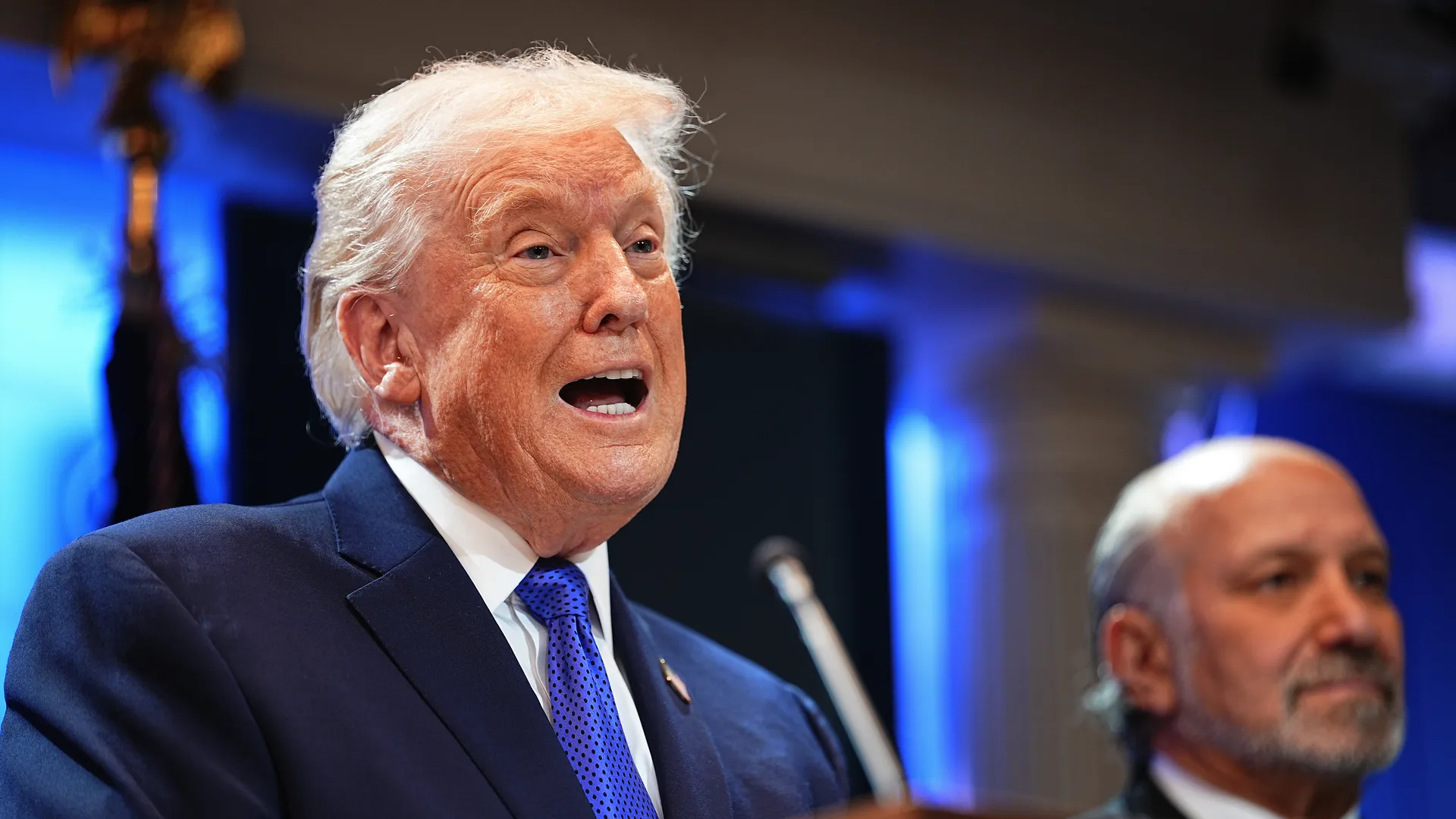
When Donald J. Trump confirmed that the United States had conducted a targeted counterterrorism strike against ISIS-linked networks in Northwestern Nigeria, global analysts called it audacious. But to those who understand the anatomy of failed states, it was inevitable. America doesn’t move into a territory for sentiment; it moves for strategy. What Trump did, intentionally or not, was expose the most dangerous truth about Nigeria: the country’s greatest security threat is not the terrorists in the forests but the politicians in the palaces.

For over a decade, Nigeria’s political and military …

Why Captain Iheanacho Is Imo’s Best Hope—Part 4

Why Captain Iheanacho Is Imo’s Best Hope—Part 4

Imo has painted over rot for too long. The time has come not to renovate failure, but to rebuild function.

By Prof. MarkAnthony Nze

The Reform Blueprint

For decades, Imo has spoken the language of reform without understanding its grammar. Every administration promises change, commissions committees, and launches programs that collapse under the weight of their own slogans. Roads are flagged off before designs exist, schools are commissioned before teachers are hired, and debt grows faster than development. Reform here is not transformation — it is theatre.

Captain Emmanuel Iheanacho rejects that performance. His conception of reform is mechanical, not …