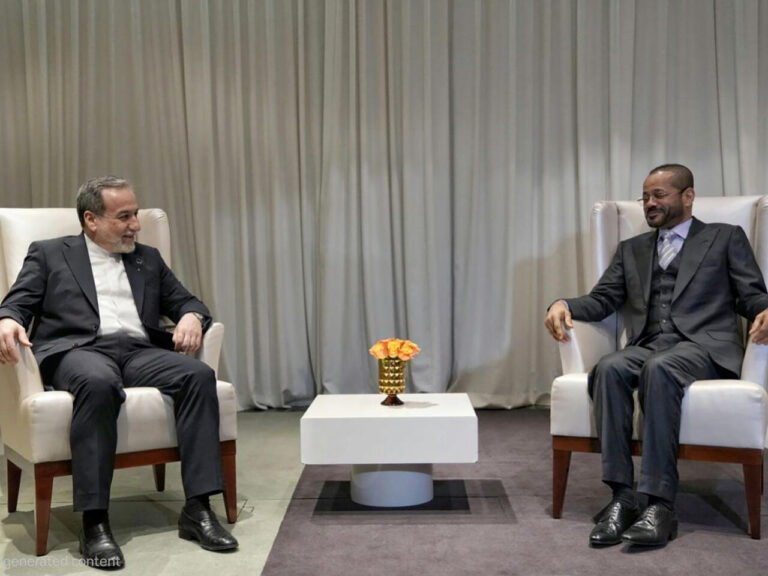
The United States and Iran are expected to continue their indirect talks on the Iranian nuclear issue later this week, with the third round of talks scheduled for Thursday in Geneva, as diplomatic efforts escalate alongside mounting military tensions in the Middle East, Oman’s foreign minister said on Sunday.
Omani Foreign Minister Badr Albusaidi said that the talks would be held in Geneva after recent communications between the two sides in an effort to bridge their differences.
Oman has been the facilitator between the United States and Iran throughout the current diplomatic process, which has been carried out in an indirect manner.
The move comes as there is growing concern among regional observers that the conflict may spill over into an open war.
The United States has increased its military presence in the Middle East in recent weeks, and United States President Donald Trump warned last week that “really bad things will happen” if a deal is not reached.
Albusaidi characterized the upcoming meeting as a chance to “go the extra mile” in finalizing a deal. This indicates a fresh start after the previous rounds of talks that saw little progress.
Sources close to the negotiations indicate that both parties are considering changes to their respective negotiating stands, but there are still large differences.
Sources, as cited by Reuters, indicate that Iranian negotiators have proposed new possible concessions regarding the limits of uranium stockpiles, which depend on substantial sanctions relief and recognition of Tehran’s right to engage in civilian nuclear enrichment.
Iran has long maintained that it has the right to engage in nuclear enrichment for peaceful purposes, as allowed by international agreements.
However, Western countries have long held that Iran should not be allowed to enrich at higher levels, as this would reduce the time needed to develop nuclear weapons.
Read Also: United States Automatic Immigrants Work Permit Extension Ends
Iranian President Masoud Pezeshkian expressed guarded optimism regarding the outcome of recent diplomatic efforts, posting on social media that “encouraging signals” had been received, but that Tehran was still ready for “any potential scenario.” This reflects the typical Iranian dual policy of openness to negotiations and warnings against external pressure.
On the U.S. side, the talks are being conducted by special envoy Steve Witkoff, who said over the weekend that the White House was still unclear about Iran’s failure to agree to more stringent controls on its nuclear program despite mounting economic and military pressure.
In a television interview, Witkoff said that the president was “curious” about why Tehran had not agreed to limit enrichment activities more decisively.
Iran’s Foreign Minister Abbas Araqchi reacted to the comments, writing on social media: “Curious to know why we do not capitulate? Because we are Iranian.” In a separate interview with CBS News, Araqchi said that a diplomatic solution was still possible, suggesting that the talks had not reached a dead end despite the rhetoric between officials.
The attempt to re-establish diplomacy comes after failed indirect talks last year, which collapsed largely over the U.S. insistence that Iran abandon uranium enrichment on its own soil—a demand that Tehran deemed inconsistent with its sovereignty.
U.S. officials have long suggested that enrichment capability could be used to quickly produce nuclear weapons, a charge that Iran has denied, saying that its program is for peaceful purposes only.
However, tensions escalated significantly in June when U.S. forces joined Israel in attacks against Iranian nuclear facilities.
Read Also: United States Slams Nigeria Over Handling Of Trafficking Victims
Trump later asserted that “key sites” had been “obliterated,” although independent analyses indicated that while infrastructure had been damaged, Iran still held “previously enriched uranium stockpiles.” U.S. negotiators have since demanded commitments that Tehran must surrender or neutralize such materials.
Diplomats with knowledge of current agreements say Iran is weighing the export of about half of its highly enriched uranium and the subsequent dilution of the remaining stock, moves that are expected to “extend the so-called breakout timeline.” Whether such actions will meet U.S. demands is unclear.
In addition to nuclear limits, Washington has also called for the expansion of talks to encompass Iran’s ballistic missile program and its provision of armed support to allied militias throughout the region.
Iranian officials have already dismissed any talk of negotiations on missile capabilities, although insiders report that Tehran may demonstrate some flexibility on regional proxy matters. There has been no agreement on the agenda.
The upcoming Geneva talks will be the first direct engagement between the two parties since the escalation of military and political rhetoric.
Representatives from both sides have stated that technical teams are set to work on proposals before the Thursday meeting, and that mediators are working to secure step-by-step agreements that can be used as a basis for a final settlement.