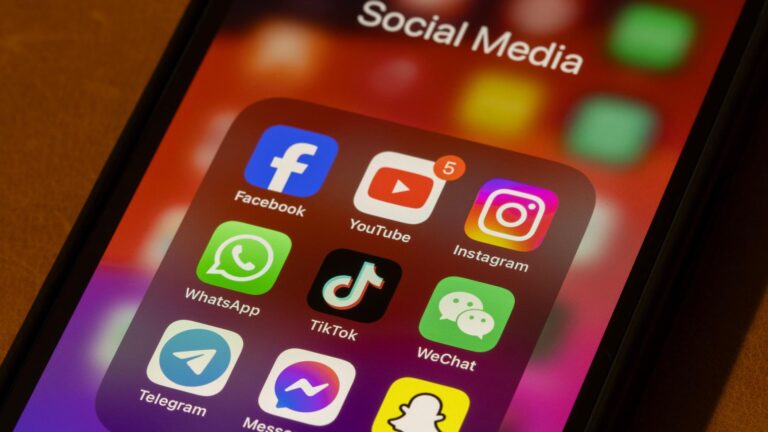
Gabon suspended access to Facebook, TikTok, and other social media platforms Wednesday after authorities accused digital networks of spreading content that undermines social cohesion and threatens national security, a crackdown that comes amid strikes by teachers and civil servants over poor pay and working conditions less than a year after President Brice Oligui Nguema won elections.
The High Authority for Communication ordered the immediate suspension “until further notice” in a televised statement Tuesday evening, with spokesman Jean-Claude Mendome saying “inappropriate, defamatory, hateful and insulting content” was undermining “human dignity, public morality, the honor of citizens, social cohesion, the stability of the republic’s institutions and national security.” He also cited the “spread of false information,” cyberbullying, and “unauthorized disclosure of personal data” as justifications for blocking platforms used by roughly 850,000 Gabonese, about a third of the Central African nation’s 2.5 million population.
AFP journalists confirmed Wednesday that Facebook and TikTok were no longer accessible in Gabon, while internet monitoring group NetBlocks reported restrictions on Meta services, YouTube, and TikTok. The regulator did not specify which platforms were included in the ban when announcing it Tuesday, though WhatsApp, the messaging service owned by Meta, was also experiencing significant disruptions Wednesday, including failed calls.
Civil society member Nicaise Moulombi condemned the shutdown as economically destructive.
“The suspension amounts to paralysing a significant part of the country’s economic and social activity in a context already marked by unemployment and the cost of living,” Moulombi said. “Social networks are no longer mere tools for entertainment, they have become instruments of work, citizen expression, commerce, innovation, and even democratic mobilization.”
Opposition leader Alain-Claude Billie-By-Nze said the social media crackdown imposed “a climate of fear and repression” in the oil-rich Central African state. In an overnight Facebook post before the platforms went dark, he called on civil groups “and all Gabonese people dedicated to freedom to mobilize and block this liberty-destroying excess.”
Read Also: South Africa, China Sign Trade Deal As U.S. Tariffs Bite
Mendome insisted that although freedom of expression is guaranteed in Gabon, it “cannot be exercised in flagrant violation of the national and international laws in force.” He warned that online content was likely “to generate social conflict, destabilize the institutions of the republic and seriously jeopardize national unity, democratic progress and achievements,” language that echoed justifications authoritarian governments across Africa have used when restricting digital communications during periods of unrest. The shutdown followed mounting labor unrest that began in December when school teachers launched strikes over stagnant wages and deteriorating working conditions. Protests demanding similar improvements have since spread to healthcare workers, higher education staff, and public broadcasters, marking Oligui Nguema’s first major wave of social discontent since he was elected in April 2025 with more than 90 percent of the vote, cementing his grip on power after leading the August 2023 military coup that ended more than five decades of rule by Ali Bongo Ondimba and his family.
When taking power in 2023, Oligui Nguema pledged to reform Gabon, where internet blackouts were routinely deployed by the Bongo regime to suppress citizens and control information flows during elections and political crises.
For the first time during the 2025 presidential poll, foreign and independent media were allowed to film ballot counting, a gesture the military leader presented as evidence of his commitment to transparency and democratic norms despite coming to power through force.
The latest social media ban raises renewed concerns that Oligui Nguema may resort to the same repressive tactics as his predecessor despite campaign promises to break with the past. Critics note that less than a year after elections observers praised as relatively open, the president has moved to silence critical voices through targeting independent media outlets and labor union leaders who question his policies or challenge government narratives.
Gabon previously suffered an internet blackout in August 2023 when authorities blocked access and imposed curfews after voting delays marred the presidential election that preceded the coup.
That shutdown prevented citizens from sharing real-time information about irregularities, military movements, or government responses, a playbook authoritarian leaders across the continent have refined since Arab Spring uprisings demonstrated social media’s power to organize protests and document state violence.
The oil-producing nation is grappling with mounting debt amid an acute liquidity squeeze that has left it increasingly reliant on regional capital markets after international lenders grew wary of extending additional credit without structural reforms. The population across the heavily forested country remains impoverished and highly dependent on food imports despite Gabon’s natural resource wealth, which includes substantial petroleum reserves and valuable tropical timber that have enriched ruling elites while failing to translate into broad-based development.
Read Also: China Africa Diplomatic Tour Targets Trade And Strategy
The World Bank has warned that despite the recent political transition and initial reform momentum, Gabon’s fiscal position remains fragile, challenged by declining oil production, weak non-oil revenue collection, bloated public sector wage bills consuming most government spending, and limited productive investment that could diversify an economy dangerously dependent on volatile commodity exports.
Striking teachers have demanded immediate salary increases and improved classroom conditions including adequate textbooks, functioning infrastructure, and reduced class sizes that often exceed 50 students per instructor. The government has offered modest pay bumps but insisted larger increases would require budget adjustments impossible given current fiscal constraints, an impasse that has prolonged strikes now entering their third month in some regions.
Healthcare workers and university professors joined the protests in January after the government failed to deliver on promised pay adjustments, arguing that real wages have declined sharply amid rising food and fuel costs while officials continue enjoying generous allowances and benefits. Public broadcasting employees separately demanded better equipment, unpaid overtime compensation, and protection from political interference in editorial decisions.
The strikes have disrupted essential services including schools educating hundreds of thousands of children and hospitals treating patients in a country where healthcare access remains limited outside the capital Libreville. Parents have complained that prolonged school closures jeopardize students’ academic progress and leave children unsupervised while adults work, though sympathy for teachers’ demands remains widespread given public awareness of poor educational conditions.
Whether Oligui Nguema can defuse the crisis through negotiations or will instead escalate repression remains uncertain. The social media ban suggests authorities view digital communications as more threatening than beneficial, a calculation that may reflect weakness rather than strength if the government fears it cannot counter narratives circulating online through persuasion or by addressing underlying grievances driving discontent.
African governments have increasingly turned to internet shutdowns during elections, protests, and security crises—actions human rights organizations and technology companies condemn as violations of free expression and association that harm economies, isolate populations, and prevent documentation of abuses. Cameroon, Chad, Ethiopia, Uganda, and others have deployed similar tactics in recent years, often targeting specific regions or nationwide networks during sensitive periods.
The suspensions typically achieve government objectives of disrupting organizing and limiting information flows in the short term, but they also generate international condemnation, economic costs as businesses lose connectivity, and public anger that can intensify rather than diminish opposition. Gabon’s decision to join this pattern less than a year after Oligui Nguema promised democratic opening may indicate his government feels sufficiently vulnerable to prioritize control over legitimacy.