Australia invoked rarely used counterterrorism powers Wednesday to temporarily ban one of its citizens detained in a Syrian camp from returning home, marking the government’s first explicit acknowledgment that someone among 34 Australians seeking repatriation poses a security threat significant enough to warrant exclusion despite citizenship rights.
Home Affairs Minister Tony Burke confirmed a temporary exclusion order was issued on security agency advice, preventing the unidentified individual, believed to be a woman, from entering Australia for up to two years even if she manages to leave Syria. “I can confirm that one individual in this cohort has been issued a temporary exclusion order, which was made on advice from security agencies,” Burke said in a statement. “At this stage security agencies have not provided advice that other members of the cohort meet the required legal thresholds for temporary exclusion orders.”
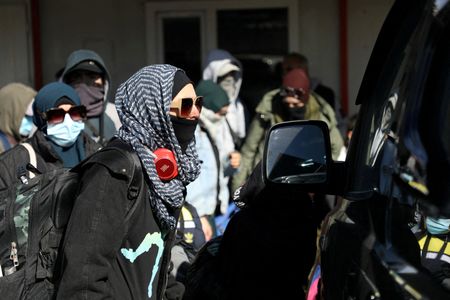
The announcement came two days after the group of 11 women and 23 children was briefly released from al-Roj detention camp in northeastern Syria on Monday, only to be turned back by Damascus authorities hours later due to what officials described as procedural problems with their paperwork. Prime Minister Anthony Albanese has insisted his government will provide no assistance to help the families, wives, widows, and children of suspected Islamic State fighters, return to Australia despite their citizenship, telling national broadcaster ABC on Tuesday: “If you make your bed, you lie in it.”
Temporary exclusion orders, introduced in 2019 legislation, allow the home affairs minister to ban Australian citizens aged 14 or older from re-entering the country for up to two years if authorities believe on reasonable grounds the measure would prevent terrorist acts, support for terrorism, training with terrorist organizations, or support for such groups.
The powers have been invoked sparingly since their creation, making Wednesday’s confirmation notable as the first publicly disclosed case involving Australians detained in Syrian camps where thousands of family members of ISIS militants have been held since the group’s territorial collapse in 2019.
The cohort attempting to return had been living in squalid conditions at al-Roj camp for years after traveling to Syria’s self-proclaimed caliphate during ISIS’s peak control over swaths of Iraq and Syria. Many left Australia as young women or teenagers accompanying husbands who joined the militant group, while some children were born in the conflict zone and have never lived in Australia despite holding citizenship through parentage. Humanitarian organizations including Save the Children have advocated for their repatriation, arguing children should not be punished for decisions made by parents and that leaving them in camps where extremist ideology circulates creates greater long-term security risks than bringing them home to rehabilitation programs and monitoring.
Read Also: Australia Will Not Help Citizens Return From Syrian IS Camp
Albanese rejected that reasoning, saying those who aligned themselves with ISIS’s “brutal, reactionary ideology” made choices that carry consequences.
“These are people who chose to go overseas to align themselves with an ideology which is the caliphate, which is a brutal, reactionary ideology and that seeks to undermine and destroy our way of life,” he told reporters Wednesday. “It’s unfortunate that children are caught up in this, that’s not their decision, but it’s the decision of their parents or their mother.”
The families’ attempted return generated intense political controversy in Australia, where support for anti-immigration populist party One Nation has surged to record levels in recent polling. Multiple surveys conducted in late January and early February showed One Nation commanding between 23 and 27 percent of primary vote intention, surpassing or matching the combined support for traditional center-right Liberal and National parties that govern in coalition when they hold power. A Newspoll conducted February 5-8 found One Nation at 27 percent, the highest any polling firm has ever recorded for the party, while the coalition slumped to 18 percent, its lowest result since formation.
The polling surge followed the December 14 Bondi Beach massacre, when a gunman opened fire during a Jewish Hanukkah celebration, killing 15 people in Australia’s deadliest mass shooting in decades.
Authorities said the attack was inspired by ISIS ideology, inflaming public anger about terrorism and immigration. One Nation leader Pauline Hanson and former National Party leader Barnaby Joyce, who defected to One Nation in January, attended vigils for victims and were warmly received by crowds, with some attendees chanting “make Australia great again” as the politicians arrived.
Read Also: Australia Commits A$3.9bn To AUKUS Submarine Yard
Hanson has capitalized on security anxieties, demanding the government bar ISIS-linked families from returning and calling for stricter immigration controls. Her hardline positions, once considered fringe, have gained mainstream traction as cost-of-living pressures, housing unaffordability, and perceptions that traditional parties have failed to address working-class concerns drive voters toward populist alternatives. Analysts note parallels with far-right surges across Europe, where parties campaigning on anti-immigration platforms have reached or entered government in multiple countries including Italy, Netherlands, and Sweden.
The political environment has pressured Albanese’s center-left Labor government, which won a landslide victory in May 2025 but has seen approval ratings decline amid economic headwinds including rising interest rates, persistent inflation, and mortgage stress affecting homeowners.
Opposition parties accused Labor of being soft on terrorism by not immediately excluding all 34 Australians from returning, while humanitarian advocates criticized the government for abandoning citizens and subjecting children to indefinite detention in dangerous conditions.
Burke emphasized that anyone who returns to Australia, whether through their own efforts without government assistance or via other means, will face prosecution if they violated laws prohibiting travel to declared ISIS-controlled areas without legitimate reason. From 2014 to 2017, Australian law made it an offense punishable by up to 10 years in prison to enter al-Raqqa province in Syria and other parts of the self-declared caliphate without authorization. Membership in ISIS carries potential sentences of 25 years, and authorities retain power to strip dual nationals of Australian citizenship if confirmed as terrorist organization members.
The United Nations refugee agency said last week a significant number of residents had left al-Hol, another major Syrian detention camp, with plans to relocate them elsewhere. Separately, the United States announced it transferred more than 5,700 adult male ISIS fighters from Syrian detention facilities to Iraqi custody for prosecution—a move UN experts criticized as contravening due process rights and subjecting detainees to inhumane prison conditions.
Australia has repatriated citizens from Syrian camps on two previous occasions, in 2019 when eight children of two slain Australian ISIS fighters returned, and in October 2022 when four mothers and 13 children assessed as most vulnerable among camp detainees were brought home. Both repatriations occurred under different political circumstances, with the 2019 operation conducted by a conservative government and the 2022 effort by Labor facing less public opposition before the Bondi massacre inflamed terrorism fears. Last year, two women and four children escaped Syria independently and returned to Australia via Lebanon without government assistance, according to ABC reporting.
Save the Children challenged the government’s refusal to repatriate detained Australians through litigation, arguing authorities had legal obligations to protect citizen children held in dangerous conditions. The federal court ruled in 2024 that no such obligation exists, though Save the Children CEO Mat Tinkler maintained the government has moral if not legal responsibilities.
“These innocent children have already lost years of their childhood, and deserve the chance to rebuild their lives in safety at home, and to reintegrate into the Australian way of life,” Tinkler said in a statement this week.