
Lebanese Prime Minister Nawaf Salam issued a pointed public warning to Hezbollah on Saturday within hours of the United States and Israel launching strikes on Iran, declaring that his government would not permit any armed faction to drag Lebanon into a regional confrontation, as the Israeli military simultaneously struck Hezbollah positions in southern Lebanon and security officials across the Middle East braced for what could become the most dangerous multi-front escalation the region has seen in decades.
“In light of the dangerous developments the region is witnessing, I once again appeal to all Lebanese to act with wisdom and patriotism, placing Lebanon’s and the Lebanese people’s interests above any other considerations,” Prime Minister Salam wrote on X.
“I reiterate that we will not accept anyone dragging the country into adventures that threaten its security and unity.” The statement, issued without naming Hezbollah directly, was understood immediately as an explicit message to the Iran-backed armed movement whose secretary-general, Naim Qassem, had warned in late January that his organisation would not remain neutral if Iran were attacked.
The warning arrives at a moment of acute vulnerability for Lebanon. The country is still physically and economically devastated by the 2024 war between Israel and Hezbollah, which killed thousands of fighters, destroyed vast swathes of infrastructure across the south, the Bekaa Valley, and Beirut’s southern suburbs, and eliminated long-serving Hezbollah leader Hassan Nasrallah. Prime Minister Salam, speaking at the World Governments Summit in Dubai in early February, said Lebanon had “had enough adventures” with what he called the “Gaza support war,” Hezbollah’s year-long military campaign against Israel launched in solidarity with Hamas following the October 7, 2023 attacks. “Its cost to Lebanon was not only high, but it was extremely, extremely high,” he said at the time.
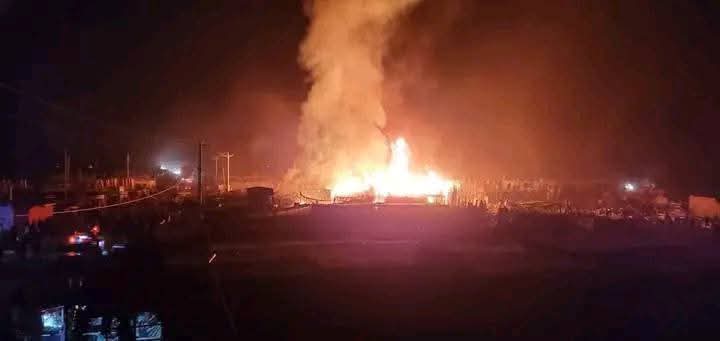
The Israeli Defence Forces said on Saturday that, concurrent with the Iran strikes, their forces had targeted Hezbollah launch positions and underground shafts in several areas of southern Lebanon, and had over the past week destroyed four structures used by Hezbollah in what the IDF described as a serious violation of understandings between Israel and the Lebanese state. Israel had already carried out 25 airstrikes on the Bekaa Valley on Thursday, February 26, which it said targeted eight Hezbollah Radwan Force military compounds used for weapons storage and training.
Read Also: Netanyahu Demands Full Dismantlement Of Iran Nuclear Program
Lebanese authorities said a Syrian national was killed and dozens injured in those strikes.
Israel had warned Beirut explicitly about the consequences of any Hezbollah involvement in a broader US-Iran conflict. Reuters reported earlier this week that Israel conveyed a direct message to Lebanese officials that it would respond forcefully to any Hezbollah military action, including by striking civilian infrastructure such as Beirut’s Rafic Hariri International Airport.
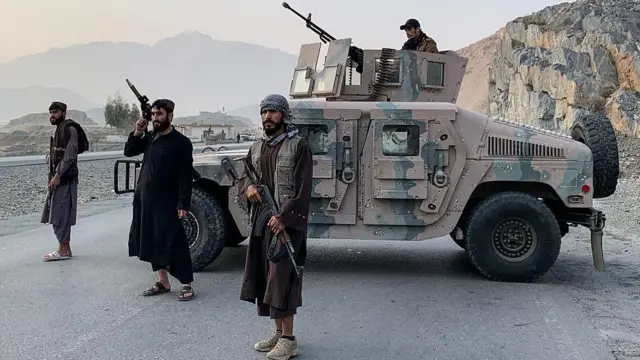
Security officials assessing the situation said that Hezbollah had not yet made a decision to enter the confrontation, and that current assessments suggested the organisation might prefer to remain outside the fighting, at least in the immediate term, despite escalating pressure from Tehran.
Those assessments also flagged Yemen’s Houthi movement as likely to join the fighting through rocket and drone launches against Israel and US assets in the region, potentially drawing further American military resources into a conflict that US officials had already described as expected to last several days.
Lebanon’s political architecture gives Prime Minister Salam limited formal leverage over Hezbollah, which operates as an autonomous military force with its own command structure, weapons stockpiles, and strategic calculus anchored in Tehran rather than Beirut.
The prime minister pointed to what his government regards as a meaningful structural change in the south: for the first time since 1969, he said, the Lebanese armed forces have full operational control over southern territory.
The Lebanese army completed the first phase of a Hezbollah disarmament plan south of the Litani River in January 2026 under the terms of the November 2024 ceasefire agreement brokered by the United States. Israel has disputed the completeness of that disarmament, alleging that Hezbollah remains entrenched in the area and citing those alleged violations as justification for near-daily strikes that the Lebanese government has characterised as a “one-sided war of attrition.”
Read Also: Israel Strikes Hezbollah Targets In Southern Lebanon
Lebanese President Joseph Aoun condemned Israeli strikes carried out on Friday, describing them as “a blatant act of aggression aimed at thwarting diplomatic efforts.”
His response to Saturday’s broader US-Israeli assault on Iran had not been issued in full as of the time of publication. Lebanon’s position, a government publicly committed to state sovereignty and non-involvement, a powerful armed faction openly aligned with the state under attack, and an Israeli military already striking Lebanese territory, left Beirut in a structurally impossible position as the wider confrontation deepened.
A Paris conference in support of the Lebanese Armed Forces is scheduled for March 5, at which France has called on Arab states to participate actively in funding Lebanese security capacity. French Foreign Minister Jean-Noël Barrot, visiting Beirut on Friday, said that a second phase of the Hezbollah disarmament plan must begin before the conference, and that “France’s vision for Lebanon is that of a strong, sovereign state holding a monopoly on arms.” Whether that vision survives the events of Saturday remained, as of the time this report was filed, wholly uncertain.
No statement from Hezbollah Secretary-General Naim Qassem had been issued in response to the US-Israeli assault on Iran as of publication. Iran’s senior official, speaking to Al Jazeera, said there would be “no red lines” to Tehran’s retaliation, a formulation widely interpreted to include the full activation of its regional proxy network.