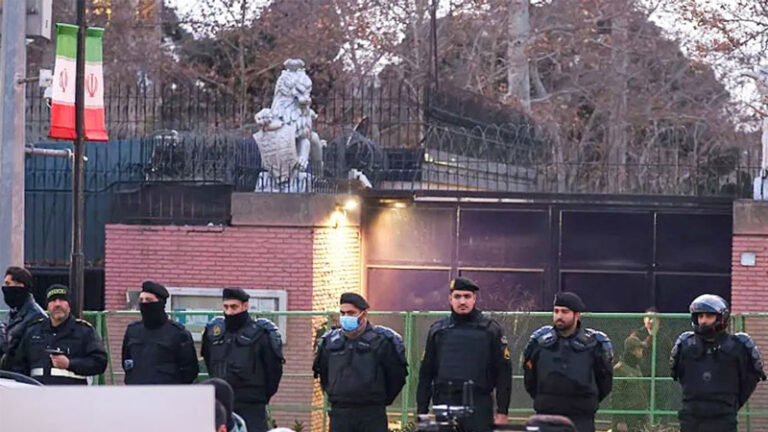
The United Kingdom has temporarily withdrawn its diplomatic staff from its embassy in Tehran as part of a growing list of precautions taken by other nations in the Middle East as tensions rise between Iran and the United States over nuclear talks that are critical to preventing all-out war.
The UK’s Foreign Office announced that it was temporarily pulling its diplomatic staff from Iran’s capital as a precautionary measure in response to growing regional uncertainty.
The announcement did not specify how long the temporary arrangement would last. The announcement comes as other nations in the region are reevaluating their security position in response to indirect talks between Iran and the United States in Geneva, which ended without an announced deal.
The talks, mediated by Oman, are believed to have been an attempt to avoid war over Iran’s nuclear program.
At around the same time, the US also started to permit certain diplomatic personnel and their families to leave Israel on a voluntary basis.
According to communications relayed by the New York Times, US Ambassador to Israel Mike Huckabee communicated to personnel who wished to leave Israel to “do so TODAY,” while emphasizing that there was “no need to panic.”
Read Also: UK Government Rejects Claims Of Pausing Chagos Islands Deal
The US embassy also placed a message on its website to US citizens which advised them to “consider leaving Israel while commercial flights are available.”
This is part of a larger trend of precautionary moves. Earlier in the week, the US also ordered non-essential personnel to leave its embassy in Beirut after conducting a security review.
Several countries, including China, India, and Canada, have also urged their citizens to leave Iran as quickly as possible due to the risk of conflict.
Diplomatic efforts have also increased as both sides have also started to issue military threats.
The US and its allies suspect that Iran is progressing towards acquiring nuclear weapons technology, which is a charge that Tehran has consistently denied while stating that its nuclear program is for civilian use only.
In fact, U.S. President Donald Trump has repeatedly made it clear that military action is always on the table in case negotiations do not result in an agreement to constrain Iran’s nuclear program.
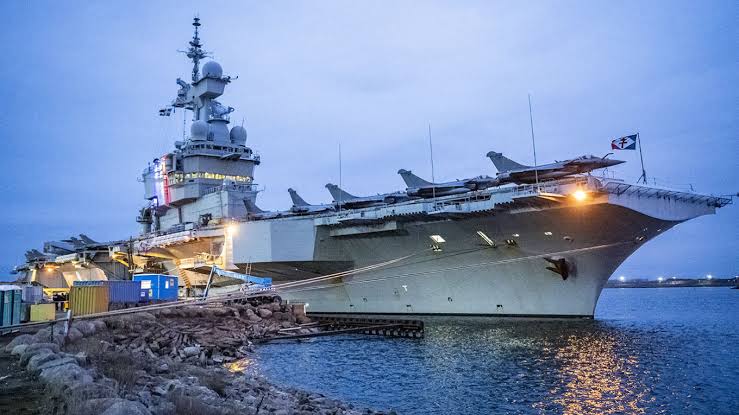
In recent weeks, the United States has moved thousands of extra troops and equipment to the Middle East, including two aircraft carriers and accompanying ships, warplanes, and aerial refuelling equipment.
Trump called this an “armada,” and this is the biggest U.S. military buildup in the Middle East since the invasion of Iraq in 2003.
Speaking on Feb. 19, Trump declared, “The world will soon know if the U.S. and Iran will be friends or enemies… We have to make a meaningful deal otherwise bad things happen.”
Iranian officials have made it clear that any military strike would be met with force, causing concern among regional governments and international observers about the possibility of miscalculation in the situation.
However, mediators have indicated that, in spite of the heightened rhetoric, talks held in Geneva on Thursday have achieved “significant progress,” although details of the talks have not been made public.
Iranian officials have indicated that the talks have achieved “good progress,” while the US officials have yet to make an assessment of the talks.
Read Also: UK Govt Considers Stripping Prince Andrew Of Succession
Diplomatic efforts are expected to continue in the coming days, with the US State Department announcing that Secretary of State Marco Rubio is expected in Israel on Monday, where he is expected to hold talks with the country’s Prime Minister Benjamin Netanyahu, among other officials.
Senior US officials have tried to walk a tightrope between warning Iran that military action may be taken while at the same time reassuring that a diplomatic solution remains the most likely outcome.
Vice-President JD Vance was quoted by the Washington Post as saying that while the strikes were still being considered, “there’s no chance that we would get involved in a long conflict.” “I think we all prefer the diplomatic option,” he added. “But it really depends on what the Iranians do and what they say.”
Countries in Europe have now turned their attention to planning for a possible escalation as tensions between the US and Iran remain high.
Britain’s decision to operate its mission in Tehran remotely was a similar measure that was taken during previous periods of heightened tensions in the region. This allowed for consular and diplomatic activities to continue while minimizing personnel risk.
Business-related travel is still ongoing in the region, although diplomatic announcements have reminded citizens to consider security advice and have plans in place in case of early departures while flights are still available.