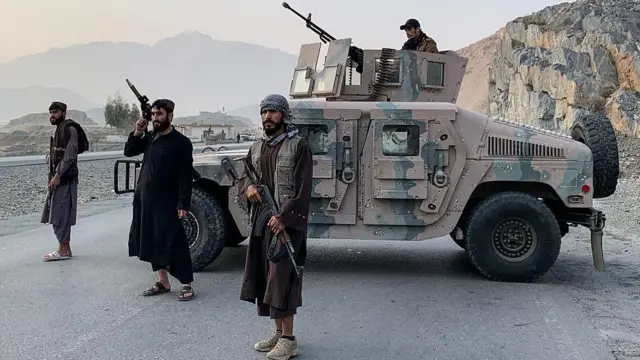
Pakistani forces launched air and ground attacks on Afghanistan, including on military installations in Kabul and Kandahar, a move that marked a major escalation of hostilities against Afghanistan’s Taliban-led government, according to officials on both sides on Friday.
The attacks are the most serious rift yet between Pakistan and Afghanistan, which have been involved in repeated cross-border attacks and longstanding disagreements about militant groups operating on their border.
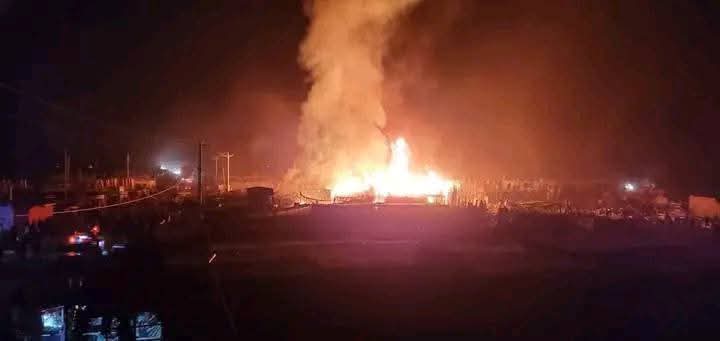
Pakistani military action against Afghanistan began early on Friday, according to officials, when explosions rocked Afghanistan’s capital and Kandahar Province, where senior Taliban leaders are based.
Thick columns of black smoke rising from military installations were captured on video, which was verified by Reuters.
Pakistan’s defense authorities said that their operations targeted Taliban positions, military offices, and ammunition depots, all in response to a series of “unprovoked” attacks by Afghanistan’s military forces.
Pakistan’s defence minister, Khawaja Mohammad Asif, said on social media platform X that “patience has reached its limit,” and that the “open war” against the Taliban government reflected a shift from border incidents to all-out conflict.
Read Also: Pakistan Launches “Operation Righteous Fury” on Afghan Cities
He said Pakistan’s armed forces are ready to face hostile intent, implying a threat to Pakistan’s security.
The Afghan authorities also acknowledged these attacks, stating that they had launched retaliatory attacks against Pakistan’s military targets.
The Taliban’s foreign ministry said on Friday that Kabul had been attacked by Pakistan’s aircraft, and that Afghan forces had launched attacks using drones against Pakistan’s military targets.
However, Pakistan denied this, stating that all drones had been shot down, and no damage had been inflicted.
The two governments also presented vastly different figures on the number of casualties incurred.
The Pakistani officials claimed that their operation resulted in the killing of 133 Taliban fighters and the injury of more than 200 others, citing that several Taliban positions were destroyed and assets captured.
The Taliban’s official spokesman, Zabihullah Mujahid, disputed these figures, citing that the Afghan troops killed dozens of Pakistani soldiers in cross-border attacks and captured several bases across the Durand Line border. Verification of these figures was not immediately available.
The Pakistani government confirmed the killing of 12 of their soldiers in the clash, while the Afghan authorities lost 13 of their fighters in a defensive operation against the strikes.
The escalation in hostilities started late Thursday after months of heightened tensions between the two sides along the 2,600-km (1,615 miles) porous border, which has long been prone to militancy and smuggling activities.
The two sides have exchanged accusations of providing safe havens to armed groups, with the Pakistanis accusing the Afghan Taliban of providing safe haven to the Tehreek-e-Taliban Pakistan (TTP) and other insurgent groups responsible for deadly attacks in Pakistan, an allegation the Afghan government had denied.
The current strain in the relationship between the two nations comes after the airstrikes by the Pakistani military in eastern Afghanistan in February, which were meant to target the hideouts of the Tehreek-e-Taliban Pakistan (TTP) and the Islamic State-Khorasan Province militant groups, according to the Pakistani military.
The Afghan authorities also stated that ground combat was initiated on Thursday night in various border areas. Small weapons, artillery, and rocket attacks were carried out from both sides.
Read Also: Pakistan Strikes Afghan Soil After Ramadan Bombings Kill Dozens
The information authorities in Pakistan stated that these attacks resulted from “unprovoked firing” by Taliban forces in different areas of the border.
In addition to the military engagement, there are indications that the overall stability in the region could be adversely impacted.
The attempts to manage previous hostilities, including a mediated cease-fire agreement facilitated by Qatar and Turkey in October 2025, have not been successful. There are no indications of renewed diplomatic efforts at this time.
International actors have raised concern over the rapid escalation of hostilities. The Iranian and Russian authorities stated that they would facilitate negotiations to resolve the issue.
The authorities also stated that if these hostilities continue, it could result in serious consequences for regional stability in South Asia.
The current confrontations also highlighted the humanitarian consequences for those living on the border.
People living in certain parts of Kabul described scenes of panic as explosions illuminated the night sky, with secondary explosions from ammunition depots also being reported.
There were indications of a potential refugee crisis and damage to infrastructure, although details are yet to emerge.
Both Pakistan and Afghanistan are currently dealing with security issues on their own soil, which are making the current conflict between the two nations more complicated.
Pakistan witnessed a surge in militant attacks in 2025, and these attacks by insurgents resulted in a large number of casualties across the country, making it a pressing need for Pakistan to take drastic measures against the support being extended to these groups from outside its territory.
Despite the current escalation of tensions, there are indications that Afghanistan is ready to engage in dialogue with Pakistan.
The Taliban’s foreign ministry released a statement that claimed, “Afghanistan has never been a supporter of violence,” and reaffirmed their commitment to resolving conflicts “through dialogue and mutual respect, as witnessed through our communication with Qatar’s Deputy Foreign Minister.”