Diplomacy between Washington and Tehran has resumed under the shadow of military escalation, as American and Iranian officials convene in Geneva for a third round of indirect negotiations that could determine whether the current crisis hardens into open conflict. The talks unfold against an unmistakable backdrop: the most significant US military deployment to the Middle East since the 2003 invasion of Iraq and explicit warnings from President Donald Trump that failure to secure a nuclear agreement could trigger American strikes.
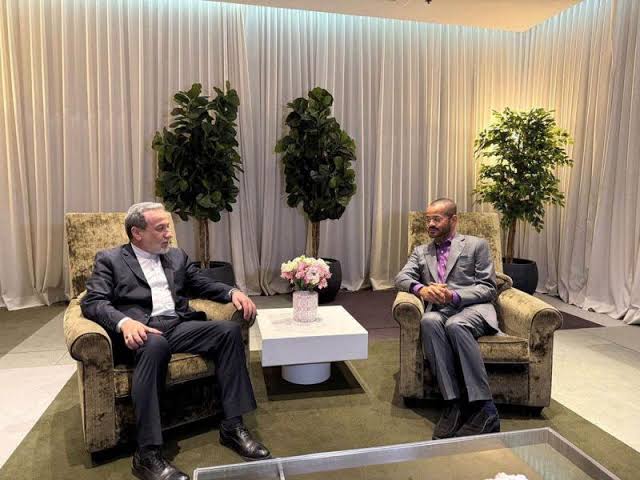
The negotiations, once again facilitated by Oman’s Foreign Minister Badr Albusaidi, represent the only structured channel of communication between two governments whose relationship has oscillated between hostility and cautious engagement for more than four decades. Albusaidi has described the discussions as marked by “unprecedented openness to new and creative ideas and solutions,” a diplomatic phrasing that suggests both urgency and fragility.
Yet the political climate surrounding the talks is anything but conciliatory. President Trump has stated that he prefers diplomacy, but he has simultaneously indicated that he is considering a limited military strike to compel Iranian concessions. The administration has offered few specifics about what precise commitments Washington seeks beyond an assurance that Iran will not develop nuclear weapons. The ambiguity has left allies and adversaries alike assessing the risks of miscalculation.
Read Also: PSG Surges Past Monaco To Reach Champions League Last 16
Iran’s delegation is led by Foreign Minister Abbas Araghchi, who has emerged as the principal architect of Tehran’s current negotiating posture. The American side is represented by special envoy Steve Witkoff and Jared Kushner, the president’s son-in-law. The format remains indirect, with Omani mediation bridging the absence of formal diplomatic relations between Washington and Tehran.
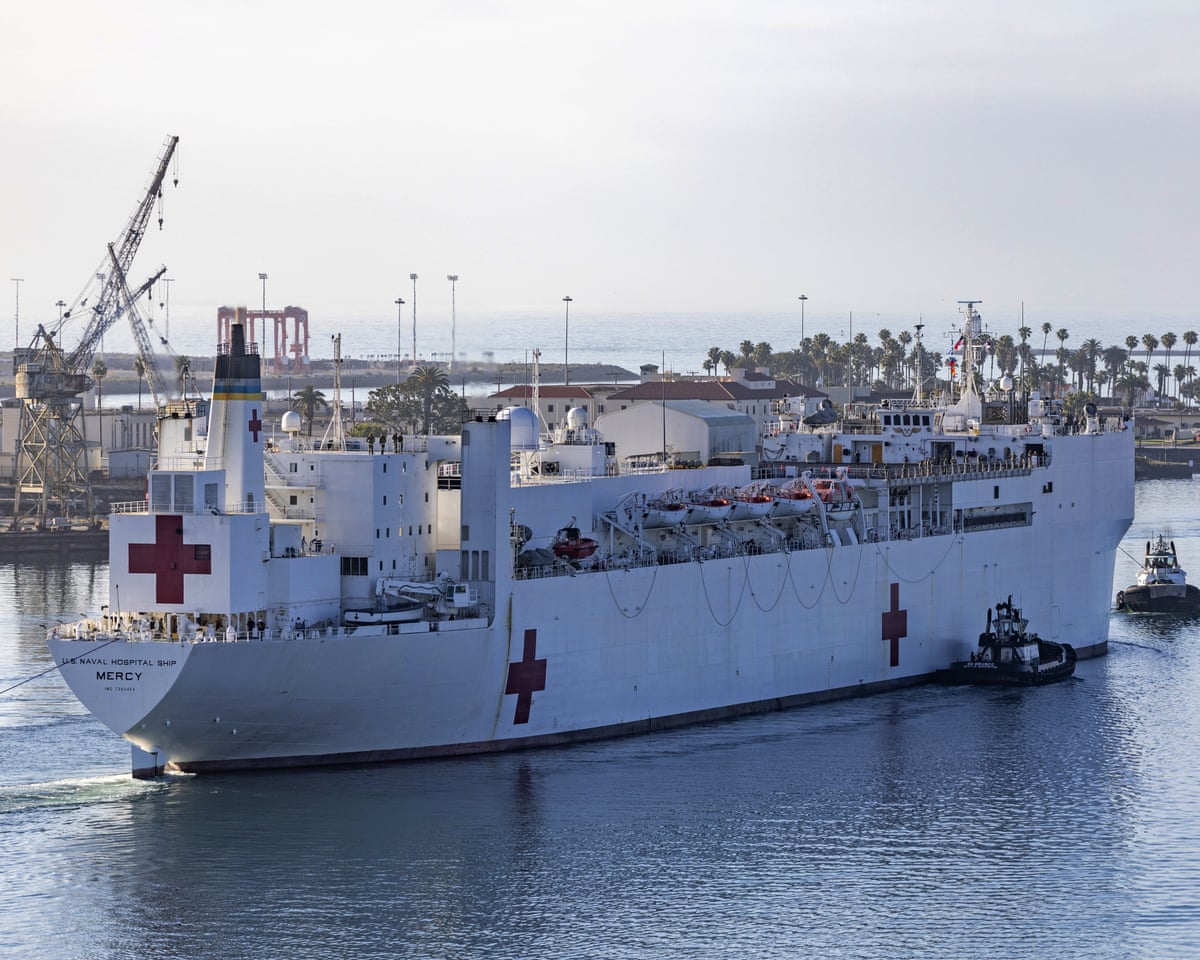
The military context is striking. In recent weeks, the United States has deployed thousands of additional troops to the region. Two aircraft carriers and accompanying warships now patrol strategic waterways, alongside fighter jets and refuelling aircraft. Trump has referred to the deployment as an “armada,” a choice of language that underscores both resolve and deterrence. For Gulf states and other US-aligned governments, the show of force is a reminder that the regional balance remains tightly linked to American calculations.
This escalation follows events eight months ago, when the United States struck three Iranian nuclear sites during a conflict involving Israel and Iran. At the time, Trump declared the facilities “obliterated.” Iran maintains that uranium enrichment activities were halted following the attacks. However, Tehran has not granted the International Atomic Energy Agency access to inspect the damaged facilities, leaving independent verification incomplete.
The dispute over enrichment lies at the centre of the current impasse. For decades, the United States and Israel have accused Iran of pursuing nuclear weapons capabilities under the guise of civilian energy development. Tehran rejects the allegation, insisting its programme is strictly peaceful. Nonetheless, Iran remains the only non-nuclear-armed state known to have enriched uranium to near weapons-grade levels. Approximately 400 kilograms of highly enriched uranium are believed to be in its stockpile.
Washington has pressed for Iran to cease enrichment activities entirely on its territory—a demand Tehran has categorically rejected. However, Iranian officials have signalled openness to technical compromises. Proposals under discussion reportedly include the creation of a regional consortium for uranium enrichment and arrangements to manage or relocate existing stockpiles. None of these ideas have been formally published, reflecting the sensitive nature of the negotiations.
In return for concessions, Iran seeks relief from sanctions that have severely constrained its economy. Critics of the Iranian government argue that easing sanctions would strengthen the clerical establishment at a time of domestic vulnerability. Indeed, Trump’s initial threats to bomb Iran last month were linked to the regime’s violent suppression of anti-government protests that reportedly resulted in thousands of deaths. Since then, the White House’s focus has shifted more explicitly to nuclear concerns.
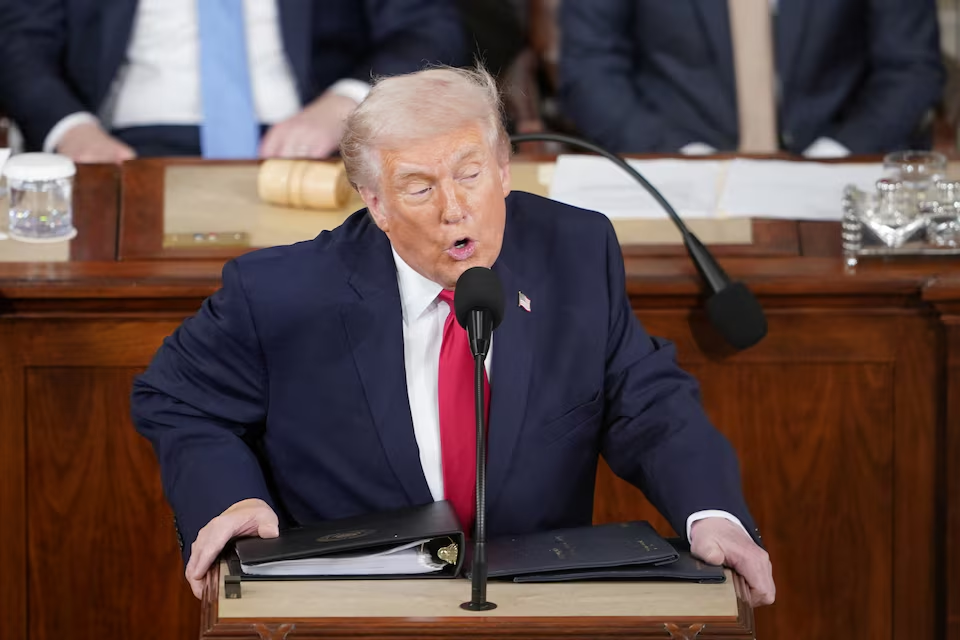
Trump’s public messaging has been forceful but imprecise. In his State of the Union address to Congress, he asserted that Iran was developing missiles that could “soon” reach the United States, though he did not provide supporting evidence. He also accused Tehran of attempting to revive its nuclear weapons programme after last year’s strikes and insisted that he could not permit what he described as “the world’s number one sponsor of terror” to obtain nuclear arms.
Hours before that speech, Araghchi stated on social media that Iran would “under no circumstances ever develop a nuclear weapon.” He described the present moment as a “historic opportunity” to craft an unprecedented agreement addressing mutual concerns. An Iranian foreign ministry spokesman subsequently accused Washington of propagating “big lies” regarding the nuclear programme, ballistic missiles, and casualty figures from the protest crackdown.
Beyond enrichment, other contentious issues loom. The United States has raised concerns about Iran’s ballistic missile programme and its support for allied armed groups across the region, an alliance Tehran refers to as the “Axis of Resistance,” encompassing Hamas in Gaza, Hezbollah in Lebanon, Iraqi militias, and the Houthis in Yemen. Iran has refused to discuss limitations in these areas, viewing them as essential components of its deterrence strategy.
Reports in American media, citing unnamed officials, suggest that Trump has considered an initial strike targeting Iran’s Revolutionary Guards or nuclear infrastructure to intensify pressure. If negotiations collapse, more expansive military options—including efforts aimed at toppling Supreme Leader Ayatollah Ali Khamenei—have reportedly been contemplated. The chairman of the Joint Chiefs of Staff has cautioned that military action could entangle the United States in a prolonged conflict, though Trump has asserted that General Dan Caine believes any confrontation would be “easily won.”
Iran has responded with explicit warnings that any attack would be met with retaliation against American military assets in the Middle East and against Israel. Regional governments aligned with Washington have quietly expressed concern that even limited strikes could ignite a broader war. Air power alone, some argue, would be unlikely to alter Iran’s internal political order.
Israeli Prime Minister Benjamin Netanyahu has cautioned against any agreement that excludes Iran’s ballistic missiles and regional proxies, reiterating his long-standing view that Tehran constitutes a central threat to Israel’s security. Observers believe Netanyahu may favour a more forceful approach aimed at regime change.
Read Also: Ukraine, US Open Reconstruction Talks As Kremlin Rejects Summit
The strategic asymmetry remains stark. The United States maintains the world’s second-largest nuclear arsenal. Israel is widely believed to possess nuclear weapons, though it neither confirms nor denies their existence. Against this backdrop, Iran’s insistence on sovereign enrichment is framed domestically as a matter of national dignity and strategic autonomy.
Ahead of Trump’s congressional address, Secretary of State Marco Rubio delivered a classified briefing to the bipartisan “gang of eight,” comprising senior congressional leaders and intelligence committee heads. Senate Minority Leader Chuck Schumer described the matter succinctly afterward: “This is serious, and the administration has to make its case to the American people.”
The Geneva talks thus proceed within a compressed window. Diplomacy is active, but so too is deterrence. For Africa and other regions observing from a distance, the outcome will shape not only Middle Eastern stability but global energy markets, security alignments, and the broader architecture of non-proliferation. Whether this moment yields compromise or confrontation now hinges on political choices that extend well beyond the negotiating table.