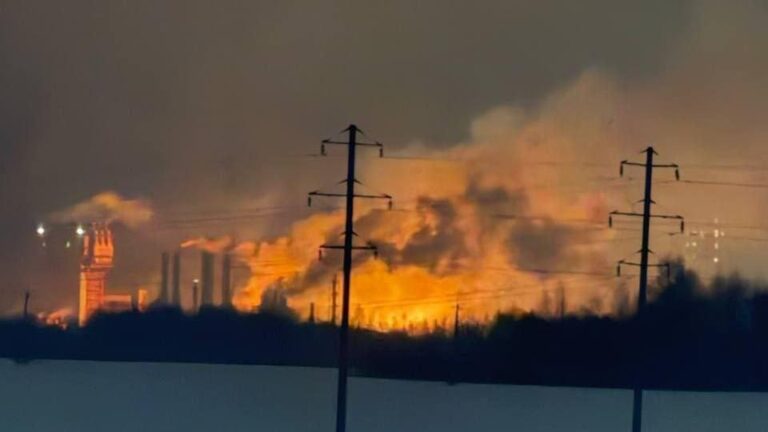
A fertilizer production plant in western Russia was attacked with a drone strike, leading to the deaths of seven people and leaving at least ten injured, according to Russian authorities.
The attack took place in Dorogobuzh, a city in the Smolensk region in western Russia, located 290 kilometres or 180 miles from the Ukrainian border.
According to Russia’s Investigative Committee, a total of 30 drones attacked the fertiliser plant, which produces fertilisers such as ammonium nitrate and nitric acid. Although these chemicals are primarily used in fertilizer production, they are also used in the production of explosives.
According to Smolensk regional governor Vasily Anokhin, “a barbaric terrorist attack by the Ukrainian Armed Forces hit a civilian plant.” He added that “the rescuers have contained a fire after the attack, and their operations are underway.”
He went on to say that “we are considering the possibility of evacuating people living nearby due to health concerns.” However, it is not clear whether the attack has led to toxic contamination in the area.
Read Also: Russia Can Sustain Ukraine War In 2026, IISS Report Warns
Following the attack, schools in Dorogobuzh went into online mode, and kindergarten classes were cancelled, Anokhin announced on social media. There has been no official reaction from the Ukrainian capital.
This attack in Dorogobuzh comes after a drone attack on Russia’s energy infrastructure. Over the weekend, a Ukrainian attack struck the Kaleykino oil pumping station in the Republic of Tatarstan, over 1,200 kilometres (750 miles) from the Ukrainian border. This oil pumping station is a vital part of the Druzhba pipeline, which carries Russian oil through Ukraine to Hungary and Slovakia.
A Russian oil pipeline operator, Transneft, announced that the attack had led to a reduction in Russian crude oil intake of 250,000 barrels per day.
These strikes are part of a rising trend in Ukrainian long-range drone strikes targeting Russian infrastructure and energy facilities.
Last autumn, repeated drone strikes forced Russia to stop its petrol exports until the end of 2025 due to temporary outages in its facilities.
The Dorogobuzh chemical plant manufactures chemicals that can be considered dual-use products because they can be used both in civil and military contexts.
The chemicals include ammonium nitrate, which can be used both as a fertilizer and in the production of explosives.
The Russian authorities did not confirm if the chemical plant stored explosives that could have contributed to the intensity of the fire.
The response of the authorities in Russia was swift in addressing the attack in Dorogobuzh, with the fire service reportedly having brought the situation under control in no time.
The governor, Anokhin, stated that they were “minimising risks to the population” while considering the possibility of evacuating the nearby population.
Read Also: Russia Experiences Pressure Four Years Into War In Ukraine
The casualties and injuries in the attack make this one of the most fatal reported drone attacks in Russia since the conflict began in February 2022. Although Ukraine has been using drones to attack Russia’s logistical and industrial targets, attacks that result in civilian casualties in Russia are relatively rare.
Analysts have pointed out that the targets, which include fertiliser plants and oil infrastructure, indicate Kyiv’s strategy of targeting critical Russian supply chains, rather than trying to occupy territory within Russia.
The strike at Kaleykino, which is part of the Druzhba pipeline, has economic implications for fuel supplies within Russia and for crude oil supplies to Hungary and Slovakia, which depend on supplies from Russia via Ukraine.
The war between Russia and Ukraine is now entering its fifth year, and neither side seems to be making significant military gains.
The military front in Ukraine, especially in the east, has been relatively static, and it seems that both sides are consolidating their positions, rather than launching major offensives.
International attempts to broker a peace deal between Moscow and Kyiv have not been successful. Ukrainian President Volodymyr Zelensky announced on Wednesday that a new round of US-brokered trilateral talks is set to take place in early March.
He stated that he instructed his top negotiator to work out agreements regarding a prisoner swap. Moscow is demanding that Kyiv cede control of the Donbas region, but Kyiv is insisting on sovereignty over its territory.
The Dorogobuzh attack highlights the growing geographical reach of the conflict and its effects on civilian zones and industrial sites in Russia.
Although there has been no confirmation of the attack from the Ukrainian side, it is the latest in a series of long-range drone strikes targeting both energy and chemical sites across Russia.
While investigators continue to analyze the Dorogobuzh attack, there is a focus on the potential dangers of the chemical spill.
Emergency measures, including the closure of schools and possible evacuations, are in place until the rescue efforts are complete.
There have been no reports of further casualties beyond the seven reported deaths and ten injured.