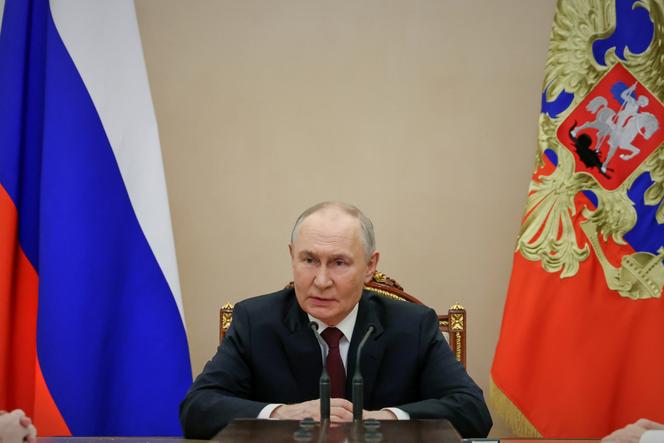
Russia spent a record $186 billion on defence in 2025, amounting to 7.3 per cent of gross domestic product, and retains sufficient military and economic capacity to sustain its invasion of Ukraine for a fifth year despite mounting manpower pressures and a slowdown in the pace of spending growth, according to the International Institute for Strategic Studies’ annual Military Balance report, published in London on Tuesday on the fourth anniversary of the full-scale invasion.
There is “little indication” that Russia’s ability to fight its war against Ukraine for a fifth year has diminished, and the country’s threat to Europe is growing, IISS Director-General Bastian Giegerich said at a press briefing accompanying the report’s publication.
The assessment, which draws on open-source military data covering more than 170 countries, was published as ceasefire talks between Russia, Ukraine, and the United States remained stalled on the core question of territorial settlement.
Russian defence spending rose by 3 per cent in real terms in 2025 after a 57 per cent jump in 2024, according to IISS data, and defence spending as a share of GDP rose to 7.3 per cent from 6.7 per cent a year earlier. Military spending had doubled in real terms since 2021, allowing Russia to spend more heavily on equipment and recruitment to sustain relentless ground and air attacks.
The $186 billion figure is more than double the proportion of GDP spent by the United States and approximately three times the level of the United Kingdom.
Russian defence spending could potentially fall this year from “a very, very high point,” said Fenella McGerty, IISS senior fellow for defence economics. After significantly raising defence spending over the past four years, Russia now faces stagnating growth, a widening fiscal deficit, and falling revenues due to Western sanctions. That deceleration, however, had to be read against the baseline those years of sharp growth had established. The question was not whether Russia’s defence spending was growing as fast as it once was, but whether the accumulated capability it had purchased was sufficient to sustain current operational intensity, and on that measure, the IISS concluded, it was.
Ukraine dedicated 21 per cent of its GDP to defence in 2025, up from 15 per cent a year earlier, and spent $44.4 billion, roughly a quarter of Russia’s total.
The asymmetry of that ratio, sustained over four years, has translated into the asymmetry visible on the frontline: Russia has been able to maintain a continuous high tempo of ground attacks and aerial bombardment while absorbing losses that would have forced a reconsideration of strategy in any earlier conflict.
The personnel picture presented by the report is one of sustained pressure approaching a structural limit. Russia suffered higher loss rates at the end of last year and into 2026, partly as it pursued a more aggressive offensive posture. Should that trend continue, Russia will face pressure on its current operational posture, though its armed forces can scale back offensive activity as a counterbalance.
Read Also: Russia Experiences Pressure Four Years Into War In Ukraine
Russia recruits an estimated 30,000 to 35,000 people a month, but IISS Russia expert Nigel Gould-Davies said there were growing signs the rate of recruitment had begun to fall short of monthly battlefield losses, and that the quality of new recruits was declining as recruiters were compelled to accept people with health problems and addiction issues.
“Russia does have as an ultimate fallback option the ability to conduct a wider mobilisation of the Russian state and the Russian people, should it really, really feel the need to bolster personnel resources for this war,” IISS senior fellow Henry Boyd said. A second enforced mobilisation, however, would carry significant political risk, given the domestic unrest that accompanied the September 2022 call-up, which drove hundreds of thousands of working-age men to flee Russia.
Global defence spending as a share of GDP reached 2.01 per cent in 2025, up from 1.89 per cent a year earlier and from 1.59 per cent in 2022, the highest level since the 2000s, according to McGerty. The redistribution of that spending is reshaping the global military balance in ways that extend well beyond the Ukraine theatre.
European NATO members on average spent 2.16 per cent of GDP on defence last year, and European military spending grew at record levels to $562.9 billion, up 12.6 per cent in a year, driven primarily by Germany and Poland. Europe now accounts for 21 per cent of global defence spending, up from 17 per cent in 2022. NATO countries have pledged to raise national defence budgets to 5.0 per cent of GDP by 2035, but could be constrained by their “limited fiscal headroom,” the IISS warned.
The drone and missile dimension of Russia’s threat to Europe has developed in parallel with the ground campaign in Ukraine and now presents a distinct and growing challenge. Russia has developed a modernised version of the Shahed-136 attack drone with a range of 2,000 kilometres, sufficient to strike targets across central and western Europe.
The IISS report highlighted NATO efforts to reinforce its eastern flank, pointing to drone incursions into Poland last September. “Unfortunately for European armed forces, there is a capability shortfall, leaving them ill-prepared for the kind of large-scale attacks that Ukraine is facing,” the report said. NATO Secretary-General Mark Rutte called in June for the alliance to increase its integrated air and missile defence capacity by 400 per cent. The IISS, describing this as an ambitious target, concluded that “NATO has some way to go.” Moves to address deficiencies were underway, including the German-led European Sky Shield Initiative and the Baltic Drone Wall programme announced in early 2025.
Read Also: Kenya Exposes Network Funnelling Citizens To Russia’s War
European dependence on the United States for military capabilities that cannot be quickly replicated domestically adds a further layer of strategic vulnerability. Giegerich said Europe would require “well into the 2030s” to reduce its military dependence on Washington for intelligence, cloud computing, and space assets, regardless of how rapidly it increased financial commitments.
The report was published on the fourth anniversary of Russia’s launch of its full-scale invasion on February 24, 2022. That invasion, which the Kremlin initially expected to resolve within days, has instead produced a grinding war of attrition now entering its fifth year, with the frontline having shifted only marginally over the past 18 months. The IISS report said it was difficult to imagine the war ending any time soon.