Japan plans to deploy a unit of medium-range surface-to-air missiles to Yonaguni Island in the westernmost part of the country, near Taiwan, by March 2031 the country’s defence minister stated.
The announcement marks the first time that Japan has given a timeline for the deployment of the missile unit since the plan was first made public in 2022.
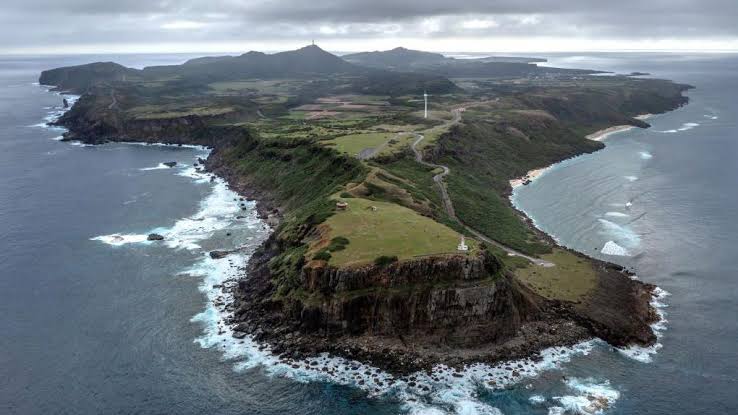
The announcement was made by Defence Minister Shinjiro Koizumi, who stated that the unit of the missile system will be deployed to Yonaguni Island, which is about 110 km away from Taiwan and can be seen from the island on clear days.
The system is expected to be able to track 100 aircraft at the same time and engage 12 aircraft simultaneously while offering 360-degree coverage with a range of about 50 km.
This unit will be equipped with medium-range surface-to-air missiles, which can intercept incoming aircraft and missiles,” Koizumi said.
He noted, however, that “the schedule for deploying this new unit may change depending on the progress of future facility improvements, but the current plan is for fiscal year 2030, which runs from April 2030 to March 2031.”
Read Also: Takaichi Bets On Supermajority To Remake Japan’s Defence Posture
Yonaguni has been developing into a military base in recent years.
Currently, it is used for coastal surveillance and hosts 160 members of Japan’s Self-Defence Forces. An electronic warfare unit, which can disable enemy communication and radar, is set to be deployed in fiscal 2026.
This was announced a day after China imposed export restrictions on 20 Japanese entities, citing security concerns.
This is a critical period because tensions between China and Japan have been rising since November, when Japanese Prime Minister Sanae Takaichi mentioned that if China attacked Taiwan, it would be a scenario where Japan would mobilize its Self-Defence Forces.
This was met by a sharp reaction from China, which included military exercises, drone operations close to Yonaguni, and other moves affecting trade, tourism, and culture.
China sees Taiwan as part of its territory and has not ruled out the use of force in the quest for unification with Taiwan.
There have been concerns among Japanese officials and analysts that a conflict with Taiwan could potentially involve the United States and other regional allies, including Japan.
Koizumi’s statement came in the wake of Takaichi’s landslide victory in the recent elections for parliament, giving her administration room to maneuver in its defense agenda.
The Yonaguni deployment is part of a wider effort by Japan to improve its missile defense capabilities.
So far, Japan has been using destroyers equipped with Aegis technology, Patriot missiles, and fighter jets for its air and missile defense.
The deployment of the Yonaguni unit will enable Japan to extend its air defense capabilities further into the region where tensions with China might arise. The deployment will also enhance Japan’s monitoring and defense capabilities in the southwestern island chain.
The Japanese authorities have stated that the missile defense system will enable the country to respond quickly to aircraft and missiles coming towards the island chain.
In this regard, Koizumi stated that the deployment is defensive in nature and aimed at maintaining Japan’s territorial integrity.
The announcement of the missile defense system deployment has yet to elicit a response from China.
Read Also: Japan Condemns China’s Remarks on “Reviving Militarism”
However, during Koizumi’s visit to Yonaguni Island in November, China stated that Japan sought to “create regional tension and provoke military confrontation,” a statement that was accompanied by drone flights in the region.
The drone flights were intercepted by Japanese fighter jets. Japan’s military deployment on Yonaguni Island has gradually increased in recent times, mirroring Japan’s rising concern about security conditions in the Taiwan Strait and its environs.
The island’s military facilities include coastal radar systems and basic logistical support. The addition of missile systems and electronic warfare capabilities would represent a major increase in military capabilities.
Although Japan has now fixed the timeline for deploying missiles on Yonaguni Island, it has also noted that actual problems might affect the deployment plan.
The current plan is subject to adjustment depending on the progress of facility improvements, according to Koizumi.
The deployment on Yonaguni Island marks Japan’s emphasis on improving defence preparedness for its southwestern island chain.
The announcement also reflects Japan’s determination to establish a strong deterrent capability in an increasingly uncertain environment.
As Takaichi’s administration continues to increase defence spending and capabilities, it has indicated that it might deploy and improve facilities in other island locations.
In the immediate term, the missile unit in Yonaguni is anticipated to support existing coastal surveillance and air defense assets.
The deployment of the missile unit is part of a move towards developing a multi-layered defense structure capable of responding to possible incursions in Japan’s southwestern sea areas.