Mexico deployed thousands of troops to manage escalating violence that occurred after the death of Nemesio Oseguera Cervantes, the most wanted drug lord in Mexico, authorities said. Oseguera Cervantes, also known as “El Mencho,” was the leader of one of the largest crime syndicates, the Jalisco New Generation Cartel (CJNG).
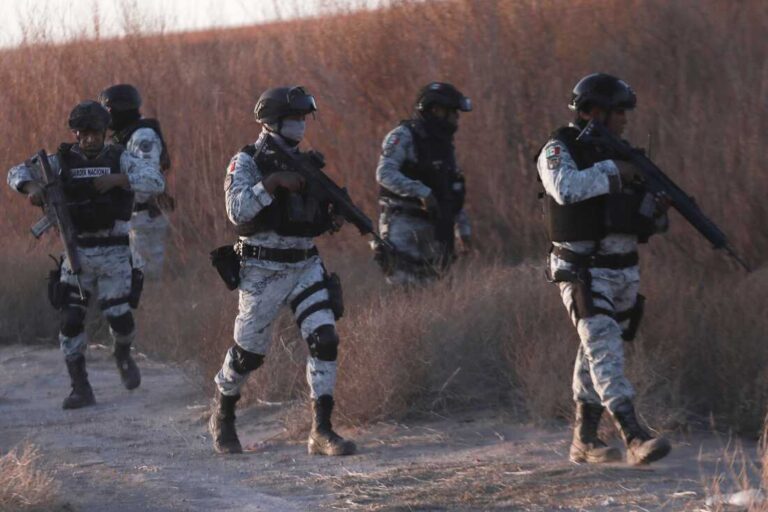
The Defence Secretary, Ricardo Trevilla, said that an additional 2,500 troops were deployed to western Mexico on Monday, bringing the number of troops deployed since Sunday to about 9,500.
The troops were deployed to different states that were affected by violence, authorities said. At least 20 states in Mexico reported violence that was related to the drug lord’s death.
El Mencho was arrested by special forces from Mexico on Sunday in Jalisco state, where he had attended a meeting with his romantic partner, according to Trevilla.
During his arrest, a shootout occurred between his bodyguards and special forces. Oseguera Cervantes suffered severe injuries and died while being taken from Tapalpa to Mexico City, according to the Defence Ministry.
Six of his bodyguards were killed, and three members of the Mexican military were injured during his arrest.
The security situation escalated after his death. Security Secretary Omar Garcia Harfuch reported that at least 25 members of Mexico’s National Guard had been killed in Jalisco state due to the violence.
Read Also: Cartel Leaves 25 Soldiers Dead In Coordinated Mexico Attacks
In addition, one prison guard, one member of a state prosecutor’s office, and 30 CJNG members were killed during clashes, according to AFP.
The operation that resulted in the capture and death of El Mencho has been commended by President Claudia Sheinbaum, with the government’s main priority being to ensure order within the country.
“There is calm, there is government, there are armed forces, and there is a lot of co-ordination,” Sheinbaum said.
The government stated that members of the cartel launched coordinated attacks in various towns and cities within Mexico where the CJNG has been active.
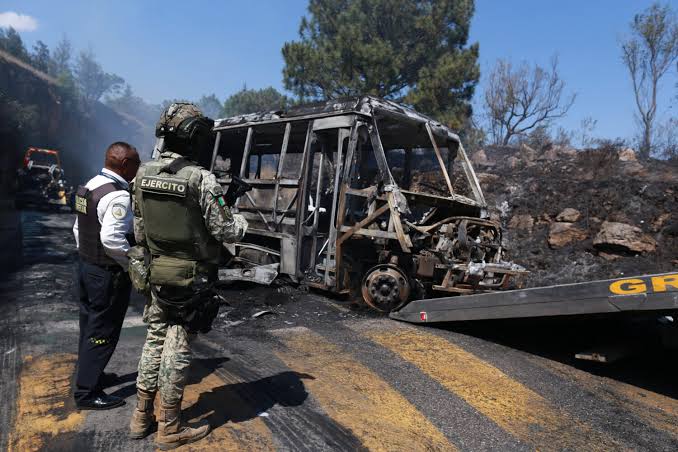
In some places, the members blocked roads by scattering nails and spikes on the roads, while in other places they burned buses and other vehicles. By Monday morning, most of the blocked roads had been cleared.
There were reports of damages to properties within some communities within Mexico, with dozens of banks and other businesses set on fire by members of the cartel.
According to BBC Verify, videos were confirmed to have been circulating online with smoke coming from buildings in Puerto Vallarta, a coastal town that attracts many tourists. Some videos showed tourists looking at a military helicopter flying low over some hotels.
There were also clashes between members of the cartel and the National Guard in San Isidro, a town located north of Guadalajara, the capital of Jalisco State.
BBC Verify verified a video showing members of the cartel, who were armed, shooting at a vehicle and at least four dead bodies near a car.
Read Also: Mexico’s Wanted Drug Lord “El Mencho” Dies In Military Raid
A video from a restaurant’s CCT camera showed a vehicle running into a National Guard truck, with members of the cartel shooting at the truck. The National Guard, however, did not provide information regarding the incident.
According to the Mexican Ministry of Defense, the operation was carried out by the army, with the support of the National Guard and the Air Force.
They said that information from U.S. agencies helped them locate El Mencho, but that no member of the U.S. agencies was involved in his arrest and death.
The U.S. State Department had offered a reward of $15 million for information that would lead to El Mencho’s arrest.
El Mencho, who had evaded arrest for many years, was accused of large-scale drug trafficking, criminal organization, and brutal attacks across Mexico.
The CJNG, under his command, had become one of the most potent criminal outfits in the nation, operating extensively across Jalisco and other regions.
The demise of El Mencho is likely to lead to significant changes within the cartel, though the government has warned that the situation might remain volatile in the near future.
Security experts have pointed out that the CJNG has a history of retaliatory attacks when their leadership is targeted.
Past operations against the cartel have resulted in coordinated attacks by the gang against law enforcement agencies and other infrastructure.
The deployment of extra troops is likely to help prevent the situation from becoming worse and protect the civilian population.
Local authorities in the affected regions had ordered the townspeople to remain indoors as the situation developed on Sunday.
Many streets were empty as the situation remained volatile.
The National Guard and soldiers had been deployed to the regions, trying to clear the roadblocks and secure strategic areas. In some regions, the military had used helicopters to monitor the situation from the air.