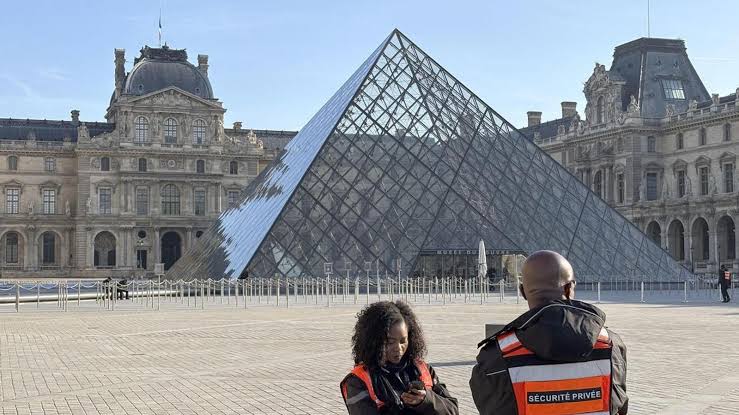
French President Emmanuel Macron on Tuesday accepted the resignation of the Louvre Museum’s chief amid mounting pressure over the museum’s recent operations and security breaches in the wake of the theft of precious jewels from the museum in Paris.
Laurence des Cars resigned amid growing pressure over the unresolved burglary in October in which thieves stole jewels valued at about $102 million from the Paris museum.
The museum has not recovered the stolen jewels, and investigators have not offered significant details about the investigation into the case and the identity of the suspects.
The burglary, considered one of the biggest security breaches in the museum’s recent history, has put the museum under scrutiny from government oversight committees and other French officials in charge of supervising the country’s museums.
“President Macron accepted her resignation while praising an act of responsibility at a time when the world’s largest museum needs calm and strong new impetus to successfully carry out large projects in terms of security and modernization.”
Macron did not indicate who would replace her or when the successor would be announced.
Read Also: Macron Ukraine Meeting Set For London Talks On Monday
Des Cars, an art historian who became the first woman to run the museum when she took office in 2021, initially enjoyed government support following the heist.
However, there has been growing criticism of the museum’s operations as problems have continued to build, with trade unions ratcheting up industrial action over working conditions and pay.
Since December, intermittent closures of the museum due to strikes by its staff have disrupted visitor access to one of the world’s most visited cultural attractions and disrupted tourism at a time when Paris is experiencing a strong rebound in visitor numbers following the COVID-19 pandemic.
Labor problems have been cited by union officials as visitor numbers rebounded at the museum. The museum’s operations have been strained due to budget constraints, the museum’s management has said.
The labor problems are the latest to add to the growing concern following the theft of the jewels about whether investment in security personnel and infrastructure has kept pace with the museum’s size and visitor numbers.
The debate also saw the involvement of French state auditors, who criticized the allocation of funds.
Based on the findings mentioned by officials who were aware of the review, the auditors questioned the allocation of funds for security upgrades and maintenance when the museum was acquiring new artworks at a high cost and when it was spending on promotional activities related to its reopening strategy after the pandemic.
Only a quarter of the Louvre Museum’s collection is currently available to the public at any given time.
This has been a problem for the museum for a long time, as it is related to the conservation needs of the artworks and the lack of space for exhibitions.
The acquisition of new artworks without the development of infrastructure to accommodate them further strained the facilities, which were already dealing with high attendance and old infrastructure.
Government officials have not publicly assigned direct responsibility for the security lapse that enabled the jewel theft, and investigations remain ongoing.
Authorities have said only that the burglars exploited vulnerabilities in surveillance and protection measures, prompting an internal review of procedures.
The Culture Ministry has since indicated that broader modernization plans are being prepared, including upgrades to monitoring systems and visitor management infrastructure.
Read Also: Sexist Cyberbullying Of Brigitte Macron Sees 10 Go On Trial
Des Cars had previously championed grand projects aimed at increasing the museum’s international connections and building new audiences following a decline in visitors caused by the pandemic’s closure measures.
Although she had been praised for stabilizing attendance and re-establishing the Louvre’s international reputation, critics argued that the museum’s leadership had been distracted by its cultural events.
The Louvre Museum attracts millions of visitors every year and is both a cultural institution and a symbol of France’s state heritage.
As such, the Louvre is a government-controlled institution, and any change in leadership is viewed through a political lens, especially considering the issue of public spending.
French authorities have stressed that ensuring uninterrupted services and rebuilding confidence in the management of the museum will be top priorities for the transition period.
The presidency announced that the next phase will be dedicated to ensuring stability while continuing with the planned process of modernization and security.
It has been noted that no interim director has been announced yet, nor has the Elysee Palace stated whether they will be considering an internal candidate or someone external to the institution.
The investigation into the theft of the jewels from the Louvre Museum last October is still ongoing with French authorities, with police and prosecution agencies working to trace the stolen jewels and ascertain how the security breach occurred.