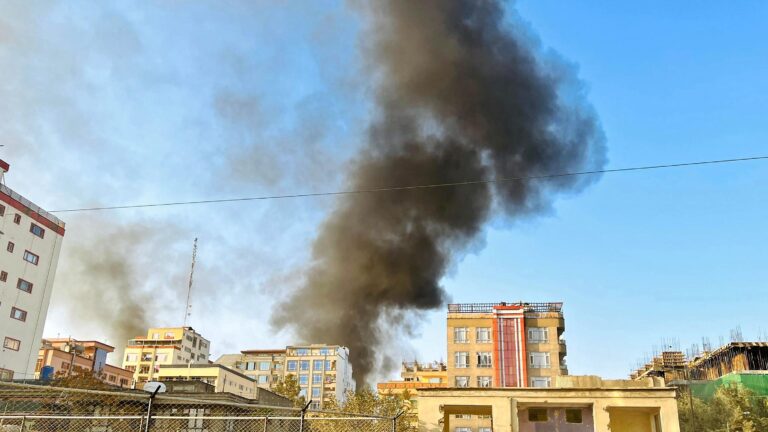
Pakistan’s military carried out air strikes against militant positions inside Afghanistan in the early hours of Sunday, hitting what Islamabad described as seven camps belonging to the Pakistani Taliban and the Islamic State’s Khorasan affiliate along a 2,600-kilometre frontier, the second such cross-border operation in four months and a sharp escalation that Kabul swiftly condemned as a violation of its sovereignty and an attack on civilian areas.
Afghanistan’s Defence Ministry said the strikes hit a religious school and residential homes in the border provinces of Nangarhar and Paktika, resulting in dozens of deaths and injuries, including women and children.
Afghan sources told Al Jazeera that at least 17 people were killed in Nangarhar alone. Local sources in eastern Afghanistan reported Pakistani aircraft struck areas in Nangarhar province including the districts of Khogyani, Ghani Khil and Behsud, while a separate strike hit a religious seminary in the Barmal district of Paktika province. Reuters was unable to independently verify the Taliban’s casualty figures.
Pakistan offered no confirmation of civilian deaths and characterised the operation in terms that admitted no ambiguity about intent. Information Minister Attaullah Tarar, writing on X before dawn on Sunday, said the military had conducted “intelligence-based, selective operations” against the seven camps and described the targeting as carried out with “precision and accuracy.”
He said Islamabad had “conclusive evidence” that recent attacks inside Pakistan, including a suicide bombing at a Shia mosque in the capital during Ramadan and multiple assaults on security posts in border districts, had been planned, resourced, and directed from Afghan territory by commanders of the Tehrik-e-Taliban Pakistan, which Pakistan refers to officially as Fitna al-Khwarij, alongside operatives of Islamic State Khorasan Province.
Read Also: Pakistan Buries 31 Victims Of Deadly Islamabad Bombing
The incident that most immediately preceded the strikes came on Saturday, hours before the operation was launched. A suicide bomber detonated an explosives-laden vehicle against a military convoy in Bannu district in northwestern Khyber Pakhtunkhwa province, killing two soldiers, one of whom was a lieutenant colonel. That followed an attack days earlier in Bajaur district, where a bomber backed by gunmen rammed a vehicle loaded with explosives into the perimeter wall of a security post, causing part of the compound to collapse and killing eleven soldiers and a child. Authorities subsequently confirmed the Bajaur attacker was an Afghan national.
Those two incidents were themselves part of a broader recent surge. On February 6, a suicide bomber detonated his explosives during noon prayers at the Khadija Tul Kubra mosque in Islamabad’s Tarlai Kalan area, killing at least 31 worshippers and wounding 170 others. Islamic State Khorasan Province claimed responsibility. The Pakistani military said at the time that planning, training, and indoctrination for the attack had taken place in Afghanistan. Bombings of that scale in the heavily secured capital remain rare and their occurrence during Ramadan added a specific religious and political dimension to Islamabad’s anger.
Afghanistan’s ruling Taliban condemned Sunday’s strikes in language that matched their severity. The Defence Ministry described the operation as “a blatant violation of national sovereignty” and “a breach of international law, the principles of good neighbourliness and Islamic values,” adding that “an appropriate and measured response will be taken at a suitable time.” “We hold the Pakistani military responsible for targeting civilians and religious sites,” a Taliban statement said.
The strikes complicated what had been a fragile and tentative diplomatic effort. A Qatar-mediated ceasefire has largely held since October, but direct talks in Istanbul failed to produce a formal peace agreement, and the underlying tensions over the TTP’s presence and operating freedom on Afghan soil have remained entirely unresolved. Just days before Sunday’s operation, Kabul released three Pakistani soldiers in a Saudi-mediated gesture that had been presented as a confidence-building measure. That goodwill evaporated within 72 hours.
The October precedent looms over the current crisis. Pakistan launched a major cross-border offensive that month, also targeting TTP positions inside Afghanistan, triggering retaliatory explosions in Kabul that Afghan officials blamed on Pakistan and a cycle of border clashes that killed dozens of soldiers, civilians, and suspected fighters before the Qatar-brokered ceasefire was agreed. After Saturday’s Bannu bombing, Pakistan’s military had warned publicly that it would not “exercise any restraint” and that operations against those responsible would continue “irrespective of their location,” language that signalled the strikes were being considered regardless of the diplomatic fallout.
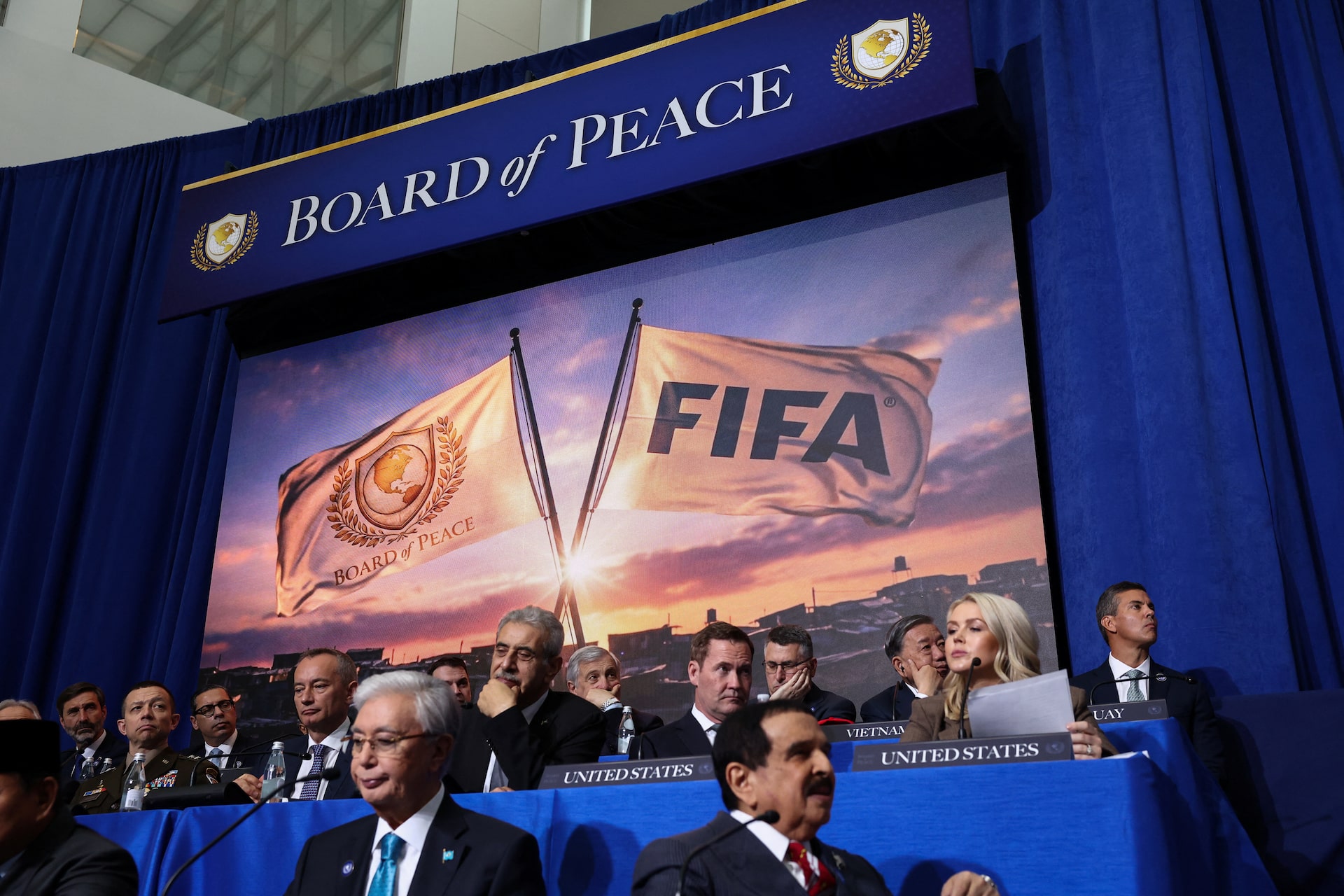
Read Also: Pakistan Joins Trump Gaza Peace Board In Ceasefire Push
The legal architecture invoked by Islamabad is the 2020 Doha Agreement between the United States and Afghanistan’s Taliban, under which the Taliban committed not to allow Afghan territory to be used by armed groups posing a threat to other countries.
Pakistan has repeatedly urged the international community to press Afghanistan’s Taliban authorities to honour that commitment, and reiterated the call on Sunday, saying the Taliban has failed to “undertake any substantive action” despite repeated bilateral engagement.
The Taliban government has consistently denied that the TTP operates from Afghan soil. The TTP, for its part, has claimed most major attacks in Pakistan while denying any operational base inside Afghanistan, a position that contradicts both Pakistani intelligence assessments and independent reporting by conflict monitors.
The TTP, while sharing an ideological lineage with Afghanistan’s Taliban and retaining close personal and financial ties with elements of the movement, is a distinct organisation. It was founded in 2007 and has waged a sustained insurgency against the Pakistani state for nearly two decades, staging thousands of attacks that have killed tens of thousands of soldiers and civilians. Its leadership has operated from eastern Afghanistan for much of that period, a geographic reality that Afghanistan’s Taliban has neither publicly confirmed nor credibly disputed.
Militant violence has increased significantly in Pakistan over the past three years, driven by both the TTP and outlawed Baloch separatist groups. Pakistan’s military has faced mounting pressure domestically to demonstrate that it can protect its citizens and soldiers from an adversary that strikes at will across a frontier it cannot fully monitor or control. Sunday’s strikes represent that pressure translated into action, at the cost of a diplomatic relationship that was already close to collapse.
No international response had been issued by the United States, China, or the United Nations as of Sunday morning. The border between Pakistan and Afghanistan remained effectively closed at multiple crossings, as it has been intermittently since October.