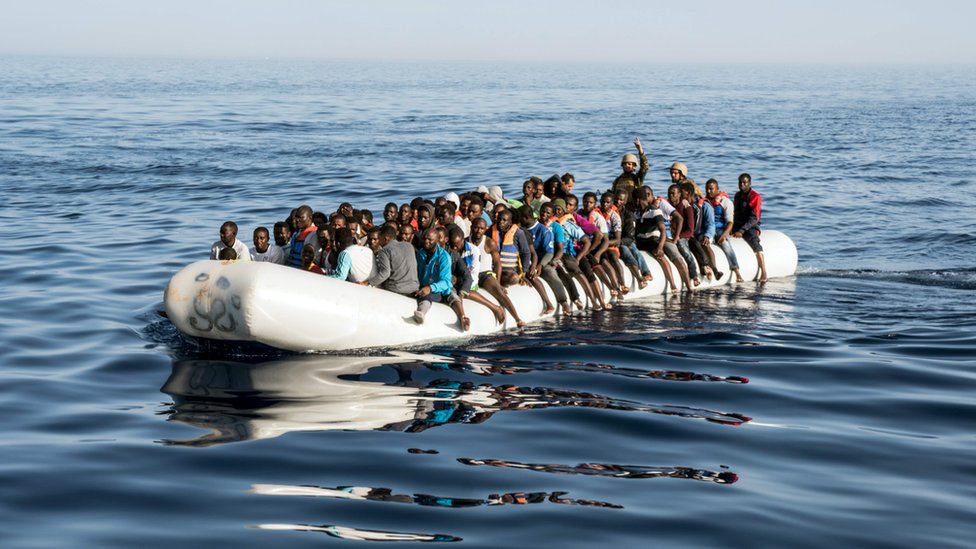
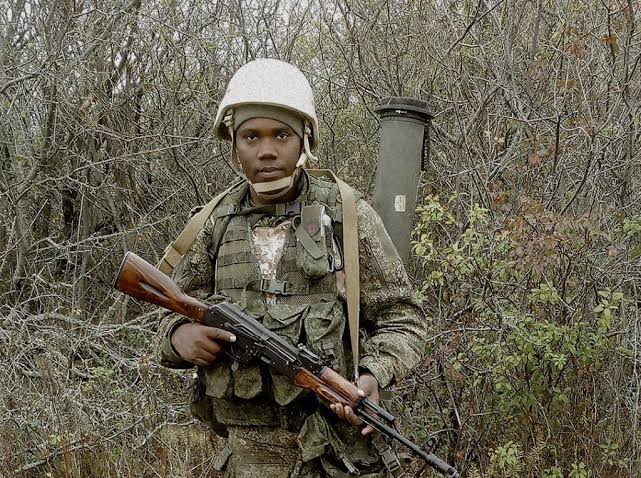
More than 1,000 Kenyan citizens have been recruited to fight for Russia in Ukraine, far exceeding previous government estimates, according to a classified intelligence report presented to Kenya’s National Assembly, a disclosure that has prompted parliamentary demands for prosecutions, a furious denial from Moscow, and confirmation that state officials at the highest levels of Kenya’s border and immigration machinery are implicated in the scheme.
The report, compiled jointly by Kenya’s National Intelligence Service and the Directorate of Criminal Investigations, was read into the public record by parliamentary majority leader Kimani Ichung’wah. It described a structured and coordinated operation involving unlicensed recruitment agencies working in concert with corrupt airport personnel, immigration officers, anti-narcotics officers, National Employment Authority officials, Directorate of Criminal Investigations staff, and, in the most diplomatically sensitive finding, employees at both the Russian embassy in Nairobi and the Kenyan embassy in Moscow.
The figure of 1,000 recruits represented a dramatic upward revision. Kenya’s government had previously estimated approximately 200 nationals had been drawn into the conflict. The new number, according to the majority leader, includes Kenyans who were already abroad and subsequently moved to Russia, not only those who departed directly from Kenyan soil.
The breakdown of their current status is grim in its precision. As of February 2026, 89 Kenyans are confirmed to be on the front line in active combat. Thirty-nine are hospitalised with serious injuries. Twenty-eight are missing in action. Thirty-five are being held in Russian military camps. Thirty have been repatriated. One is in detention. One has completed a military contract. At least one Kenyan, Clinton Nyapara Mogesa, 29, whose photograph in uniform was released by Ukraine’s Defence Intelligence, has been confirmed dead.
The recruitment model, as described to parliament, was built on deliberate deception. Unemployed Kenyans aged 20 to 50, with particular targeting of ex-military and ex-police officers, were approached through agencies presenting themselves as legitimate overseas employment brokers.
One agency on Koinange Street in central Nairobi posed as a government-backed job placement service by mimicking the branding of the official Kazi Majuu overseas employment initiative. Recruits were promised monthly salaries of up to 350,000 Kenyan shillings, approximately $2,400, plus signing bonuses of between 900,000 and 1.2 million shillings, and in some cases the prospect of Russian citizenship. None of that was disclosed to them upfront as compensation for frontline military service.
Upon arrival, recruits learned what they had signed. “They are told you are going to work as a guard… only to get there and you are taken to military camps,” Ichung’wah told lawmakers. “You’ve only trained for three weeks. They are basically just giving you a gun to go and die.” Those receiving explosives and weapons training were given as little as nine days before being deployed to combat positions.
Table of Contents
ToggleRead Also: Starlink Access Restricted For Russian Forces, Aiding Ukraine
The intelligence report named specific agencies and individuals. Global Face Human Resources Limited, run by Festus Arasa Omwamba, allegedly coordinated accommodation, Russian bank accounts, and liaison with employers. Talent Shepherd Agency was separately identified. Individuals including Edward Kamau Gituku and Joel Muchiri Ngugi allegedly held recruits at GreatWall Apartments in Athi River ahead of departure. Bank accounts linked to those individuals have since been frozen.
Medical examinations for recruits were conducted at Inspocare Health Limited, near Muthaiga Square in Nairobi, and at Universal Trends Medical and Diagnostic Centre near City Hall.
Both clinics have since obtained court orders restricting investigators from accessing patient records. The legal manoeuvres have complicated prosecution efforts.
Travel logistics evolved as enforcement tightened. Initially, recruits departed Nairobi’s Jomo Kenyatta International Airport on tourist visas, transiting through Istanbul or Abu Dhabi before entering Russia. As interceptions at JKIA increased, trafficking networks adapted, rerouting individuals through Uganda, the Democratic Republic of Congo, South Africa, and other neighbouring states to avoid detection. Ichung’wah told parliament that rogue officials within the immigration and airport systems had actively assisted recruits in passing through checkpoints undetected.
The finding that implicated staff at both embassies drew the most pointed parliamentary response.
“Our ambassador in Moscow must be able to identify the officers within the embassy that colluded with these criminals to facilitate the travel of innocent Kenyans to go and work on the frontline,” Ichung’wah said. “Government offices are not to be used for criminal activities.”
Russia’s response was swift and categorical. The Russian Embassy in Nairobi issued a statement on Thursday describing the NIS report’s allegations as “dangerous and misleading propaganda,” saying the embassy had never issued visas to Kenyan citizens with stated intent to participate in military operations in Ukraine, and had never encouraged any Kenyan to do so. The embassy acknowledged that Russian law permits foreign nationals legally present in Russia to volunteer for its armed forces, but said this was distinct from organised recruitment. It called for bilateral dialogue and said it was willing to engage with Kenyan authorities constructively on labour migration and security cooperation agreements.
Members of parliament expressed alarm at the scale and sophistication of the operation. Taita Taveta Woman Representative Mizighi Haika Mnene said rogue agencies exploit desperate Kenyans daily, while Baringo North MP Kipkoros Makilap called the revelations “chilling” and urged families and communities to remain vigilant. Several MPs pushed for immediate arrests and demanded that the government move beyond investigation to prosecution.
The Kenya government has not been passive. Foreign Minister Musalia Mudavadi confirmed last week that more than 600 recruitment agencies suspected of overseas labour fraud had been shut down, and that 27 Kenyans who had fought in Russia had been repatriated and were receiving psychological support and what officials described as “de-radicalisation” assistance.
Read Also: U.S Citizens Jailed In Russia Over Attempted Export Arm Parts
Mudavadi is scheduled to travel to Moscow next month to press Russian authorities on curbing illegal enlistment, with Kenya seeking bilateral agreements that would explicitly exclude military conscription from permissible labour arrangements.
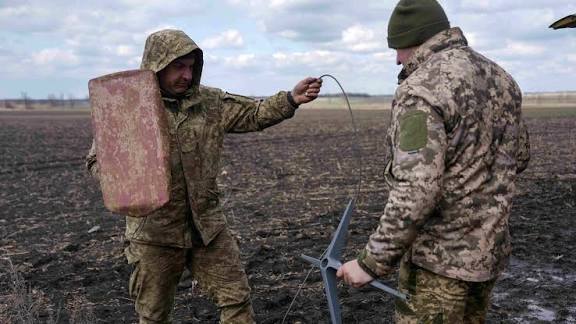
Kenya’s government has publicly described its citizens being used as “cannon fodder.” The description echoes findings from broader African continent-wide investigations. Ukraine’s foreign minister said in November that more than 1,400 people from 36 African countries had been recruited to fight for Russia. Ukraine has separately faced criticism for its own efforts to recruit foreign nationals, including Africans, to its side. Ukrainian officials have warned that any foreign fighter serving with Russian forces will be treated as an enemy combatant, and that the only pathway to safety is surrender and prisoner-of-war status.
The alleged mastermind of the Kenyan recruitment network remains under active investigation. Further arrests were expected, authorities said, without specifying a timeline.