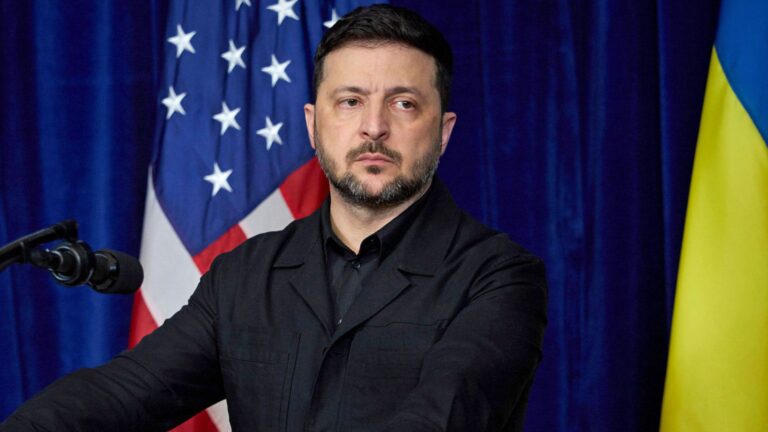
Ukrainian and Russian negotiators reconvened Wednesday for a second day of U.S.-mediated peace talks in Geneva, as President Volodymyr Zelenskiy publicly pushed back against what he described as undue American pressure to make territorial concessions, warning that any deal requiring Ukraine to surrender land Russia has not captured would be rejected by voters in a referendum.
The talks, which resumed after six hours of what Russian sources characterized as “very tense” discussions Tuesday, unfolded as President Donald Trump intensified public demands that Ukraine “come to the table fast” while remaining largely silent about Moscow’s responsibilities for ending the nearly four-year conflict. Zelenskiy told U.S. website Axios in an interview published Tuesday that it was “not fair” Trump repeatedly calls on Ukraine rather than Russia to compromise, suggesting the American president’s rhetoric creates asymmetric pressure that undermines Kyiv’s negotiating position.
“I hope it is just his tactics and not the decision,” Axios quoted Zelenskiy as saying, a formulation that conveyed both his uncertainty about Trump’s ultimate intentions and his concern that Washington might prioritize rapid settlement over Ukraine’s sovereignty and territorial integrity.
The Ukrainian leader thanked Trump for organizing the negotiations and said private conversations with U.S. envoy Steve Witkoff and the president’s son-in-law Jared Kushner did not carry the same tone of urgency or implicit threat as Trump’s public statements, suggesting a disconnect between the president’s messaging and the approach his negotiators employ behind closed doors.
Trump told reporters Monday aboard Air Force One that “Ukraine better come to the table fast. That’s all I’m telling you,” a comment that placed responsibility for progress squarely on Kyiv while offering no parallel demands that Moscow demonstrate flexibility or willingness to withdraw from territories its forces occupy. The formulation reflected Trump’s transactional view of diplomacy, in which he appears to believe the party most desperate for peace carries greater obligation to compromise regardless of which side initiated aggression or controls disputed land through military force.
Ukraine’s lead negotiator Rustem Umerov, who heads the National Security and Defence Council, said Tuesday’s discussions focused on “practical issues and the mechanics of possible decisions” without providing specifics about what options were explored or how far apart the sides remained on fundamental questions.
Russian officials made no public comments about the substance of negotiations, maintaining their customary silence during diplomatic processes where Moscow prefers to control messaging through official channels rather than allow leaks or unofficial characterizations. However, Russian news agencies quoted an unnamed source describing Tuesday’s talks as “very tense” and lasting six hours across different bilateral and trilateral formats, a timeline suggesting negotiators cycled through various configurations including direct Ukraine-Russia discussions, U.S.-Russia exchanges, and three-way sessions attempting to bridge positions. Before talks began, Umerov had cautioned against expecting breakthrough, saying the Ukrainian delegation approached Geneva “without excessive expectations” given the gulf separating the sides on territorial control, security guarantees, and other core issues.
In his nightly address Tuesday, Zelenskiy said he was awaiting reports from the Geneva team before commenting substantively on progress.
“We are ready to move quickly toward a worthy agreement to end the war,” he said, questioning whether Russia shared that readiness. “The question for the Russians is: Just what do they want?”
Read Also: U.S Citizens Jailed In Russia Over Attempted Export Arm Parts
The Geneva round follows two previous sessions of U.S.-brokered negotiations held in Abu Dhabi that concluded without major breakthrough as Ukraine and Russia remained fundamentally opposed on key issues, most critically the future status of territories Russia occupies including Crimea, which Moscow annexed in 2014, and approximately 20 percent of eastern Ukraine captured since the February 2022 invasion. Moscow demands Kyiv formally cede the entirety of four regions Russia claims to have annexed even though its forces do not fully control those areas, while Ukraine insists on restoration of its 1991 borders as the basis for any sustainable peace.
Early Wednesday, Witkoff sought to project optimism about the process despite Zelenskiy’s public complaints and the absence of concrete progress announcements.
“President Trump’s success in bringing both sides of this war together has brought about meaningful progress, and we are proud to work under his leadership to stop the killing in this terrible conflict,” he wrote on X. “Both parties agreed to update their respective leaders and continue working towards a deal.”
Whether Witkoff’s characterization reflects genuine movement or represents diplomatic spin designed to maintain momentum and justify Trump’s investment in mediation remains unclear. Past rounds of talks produced similar positive American assessments that were not matched by substantive breakthroughs, suggesting U.S. officials may define success partly in procedural terms, getting adversaries in the same room repeatedly, rather than measuring actual compromise on disputed questions.
Zelenskiy’s decision to publicly air grievances about American pressure represented a calculated risk, potentially complicating relations with Washington at a moment when Ukraine depends on U.S. military aid, intelligence support, and diplomatic backing to sustain its defense against Russia’s larger forces. However, remaining silent while Trump rhetorically equated Ukrainian and Russian responsibilities for deadlock could undermine domestic support in Ukraine, where the public overwhelmingly opposes territorial concessions and expects leadership to resist external pressure that ignores Russian aggression.
The Ukrainian president emphasized that any agreement requiring Ukraine to relinquish territory in eastern Donbas that Russia has not captured militarily would face rejection in the referendum Kyiv has promised to hold before ratifying peace terms. That statement aimed to remind Trump that even if Zelenskiy personally agreed to concessions under American pressure, he could not implement them without voter approval, a constraint that reduces his flexibility while providing political cover to resist demands he views as unreasonable.
Read Also: Russia Warns Europe Against Seizing Its Ships
Ukrainian officials have suggested privately that Trump’s public comments may represent negotiating theater designed to pressure both sides by appearing to favor Moscow’s position, thereby incentivizing Russia to offer meaningful compromises rather than assume American support for maximalist demands. However, that interpretation depends on Trump ultimately backing Ukraine if negotiations fail, an assumption that appears increasingly uncertain given the president’s statements and his administration’s apparent eagerness to declare success and exit the mediating role regardless of whether terms prove sustainable.
Russia occupies approximately 18 to 20 percent of Ukrainian territory depending on how contested zones are calculated, including all of Crimea and significant portions of Donetsk, Luhansk, Zaporizhzhia, and Kherson regions. Moscow claims sovereignty over those four regions based on sham referendums conducted under military occupation in September 2022 that Ukraine and most countries rejected as illegal and illegitimate. Putin has repeatedly insisted Ukraine must recognize Russia’s annexations as a precondition for peace, a demand Kyiv categorically rejects and that no Ukrainian government could accept without collapsing domestically.
Beyond territorial questions, negotiations must address security guarantees that would deter future Russian aggression after any settlement.
Ukraine seeks NATO membership or equivalent defense commitments backed by American and European military presence, while Russia opposes NATO expansion and demands Ukrainian neutrality. Those incompatible positions have proven impossible to reconcile across three rounds of talks, suggesting territorial disputes may be easier to finesse through temporary arrangements than security architecture questions that go to each side’s existential concerns.
The inclusion of military chiefs from all three countries in Geneva signals discussions may focus partly on technical ceasefire monitoring mechanisms rather than attempting to resolve political deadlocks, a pragmatic approach that could produce modest progress on confidence-building measures even if fundamental disagreements persist. Earlier Abu Dhabi talks examined potential demilitarized zones and military-to-military communication channels that might prevent accidental escalation during ceasefire periods, laying groundwork for implementation if diplomats eventually agree on terms.
Whether Wednesday’s second session produces tangible progress or concludes with further commitments to continue talking without breakthrough will influence both Trump’s patience with the process and Ukrainian public confidence that negotiations serve their interests rather than merely providing diplomatic cover for pressure to accept unfavorable terms.