South Korea formally expressed regret to North Korea on Wednesday after confirming that three civilians conducted four unauthorized drone flights into the North’s airspace between September and January, incursions that crashed two aircraft on North Korean territory and prompted Pyongyang to warn of “terrible situations” if such provocations continued.
Unification Minister Chung Dong-young disclosed the findings of an ongoing joint military-police investigation during a press conference, saying authorities were probing the three civilians on suspicion of violating aviation safety laws and breaching criminal statutes against benefiting the enemy. Some officials at South Korea’s military intelligence agency and the National Intelligence Service were also under investigation for alleged involvement with the trio, Chung said, though he did not elaborate on what role security personnel may have played or whether they provided equipment, intelligence, or logistical support.
“We express official regret to the North,” Chung said, adding that President Lee Jae Myung’s government was taking the drone incursion incidents “very seriously” as violations that harmed inter-Korean ties just as Seoul seeks to revive dialogue after years of frozen relations.
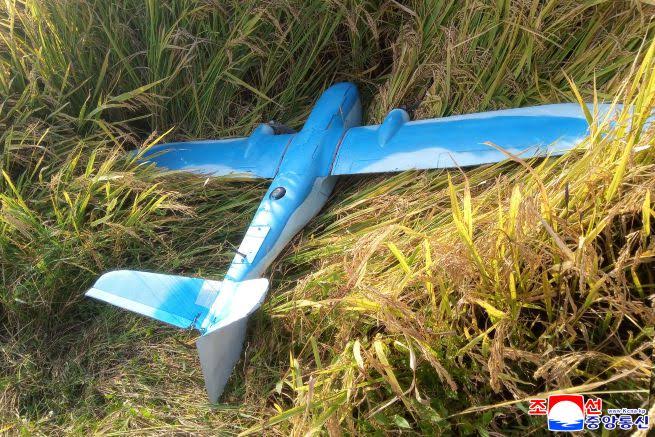
The investigation confirmed four separate flights, the first on September 27, 2025, from Incheon’s Ganghwa County, followed by two more launches on November 16 and 22 from undisclosed locations, and a fourth on January 4 this year. Drones from the September and January flights crashed in North Korean territory, findings that matched incidents Pyongyang had previously disclosed through state media complete with photographs of alleged wreckage. On the two other occasions, drones returned to Paju, a border settlement in South Korea, after flying over Kaesong, a North Korean city just across the demilitarized zone.
North Korea reacted angrily to the intrusions, with Kim Yo Jong, the powerful sister of North Korean leader Kim Jong Un, issuing statements demanding Seoul investigate and warning that provocations could result in “terrible situations.” Her language, while characteristically harsh, stopped short of explicit military threats and suggested Pyongyang was gauging whether Lee’s government would acknowledge wrongdoing and take preventive measures, or deflect responsibility as previous South Korean administrations often did.
Read Also: North Korea Warns Of Retaliation Over Drone Incursion
Kim’s response to Chung’s initial expression of regret earlier this month called his comments “sensible behavior” but insufficient as a government response, demanding stronger measures to prevent recurrence. Her relatively measured tone, by North Korean standards, reflected calculation that Lee’s liberal government, which prioritizes dialogue and peaceful coexistence, might prove more receptive to engagement than conservative predecessors who took hardline positions.
Chung also addressed controversial drone operations conducted under ousted President Yoon Suk Yeol, expressing regret over what he characterized as “an extremely dangerous incident aimed to induce an attack against South Korea by sending 18 drones on 11 occasions, to sensitive areas in North Korea including the airspace over the Workers’ Party office.”
The allegation that Yoon deliberately provoked North Korea to justify domestic political maneuvers formed part of prosecutors’ indictment against the former president, who was impeached in March 2025 and formally removed from office in April after massive protests paralyzed Seoul. South Korean prosecutors have charged Yoon with multiple offenses including aiding an enemy state, accusing him and his military commanders of ordering covert drone operations into the North to raise tensions and create security pretexts for his December 2024 martial law decree, an authoritarian power grab that sparked the crisis leading to his downfall.
Yoon denies wrongdoing, arguing his actions were necessary responses to genuine threats and that prosecutors are conducting a politically motivated witch hunt.
Read Also: South Korea Drone Investigation Targets Possible Civilian Flights
The controversy over drones sent during Yoon’s tenure versus those dispatched by civilians under Lee’s administration highlights the fraught politics surrounding inter-Korean relations, where hawkish factions accuse liberals of appeasing Pyongyang while progressives charge conservatives with manufacturing crises for domestic political advantage. The Lee government has sought to draw clear distinctions between unauthorized civilian actions it condemns and systematic provocations it alleges Yoon orchestrated at state level.
Chung announced Wednesday that South Korea plans to strengthen penalties for unauthorized drone flights to the North, including up to one year imprisonment or 10 million won ($6,928) fines, sanctions designed to deter future incidents that could derail diplomatic openings or trigger military confrontation in the world’s most heavily armed border region. A clause will also be added to South Korea’s inter-Korean relations development act explicitly prohibiting actions that heighten tensions on the peninsula, he said.
The minister disclosed plans to seek partial reinstatement of the September 2018 inter-Korean military agreement, which created buffer zones and no-fly zones aimed at reducing accidental clashes but was suspended by Yoon’s government in 2023 after North Korea launched a spy satellite. “In coordination with military authorities, the government will proactively review and pursue restoration of the Sept. 19 inter-Korean military agreement, including possible reestablishment of no-fly zones, in order to prevent accidental clashes and rebuild military trust,” Chung said.
Whether North Korea will reciprocate Seoul’s gestures or exploit them for propaganda while continuing weapons development remains uncertain.
Pyongyang has so far remained unresponsive to Lee’s offers of dialogue since he took office in May 2025, instead focusing on ballistic missile tests, military parades showcasing new weapons systems, and strident rhetoric about strengthening nuclear deterrence against what it characterizes as U.S. and South Korean aggression.
The drone episode has complicated Lee’s efforts to fulfill campaign promises of engaging North Korea and reducing military tensions through confidence-building measures, economic cooperation proposals, and humanitarian projects.
His administration argues that dialogue offers the only path to peacefully resolving nuclear standoff and eventual reunification, while critics warn that Pyongyang interprets conciliatory gestures as weakness and exploits diplomatic openings to extract concessions without reciprocal steps.
The three civilian suspects reportedly include university students and activists associated with groups that have previously sent propaganda balloons into North Korea carrying leaflets critical of the Kim regime, USB drives containing South Korean entertainment, and other materials designed to undermine Pyongyang’s information control. Such balloon launches, conducted by defector organizations and conservative activists, have periodically strained inter-Korean relations when North Korea demanded Seoul stop them and threatened retaliation.