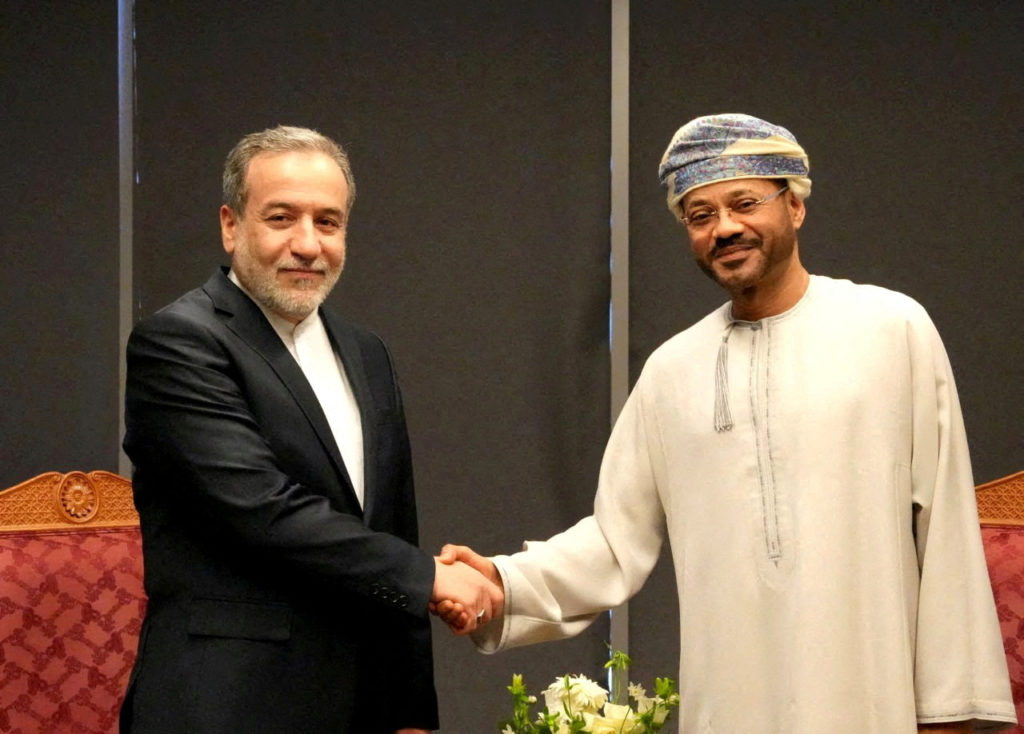
Iranian Foreign Minister Abbas Araqchi sat down with senior American officials in Geneva on Monday for the first direct nuclear negotiations between Tehran and Washington in more than a decade, opening talks that both sides described publicly with cautious optimism but that are constrained by fundamental disagreements over Iran’s right to enrich uranium and the scope of any eventual agreement.
The Geneva session marked the first face-to-face contact between U.S. and Iranian officials since the 2015 signing of the Joint Comprehensive Plan of Action, from which President Donald Trump withdrew during his first term in 2018. All subsequent diplomatic contacts, including two rounds of preliminary discussions in Oman in early February, were conducted indirectly through intermediaries.
The U.S. delegation was led by Special Envoy Steve Witkoff and Trump’s son-in-law and senior adviser Jared Kushner. Araqchi led the Iranian side, accompanied by a team of nuclear and sanctions experts.
Before the talks convened, Araqchi met International Atomic Energy Agency Director General Rafael Grossi for what he described as “deep technical discussions.” The IAEA has been pressing Iran for months to account for a stockpile of approximately 440 kilograms of highly enriched uranium that was at Iran’s declared nuclear facilities before the joint U.S.-Israeli strikes on Natanz, Fordow, and Isfahan in June 2025, and to permit the resumption of inspector access to those three bombed sites, all of which Iran has restricted since the attacks.
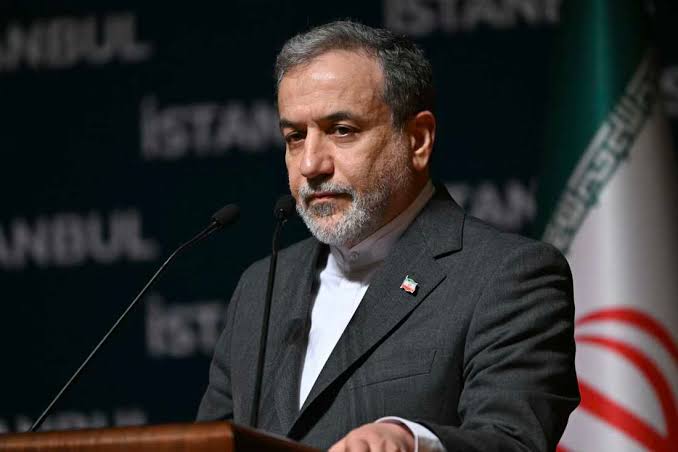
Araqchi said Iran arrived in Geneva with substantive proposals. “I am in Geneva with real ideas to achieve a fair and equitable deal,” he wrote on X. He added a pointed qualifier: “What is not on the table: submission before threats.”
After the talks concluded later on Monday, Araqchi described them as “constructive,” signaling sufficient progress to justify continued engagement while declining to provide specifics. A further round of talks in Geneva was announced, without a confirmed date.
Read Also: Netanyahu Demands Full Dismantlement Of Iran Nuclear Program
The diplomatic effort unfolds under significant military pressure. The United States has deployed a second aircraft carrier to the Middle East alongside the USS Harry S. Truman already in the region, and U.S. officials have told Reuters that Washington is preparing for the possibility of a sustained military campaign should the negotiations fail to produce an agreement. The military posture is designed to reinforce that the Trump administration’s stated preference for a negotiated outcome is backed by a credible threat of force.
Adding its own dimension to the military signaling on Monday, Iran’s civil defense organization conducted a chemical defense drill at the Pars Special Economic Energy Zone, the country’s critical gas hub on the Persian Gulf coast, in what officials described as routine preparedness exercises but which analysts noted was timed conspicuously with the Geneva talks.
The two sides’ positions remain far apart on the central question of enrichment. Iran’s Deputy Foreign Minister Majid Takht-Ravanchi told the BBC on Sunday that Tehran was ready to compromise on elements of its nuclear program, including potentially diluting its stockpile of 60 percent highly enriched uranium, in exchange for a phased lifting of sanctions. He said the ball was “in America’s court to prove that they want to do a deal.” Iran insists, however, that zero enrichment on Iranian soil is categorically unacceptable, arguing it constitutes a sovereign right under the Non-Proliferation Treaty.
Washington has sought to expand the talks to address Iran’s ballistic missile program and its support for regional proxy groups, issues Tehran has firmly refused to include in the current agenda. Iran’s position is that the only subjects it will discuss are nuclear restrictions and sanctions relief.
The U.S. proposal under discussion, according to reporting by Axios and The New York Times citing officials familiar with the negotiations, involves a suspension of uranium enrichment for three to five years alongside the removal of at least 450 kilograms of enriched material from Iranian territory. The framework would stop short of requiring the permanent dismantlement of Iran’s enrichment infrastructure, but it is still far beyond what Iran has indicated it is willing to accept.
Read Also: U.S. and Iran Set for Second Round of Nuclear Talks in Geneva
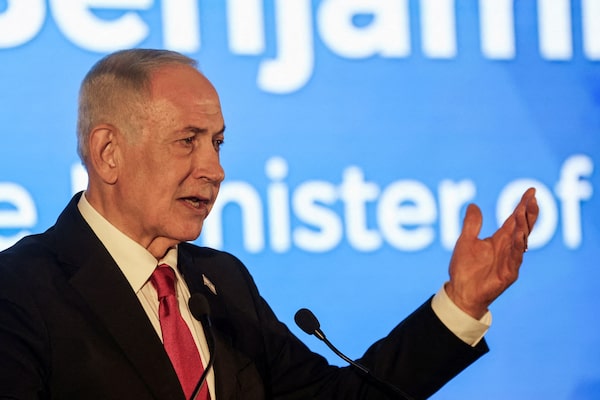
Israeli Prime Minister Benjamin Netanyahu has publicly set even more demanding conditions. In a speech in Jerusalem on Sunday, Netanyahu said he told Trump that any agreement must include the physical dismantlement of all enrichment equipment and infrastructure, not merely a pause in operations. “There shall be no enrichment capability, not stopping the enrichment process, but dismantling the equipment and the infrastructure that allows you to enrich in the first place,” he said, adding that all enriched material must physically leave Iranian territory. He described himself as skeptical that any satisfactory deal was achievable.
Netanyahu’s demands exceed the Trump administration’s own stated negotiating position, creating a visible gap between Washington and Jerusalem even as the two governments coordinate closely on Iran policy. Trump reportedly told Netanyahu during their February 11 White House meeting that military action against Iran’s ballistic missile program would be supported if diplomacy fails, but that he intended to pursue the talks first.
The talks carry extraordinary stakes. Iran’s supreme leader, Ayatollah Ali Khamenei, has in recent months said he was prepared to authorize enrichment suspension if the U.S. provides credible guarantees of sanctions removal, a shift from his prior categorical rejection of any enrichment limits. The June 2025 joint U.S.-Israeli strikes on Iranian nuclear sites, which inflicted severe damage on centrifuge infrastructure at Natanz and Fordow while killing several senior nuclear scientists, substantially degraded Iran’s near-term enrichment capacity and may have altered the government’s cost-benefit calculation.
Iran’s domestic situation adds further complexity. A government crackdown on protests that erupted in late 2025 has killed more than 7,000 people according to human rights organizations, placing the administration of President Masoud Pezeshkian under pressure both from outside the country and from opposition movements within it. An agreement that delivers sanctions relief and economic stabilization carries significant political value for the leadership at a moment of internal vulnerability.
The next formal negotiating session in Geneva has not been publicly scheduled. Both sides have emphasized that the process will be deliberate and that no artificial deadlines have been set.