The United States and Iran are poised to resume indirect negotiations on Tehran’s nuclear programme in Geneva next week, Swiss authorities confirmed, as both capitals seek to break a diplomatic impasse that has simmered amid escalating regional tensions.
The discussions are scheduled to take place under the auspices of the Sultanate of Oman, which served as intermediary in initial talks earlier this month, officials said.
Swiss Foreign Ministry spokesman Pierre Gobet said that Muscat, Oman’s capital, would host delegations from Washington and Tehran in Geneva, reiterating Switzerland’s readiness to offer “good offices” to facilitate diplomatic engagement between the two longstanding adversaries.
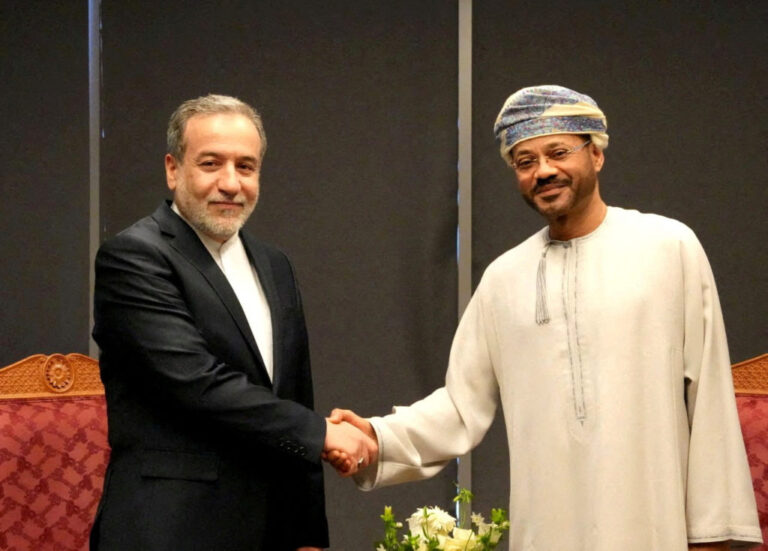
The talks in Geneva, expected to begin in the coming days, mark a continuation of a diplomatic effort that began with indirect discussions on Feb. 6 in Oman’s Muscat. That round brought together Iranian Foreign Minister Abbas Araghchi and a U.S. delegation led by White House Middle East envoy Steve Witkoff, along with senior adviser Jared Kushner, in separate rooms with Omani officials relaying messages.
The focus of the negotiations remains Tehran’s nuclear programme, which Washington seeks to constrain through legally binding commitments.
U.S. President Donald Trump has insisted that any accord must require Iran to drastically limit enrichment of uranium, a core component for both civilian energy and potential weapons use. Tehran, while insisting its nuclear activities are peaceful, has so far refused to accept demands for zero enrichment.
Trump and senior administration officials have repeatedly warned Iran that failing to reach an agreement could carry serious consequences.
After the initial round in Oman, the U.S. president described a failure to secure a deal as potentially “very traumatic” for Iran.
Read Also: United States Automatic Immigrants Work Permit Extension Ends
Officials in Washington have also underscored that diplomatic avenues remain open but have not ruled out other options.
The backdrop to the renewed talks includes a significant U.S. military build‑up in the Middle East. Trump announced the deployment of the USS Gerald R. Ford carrier strike group from the Caribbean toward the region, part of what U.S. defence officials describe as a broader repositioning of forces.
The U.S. administration has framed the deployment as a deterrent against renewed hostilities, including any hostile Iranian response to U.S. actions.
Iran’s leadership has countered that it will respond to any aggression, maintaining that its nuclear aspirations are peaceful and not aimed at weaponisation.
Iranian President Masoud Pezeshkian has expressed a willingness for “any kind of verification,” although Tehran has limited access for inspections by the International Atomic Energy Agency in recent months, hampering independent oversight.
A central point of contention remains uranium enrichment. Iran has enriched uranium to as much as 60 per cent purity—a level seen as technically close to weapons‑grade—although Iranian officials argue such enrichment is legally justified under the nuclear Non‑Proliferation Treaty for civilian energy needs. U.S. negotiators have pressed for significant restrictions on enrichment, a stance Tehran has characterised as unrealistic without reciprocal concessions.
Diplomatic efforts over Iran’s nuclear programme date back more than a decade, including the 2015 Joint Comprehensive Plan of Action (JCPOA), from which the U.S. withdrew in 2018.
That agreement curbed Tehran’s nuclear activities in exchange for sanctions relief, but its dismantling under Trump’s first term contributed to rising mistrust and a subsequent breakdown in broader diplomatic cooperation.
Read Also: United States Strikes $0.42-Per-Agency Deal For Musk’s Grok AI
Oman’s role as mediator reflects its longstanding practice of providing a discreet channel between Tehran and Washington.
The Gulf monarchy has frequently hosted indirect talks and message‑passing in highly sensitive negotiations, allowing both sides to engage without formal diplomatic ties.
The geopolitical context surrounding the upcoming Geneva meetings is complicated by broader regional disputes.
Israeli Prime Minister Benjamin Netanyahu, who met with Trump in Washington this week, has advocated for any agreement to extend beyond nuclear limits to include Iran’s ballistic missile programme and its support for proxy groups such as Hamas and Hezbollah.
Tehran has resisted expanding the agenda, arguing that its nuclear programme should be discussed independently of other security issues.
Gulf Arab states have voiced concern that any conflict between the U.S. and Iran could escalate across the region. Leaders in the Persian Gulf have repeatedly warned that military confrontations risk drawing multiple countries into wider hostilities, with potentially grave humanitarian and economic implications.
Domestically, Iran faces internal pressures, including widespread protests that have occurred over economic grievances and political repression.
The U.S. has criticised Tehran’s handling of such unrest, further complicating the diplomatic environment. Iranian officials have asserted that external military pressure will not deter the country’s strategic objectives, underscoring Tehran’s resolve in high‑stakes negotiations.
As the Geneva talks approach, diplomats and analysts will be watching closely for indications of whether these indirect negotiations can narrow differences on core issues such as enrichment levels and verification measures.
The next scheduled session is expected to begin later this week, with both sides returning to Geneva under Omani mediation to pursue a fragile diplomatic path forward.