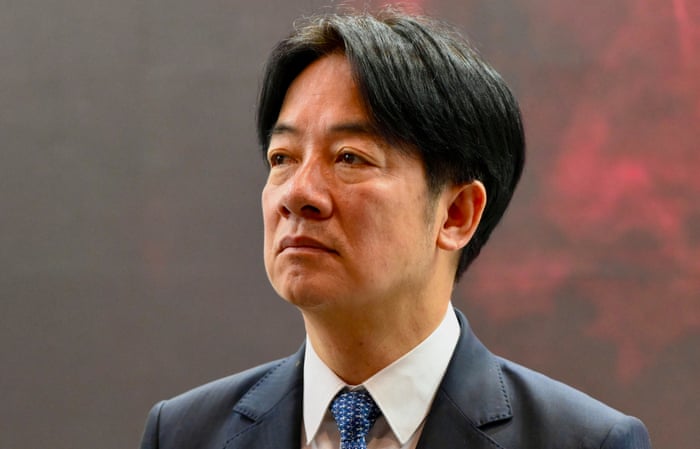
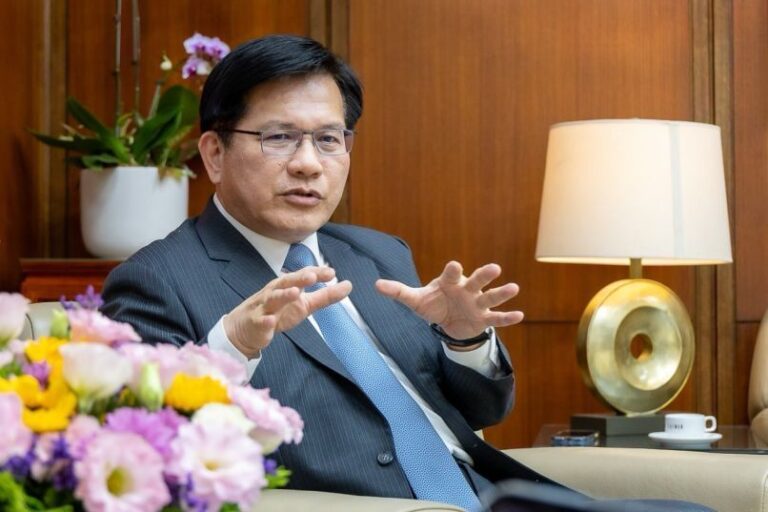
Taiwan’s foreign minister issued a pointed public rebuttal Sunday to Chinese Foreign Minister Wang Yi’s address at the Munich Security Conference, accusing Beijing of systematically violating the United Nations principles it claims to champion while conducting military operations that directly threaten regional peace.
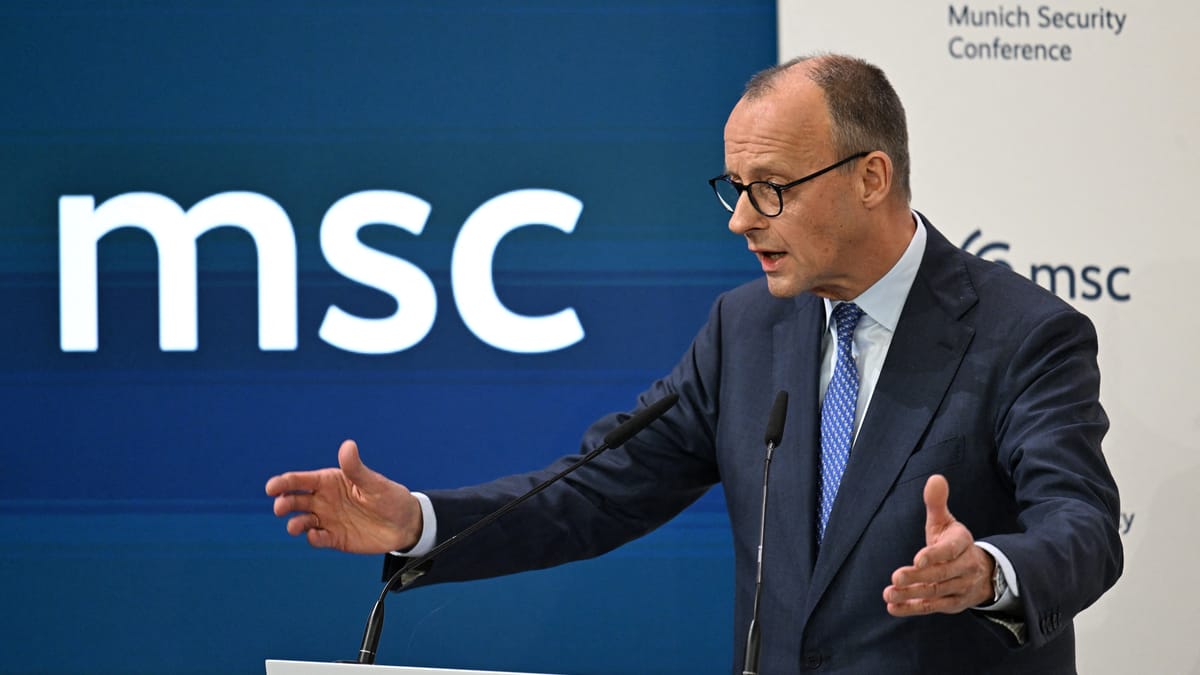
Foreign Minister Lin Chia-lung published his response hours after Wang’s Saturday appearance at the annual security gathering in Bavaria, where the Chinese top diplomat argued that external forces were attempting to “split Taiwan from China,” blamed Japan for rising tensions around the island, and invoked UN Charter principles as the foundation of Beijing’s foreign policy posture.
Lin rejected each element of that framing with precision. “Whether viewed from historical facts, objective reality or under international law, Taiwan’s sovereignty has never belonged to the People’s Republic of China,” he said, challenging the premise of Beijing’s entire position on the cross-strait question.
On Wang’s appeal to UN principles, Lin said the invocation amounted to hypocrisy. “China has recently engaged in military provocations in surrounding areas and has repeatedly and openly violated U.N. Charter principles on refraining from the use of force or the threat of force,” he said. This, Lin added, “once again exposes a hegemonic mindset that does not match its words with its actions.”
The foreign minister noted that Wang had “boasted” of Beijing’s commitment to international principles while simultaneously blaming other countries for tensions that, Taiwan contends, originate entirely from China’s own escalatory behavior. He described this as a pattern of deflection inconsistent with the posture of a nation claiming to uphold international order.
Taiwan’s response carries added weight given that Lin was not present at Munich to contest Beijing’s framing in real time. Senior Taiwanese officials are systematically excluded from the conference, a consequence of the diplomatic isolation China has enforced on the island across most international forums. Beijing’s ability to speak unchallenged in Munich amplifies what Taipei views as a recurring asymmetry in how cross-strait disputes are aired before global audiences.
Read Also: US Lawmakers Pressure Taiwan To Pass $40bn Defense Budget
Wang’s Munich address used the conference stage to advance several well-established Chinese positions. He characterized any international support for Taiwan’s distinct status as interference in China’s internal affairs and framed Japan’s involvement in Taiwan Strait discussions as particularly destabilizing. His remarks were consistent with messaging Beijing has intensified since Taiwan President Lai Ching-te took office in May last year.
Beijing views Lai with particular hostility. China’s Foreign Ministry this week called him a “diehard separatist,” a “saboteur of peace,” and an “instigator of war” following remarks in which he warned that annexation of Taiwan would leave Japan, the Philippines, and other Indo-Pacific neighbors as the next countries under threat. Lai has repeatedly denied being a separatist, insisting his position is simply that Taiwan’s democratic population alone can determine its future.
China has never renounced the use of military force to bring Taiwan under its jurisdiction. The People’s Liberation Army conducted its most recent large-scale drills around the island in December, the latest in a series of exercises that have grown in frequency and scale under Xi Jinping’s leadership. PLA aircraft regularly cross the median line of the Taiwan Strait and enter Taiwan’s Air Defense Identification Zone in what Taipei describes as deliberate pressure operations.
The historical dispute over sovereignty rests on competing readings of the same period. Beijing maintains that Taiwan was transferred to Chinese rule at the end of the Second World War in 1945 and that sovereignty claims originating from that period are therefore valid and legally binding. Taiwan’s government counters that the 1945 transfer occurred to the Republic of China, which governed mainland China before the Communist victory in the 1949 civil war. The People’s Republic of China was not established until that year, making any claim based on the wartime transfer legally inapplicable to Beijing, Taipei argues.
Read Also: Taiwan’s Lai Urges Lawmakers To Pass Stalled Defense Budget
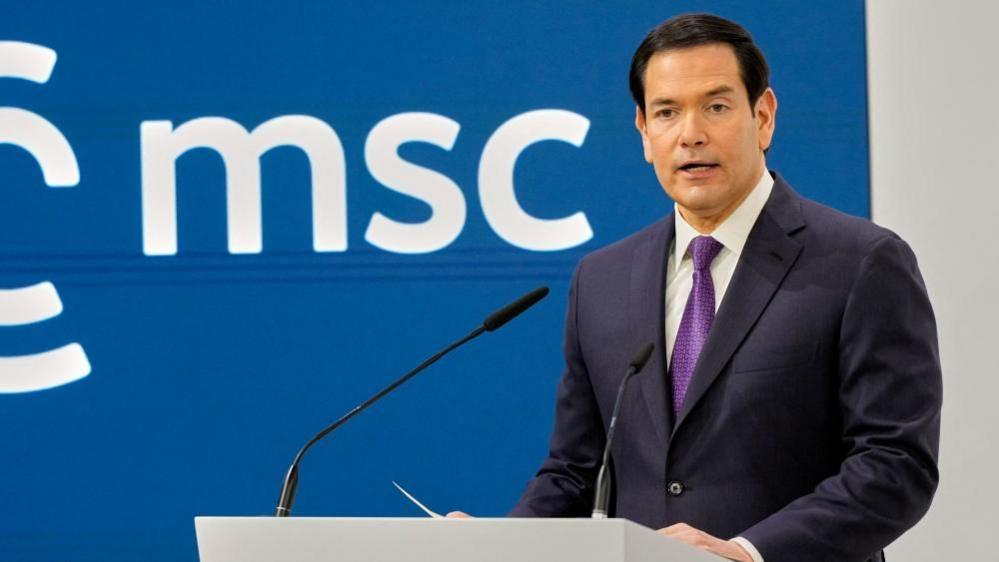
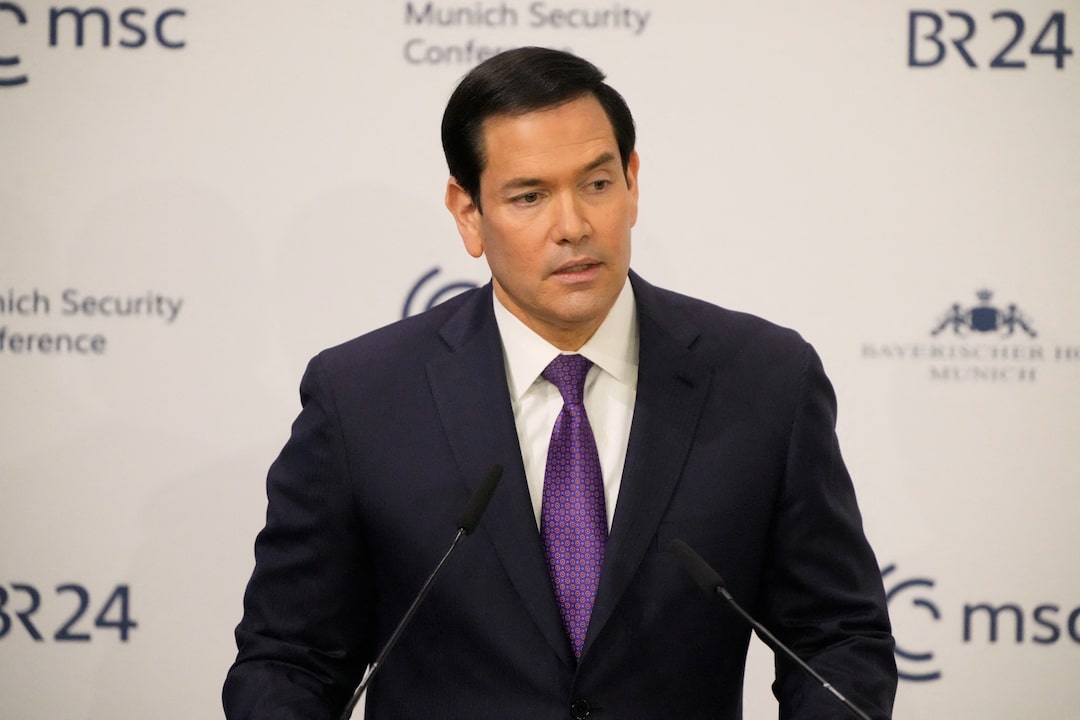
On the conference sidelines, Wang met bilaterally with U.S. Secretary of State Marco Rubio in an exchange described by officials on both sides as constructive, though neither government disclosed substantive details of the conversation. Taiwan’s status was widely assumed to have featured in the discussion given its centrality to U.S.-China relations, reaffirmed by President Xi Jinping in a recent call with President Trump in which Xi described Taiwan as the most sensitive issue in the bilateral relationship.
The Munich conference concluded Sunday after three days of sessions centered on European security, Ukraine, and the future of transatlantic relations. China’s participation, represented at the foreign minister level, and Taiwan’s exclusion, despite its direct stake in multiple agenda items, underscored the structural constraints the island’s government operates under in multilateral diplomatic environments.
Lin’s office has not indicated whether Taiwan will seek additional bilateral meetings with conference attendees on the sidelines of other international gatherings in the weeks ahead.