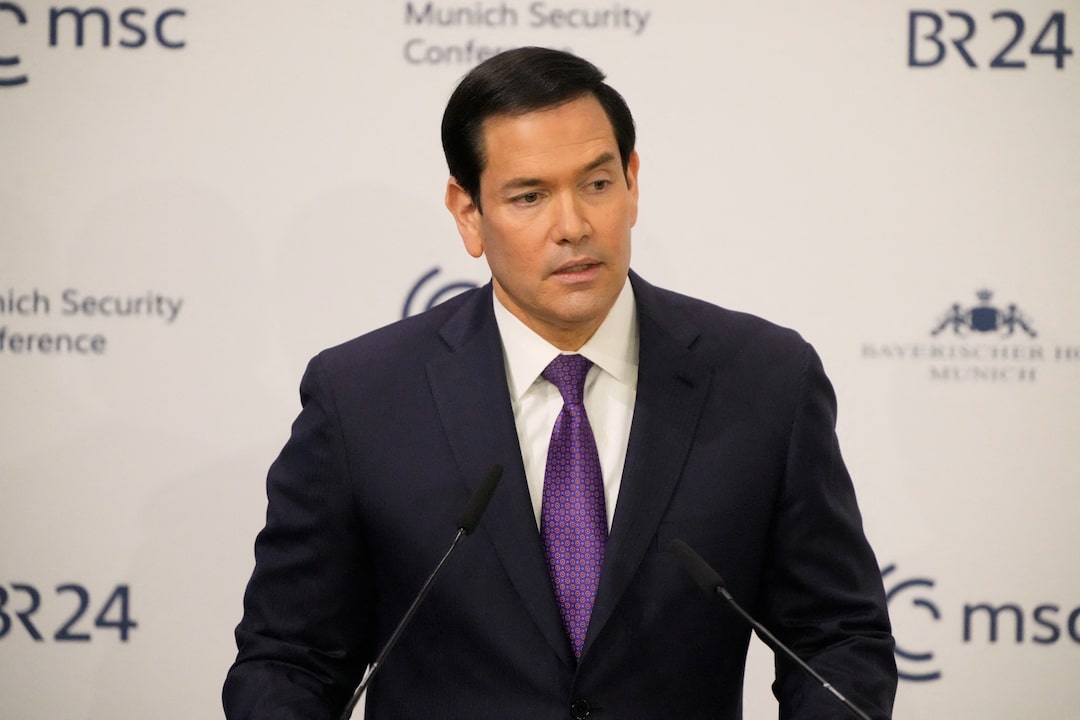
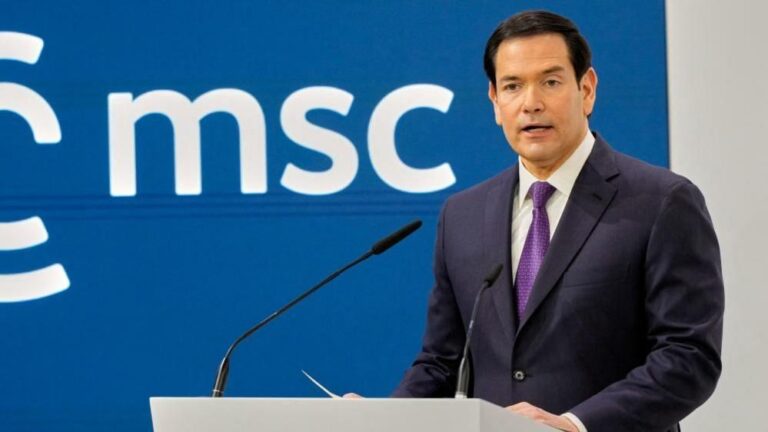
U.S. Secretary of State Marco Rubio departed Sunday for a two-day visit to Slovakia and Hungary immediately following the Munich Security Conference, reinforcing Washington’s alignment with two Eastern European governments that have defied mainstream EU positions on Russia, Ukraine, and democratic governance while cultivating close ties with President Donald Trump.
According to the official State Department itinerary, Rubio will meet with senior Slovak government officials in Bratislava on Sunday before traveling to Budapest, where he will hold discussions with Hungarian officials on Sunday and Monday. The visit marks Rubio’s first time in either country.
In Bratislava, discussions will focus on advancing shared regional security interests, strengthening bilateral cooperation on nuclear energy and energy diversification, and supporting Slovakia’s military modernization and NATO commitments. In Budapest, the agenda centers on bilateral and regional interests, peace processes to resolve global conflicts, and a U.S.-Hungary energy partnership.
When asked by reporters whether he intended to press Hungary and Slovakia to stop purchasing Russian energy, Rubio gave a measured response without committing to specific demands. “Well, we’ll have those conversations with them. We’ll talk to them about what needs to happen,” he said, adding that both countries were “very strong with us, very cooperative with the United States.”
Read Also: Rubio Tells Munich Summit US And Europe “Belong Together”
The visit carries significant political weight for Hungarian Prime Minister Viktor Orban, who faces the most serious electoral challenge of his 15-year tenure. Orban is trailing in polls ahead of April elections, with surveys showing him behind the party of Peter Magyar, a former ally turned fierce critic who has mobilized substantial opposition support around anti-corruption themes. Trump publicly backed Orban last week in a social media post calling him “a true friend, fighter, and WINNER,” and Rubio said the administration stood firmly behind that endorsement.
“The President said he’s very supportive of him, and so are we,” Rubio said, describing the Budapest leg as a bilateral visit and not primarily an election intervention.
Slovak Prime Minister Robert Fico visited Trump at his Mar-a-Lago estate in Florida last month. The meeting generated controversy when Politico, citing unnamed European diplomats, reported that Fico had voiced private concern about Trump’s cognitive state. Both governments categorically denied the account.
Fico and Orban occupy an unusual position within the European Union. Both have clashed repeatedly with EU institutions over rule-of-law investigations, democratic backsliding concerns, and policy divergences on Ukraine. Both have maintained energy and diplomatic ties with Moscow after Russia’s full-scale invasion of Ukraine in 2022, and have at various points delayed or opposed EU sanctions packages and the provision of military assistance to Kyiv.
Their positions have placed them at odds with the EU mainstream but in alignment with the Trump administration’s skepticism toward multilateral institutions and its pressure on European partners to reduce rather than deepen collective commitments on Ukraine.
Slovakia and Hungary continue to purchase Russian gas and oil, a practice the United States has criticized. Rubio confirmed the topic would be raised during the trip but indicated he would not discuss the details of those conversations publicly. Both countries have met NATO’s minimum defense spending threshold of two percent of GDP. Fico has declined to raise expenditure above that level despite Trump’s repeated calls for all alliance members to target five percent. Hungary has also budgeted at two percent for the current year.
Read Also: Australia Commits A$3.9bn To AUKUS Submarine Yard
On nuclear energy, the meetings come after Slovakia signed a bilateral agreement with the United States last month. Fico has confirmed that U.S.-based Westinghouse is likely to build a new nuclear power plant in Slovakia, and said he was also open to participation from French nuclear engineering firm Framatome following a recent meeting with its chief executive.
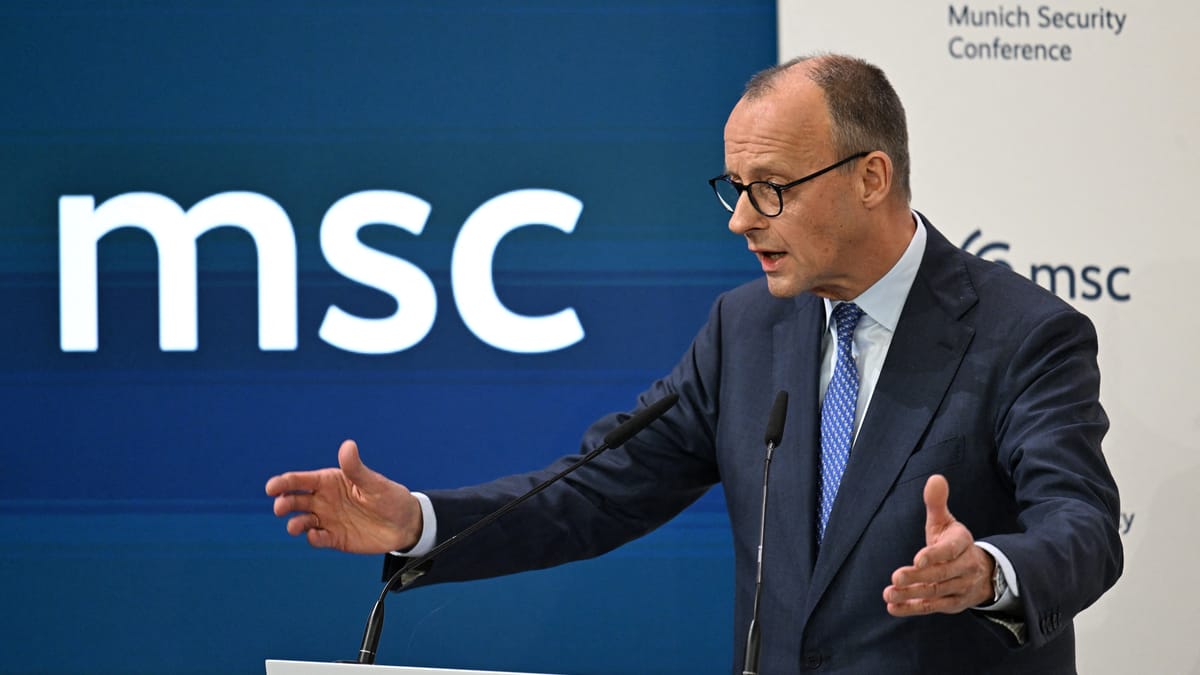
The choice of Slovakia and Hungary as Rubio’s post-Munich destinations has drawn commentary across Europe. Critics noted that the stops underscore Washington’s preference for engagement with nationalist EU governments that clash with Brussels on democratic standards over the mainstream centrist governments that form the EU’s core. In doing so, the itinerary reinforces concerns expressed by German Chancellor Friedrich Merz and other leaders at Munich that transatlantic ties are being restructured around ideological affinity rather than institutional solidarity.
Former President Joe Biden had notably strained relations with Orban, publicly accusing him of pursuing authoritarian governance through restrictions on independent media and campaigns targeting LGBTQ rights. The contrast between that posture and the current administration’s embrace of Budapest reflects the scale of the diplomatic reorientation underway in Washington.
Rubio’s European tour, which began in Munich on Thursday, concludes with the Hungary visit. He is expected to return to Washington on Monday.