Australia has pledged an initial 3.9 billion Australian dollars toward construction of a nuclear submarine shipyard at Osborne in South Australia, marking the largest single funding commitment yet made to the AUKUS defence pact and signaling that the trilateral program is accelerating despite ongoing questions about delivery timelines and American commitment.
Prime Minister Anthony Albanese described the investment as a down payment on a project the government estimates will ultimately cost 30 billion Australian dollars to complete over coming decades. The Osborne facility, located on the Lefevre Peninsula approximately 19 kilometers north of Adelaide, will become the site where Australia and Britain jointly build a new class of nuclear-powered submarines alongside the country’s existing Collins-class sustainment operations.
“Investing in the submarine construction yard at Osborne is critical to delivering Australia’s conventionally-armed, nuclear-powered submarines,” Albanese said in a statement released Sunday.
The funding will underpin a workforce of nearly 10,000 people required to design, construct, and maintain the facility and the submarines it will eventually produce. The investment is projected to support 5,500 direct jobs across the 75-hectare site.
The scale of the physical undertaking is considerable. The new Submarine Construction Yard will have a total floor area approximately ten times larger than the existing Osborne South development currently under construction. Building the facility is expected to consume 126,000 tonnes of structural steel, equivalent to the combined weight of 17 Eiffel Towers, and require 66 million man hours of labor. The main Fabrication Hall will run 420 metres in length, two and a half times the length of Adelaide Oval.
Read Also: Australia Urges Calm After Herzog Protest Clashes
South Australian Premier Peter Malinauskas said the commitment represented a transformational moment for the state’s industrial and economic trajectory. “AUKUS presents a watershed moment for the South Australian economy, and the scale of the work coming our way is difficult for most people to comprehend,” he said.
Construction of the facility will proceed in stages across three distinct areas, with the most sensitive nuclear precinct, including consolidated welding of reactor compartments that will never be reopened for the vessel’s operational life, expected to be completed by the late 2030s.
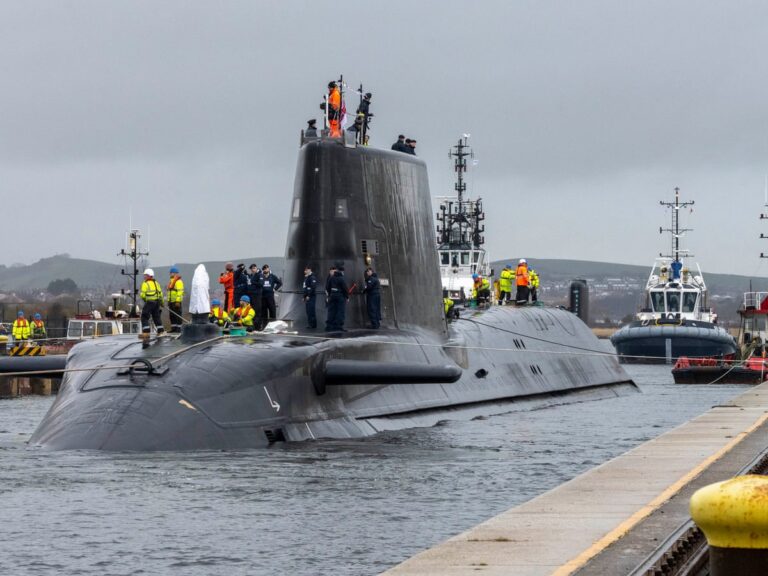
AUKUS, announced in September 2021 by then-U.S. President Joe Biden alongside Albanese’s predecessor Scott Morrison and British Prime Minister Boris Johnson, replaced Australia’s cancelled submarine contract with France and represented a fundamental reorientation of Australian defence policy toward the Indo-Pacific. The agreement has three overlapping phases: U.S.-commanded Virginia-class submarines to be rotationally based at HMAS Stirling near Perth from 2027; the direct sale of up to five Virginia-class boats to Australia from approximately 2030; and the eventual joint construction of a new SSN-AUKUS class by Britain and Australia from the end of this decade.
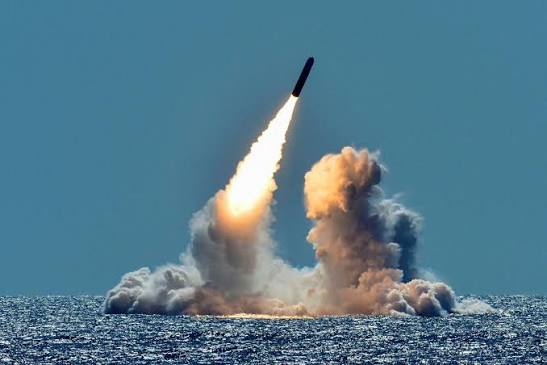
Australia plans to build five SSN-AUKUS submarines at Osborne, while the United Kingdom plans to construct up to 12 of the new class. The SSN-AUKUS design will incorporate U.S. propulsion plant components, a common vertical launch system capable of firing Tomahawk cruise missiles, and combat management systems derived from Virginia-class technology, significantly enhancing interoperability across all three navies.
In December, a Pentagon review of the AUKUS program identified areas of opportunity to place the deal on what officials described as the “strongest possible footing,” including a finding that Australia needed to accelerate its development of nuclear submarine industrial capacity. Sunday’s announcement appeared designed in part to address those concerns directly.
Deputy Prime Minister Richard Marles said the government’s commitment was unwavering. “The momentum is real and the scale of what is being achieved at Osborne is extraordinary. South Australia is at the centre of one of the most significant defence undertakings in our history,” he said.
Read Also: Israeli President, Isaac Herzog, Visits Australia Amid Protests
The announcement comes amid broader questions about the durability of the AUKUS framework under the Trump administration. U.S. Defence Secretary Pete Hegseth has previously indicated support for the pact as a core element of American Indo-Pacific strategy, but Australia has sought to demonstrate sufficient domestic investment and institutional progress to guard against any future reassessment in Washington.
The Osborne shipyard already serves as the maintenance hub for Australia’s six aging Collins-class submarines, which will continue operating until SSN-AUKUS vessels enter service in the early 2040s. The parallel running of two submarine programs — maintaining the Collins fleet while building the infrastructure for its nuclear successor — represents a significant industrial challenge for a country without prior experience in nuclear submarine construction or operation.
A new skills and training centre attached to the Osborne precinct will begin developing the specialist technical workforce required for nuclear-capable shipbuilding, a pipeline that officials acknowledge will take years to produce the personnel required at full construction scale.