
The United States will concentrate its military planning on defending its own territory and countering China’s influence in the Indo-Pacific while scaling back the scope of direct support offered to allies, according to a newly released Pentagon strategy that signals a substantial recalibration of American defense priorities.
The 2026 National Defense Strategy (NDS), outlines a shift toward homeland security and regional dominance in the Western Hemisphere, marking a departure from earlier Pentagon frameworks that placed greater emphasis on collective defense commitments and global threat competition.
The document states that as U.S. forces increasingly focus on domestic defense and the Indo-Pacific region, allies in Europe and elsewhere will assume primary responsibility for their own security, supported by what it describes as “critical but more limited” American assistance.
The strategy replaces guidance issued in 2022 under former President Joe Biden, which characterized China as Washington’s most consequential strategic rival and identified Russia as an acute threat to international stability.
By contrast, the new document adopts more measured language toward both powers. It calls for “respectful relations” with Beijing and describes Russia as a “persistent but manageable” challenge, particularly for NATO members on the alliance’s eastern flank rather than for the United States directly.
Officials said the revised framework reflects a reassessment of risk and resource allocation following years of overseas military commitments.
The Pentagon argues that European allies possess sufficient economic and military capacity to assume greater responsibility for conventional defense on the continent, noting that NATO members collectively far exceed Russia in economic output.
The strategy also omits any reference to Taiwan, a self-governing island claimed by China that had figured prominently in previous U.S. defense planning documents.
Read Also: United States ‘Listeria’ Outbreak: 6 Dead, 27 Ill from Pasta
Analysts cited by policy instituted have interpreted the omission as an effort to maintain strategic ambiguity while avoiding explicit commitments that could heighten tensions with Beijing, even as the United States continues to emphasize deterrence along key Indo-Pacific maritime routes.
Homeland defense occupies a central role throughout the 34-page document, which links military preparedness directly to border security and domestic protection.
The strategy criticizes prior policies for what it describes as insufficient attention to migration and narcotics trafficking, asserting that “border security is national security” and pledging that the Defense Department will prioritize efforts aimed at sealing U.S. borders and countering perceived forms of invasion.
That emphasis contrasts sharply with the Biden administration’s approach, which framed geopolitical competition with China and Russia as the primary drivers of risks facing Americans at home.
The earlier strategy also identified climate change as an emerging security threat; the new NDS contains no reference to climate-related risks.
Beyond homeland defense, the document elevates Latin America and the broader Western Hemisphere as core strategic priorities. It pledges to restore American military dominance in the region to safeguard access to critical geographic areas and protect U.S. interests.
The strategy describes this approach as a modern adaptation of the Monroe Doctrine — the 19th-century policy asserting U.S. opposition to external powers’ interference in the Americas — referring to it as the “Trump Corollary.”
Read Also: United States Automatic Immigrants Work Permit Extension Ends
Since returning to office in 2025, President Donald Trump has expanded the use of U.S. military power in Latin America, including operations targeting suspected drug-trafficking networks.
Among the most controversial actions was a raid that resulted in the capture of Venezuelan leader Nicolás Maduro and his wife, along with maritime strikes against dozens of vessels alleged by U.S. authorities to be involved in narcotics smuggling.
The administration has not publicly released detailed evidence linking the targeted boats to drug trafficking.
International legal scholars and human rights organizations have questioned the legality of the operations, arguing that attacks on vessels not posing an immediate threat could violate international law and amount to extrajudicial killings.
U.S. officials have defended the actions as necessary measures against transnational criminal organizations.
The new defense blueprint also places renewed emphasis on rebuilding domestic military production capacity and technological modernization.
It calls for expanding the U.S. defense industrial base, accelerating adoption of emerging technologies such as artificial intelligence, and strengthening cyber defenses against threats to both military and civilian infrastructure.
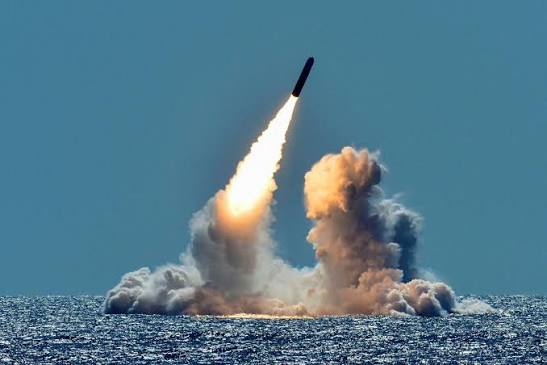
Missile defense initiatives, including the administration’s proposed “Golden Dome” system designed to counter advanced aerial and missile threats, are referenced as part of broader efforts to enhance homeland protection.
While reaffirming U.S. engagement with allies, the document underscores burden-sharing as a central principle.
European governments are expected to take the lead in regional security matters, including support for Ukraine, with Washington providing supplementary assistance rather than serving as the primary guarantor of defense.
The release of the strategy comes amid growing debate within NATO and among Indo-Pacific partners over the future role of the United States in collective security arrangements.
European leaders have increasingly discussed strengthening independent defense capabilities, reflecting uncertainty about long-term U.S. commitments.