Washington — A partial shutdown of the U.S. government affecting the Department of Homeland Security (DHS) took effect on Saturday after lawmakers failed to reach an agreement over funding tied to immigration enforcement policies under the Trump administration.
The shutdown, the second involving DHS in two weeks, leaves key agencies including Immigration and Customs Enforcement (ICE), Customs and Border Protection (CBP), the Transportation Security Administration (TSA), the Coast Guard, and the Federal Emergency Management Agency (FEMA) operating under limited resources. DHS employs more than 260,000 people nationwide.
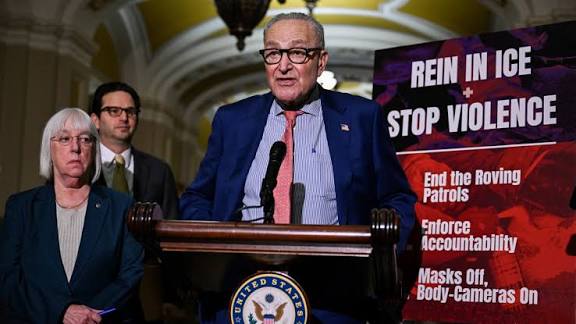
The impasse stems from Democratic objections to certain federal immigration enforcement practices, including calls for agents to wear body cameras and identification, prohibitions on masks, and requirements for judicial warrants to enter private property.
Republicans and the White House have resisted these measures, citing operational concerns and previous large appropriations.
ICE and CBP received $140 billion under last year’s “One Big Beautiful Bill” that, lawmakers argue, is sufficient to maintain operations through the end of President Trump’s term.
Earlier this month, funding disputes prompted a four-day partial shutdown.
Congress subsequently approved financing for most government agencies through September but extended DHS funding at current levels for only two weeks. That extension expired Friday, prompting the resumption of shutdown measures.
Read Also: Starmer Calls For Plea Over Ratcliffe’s Immigration Remarks
On Thursday, Senate Democrats blocked a Republican-led proposal to extend DHS funding through September without additional reforms to ICE and CBP. Only Sen. John Fetterman of Pennsylvania sided with Republicans in advancing the legislation.
Democrats also rejected a separate proposal to maintain DHS funding for another two weeks while negotiations continued.
Senate Minority Leader Chuck Schumer, a New York Democrat, emphasized the intensity of his party’s position. “Our caucus is passionate about this. If you sat in on our caucus meetings, you’d see how strongly people feel,” Schumer said after the vote. He added that some of the strongest advocates for reform were those who did not vote with Democrats in prior rounds.
Congress left Washington on Thursday without a funding agreement and is not scheduled to return until Feb. 23, the day before President Trump is set to deliver his State of the Union address.
Leaders have the authority to recall lawmakers earlier if a deal is reached, but the timeline remains uncertain.
The White House submitted a legislative proposal for full-year DHS funding late Wednesday, following a Democratic draft bill.
Democratic leaders described the administration’s offer as inadequate, though details of the plan have not been publicly released.
House Minority Leader Hakeem Jeffries, a New York Democrat, said Friday that Democrats intend to formally respond, leaving the next steps “in the hands of Donald Trump and Republicans.”
President Trump said Friday that negotiations were ongoing, reiterating his objective to “protect our law enforcement” while leaving open the outcome. “We’ll see what happens,” he said regarding the possibility of a deal with Democrats.
Meanwhile, federal authorities are proceeding with contingency plans for the shutdown.
In a Friday memo directing DHS to prepare for “orderly shutdown operations,” Office of Management and Budget Director Russ Vought noted that the administration “is currently engaged in good faith negotiations with Congress to address recently raised concerns.” Vought added that the White House would continue to pursue “good-faith, bipartisan solutions to complete the appropriations process and avoid another damaging government shutdown.”
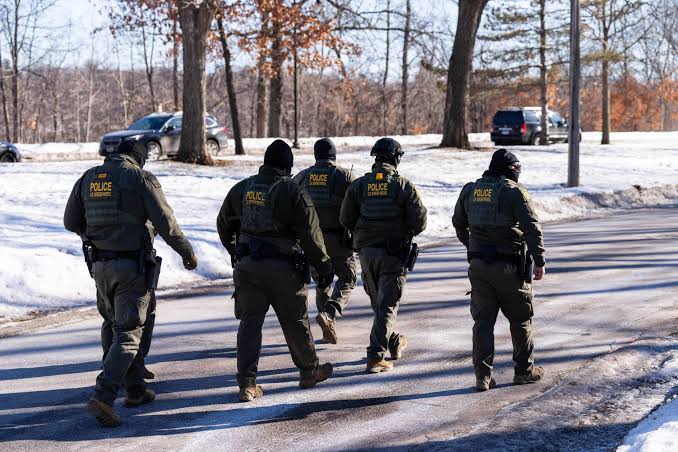
The debate over DHS funding has intensified following heightened scrutiny of federal law enforcement actions in Minnesota, where ICE and CBP officers were involved in the fatal shootings of Renee Good and Alex Pretti.
Democrats have cited the incidents as justification for tighter oversight and legislative safeguards.
Read Also: Minneapolis Immigration Agents Shoot U.S Citizen
On Thursday, Trump’s border czar, Tom Homan, announced that a planned surge in federal immigration enforcement in Minnesota would be suspended, a move aligning with one of the Democratic demands. Schumer, however, stressed that executive directives alone are insufficient to address systemic concerns, stating on the Senate floor, “ICE’s abuses cannot be solved merely through executive fiat alone. We first and foremost need legislation.”
The ongoing negotiations have highlighted divisions within Congress.
Republicans argue that existing DHS resources are adequate and that proposed reforms could impede law enforcement. Democrats maintain that legislative measures are necessary to ensure accountability and oversight.
As of Saturday, DHS offices are operating under restricted budgets, with certain non-essential functions paused and employees facing furloughs.
Agencies including the TSA, FEMA, and the Coast Guard are continuing operations at a reduced capacity, though the precise impact on services such as airport screening and emergency response remains to be fully assessed.
Lawmakers from both parties have indicated that discussions could resume immediately upon their return, but no new agreement has been announced.
The next procedural step rests with Congress, with Senate and House negotiators prepared to re-engage once the White House and Republican leadership indicate willingness to adjust terms.