A cross-party group of 37 American legislators has formally urged Taiwan’s parliament to approve a stalled $40 billion defense spending package, warning that Chinese military pressure on the island has reached its most dangerous level in decades and that political gridlock in Taipei risks sending the wrong signal to Beijing.
The letter, released Thursday and addressed to parliament speaker Han Kuo-yu and the leaders of Taiwan’s main opposition parties, marks the most direct legislative intervention yet by U.S. lawmakers in Taiwan’s domestic budget debate. The signatories included senior members of both the Senate Foreign Relations Committee and the House Foreign Affairs Committee, spanning both Republican and Democratic affiliations.
Senators Pete Ricketts of Nebraska and Chris Coons of Delaware, along with Representatives Young Kim of California and Ami Bera, also of California, spearheaded the effort, sending a clear bipartisan signal that Washington’s concern about Taiwan’s defense posture extends well beyond party lines.
“The threat posed by the People’s Republic of China against Taiwan has never been greater. Xi Jinping is focusing every element of the PRC’s national power to control Taiwan,” the letter stated, adding that Washington and Taipei share a strong and enduring partnership that demands reciprocal commitment.
Read Also: Taiwan’s Lai Urges Lawmakers To Pass Stalled Defense Budget
China’s People’s Liberation Army has conducted multiple large-scale exercises around Taiwan in recent months, including drills simulating encirclement and blockade operations. Chinese aircraft routinely cross the median line of the Taiwan Strait and enter Taiwan’s Air Defense Identification Zone, while Chinese vessels have increased activity in surrounding waters.
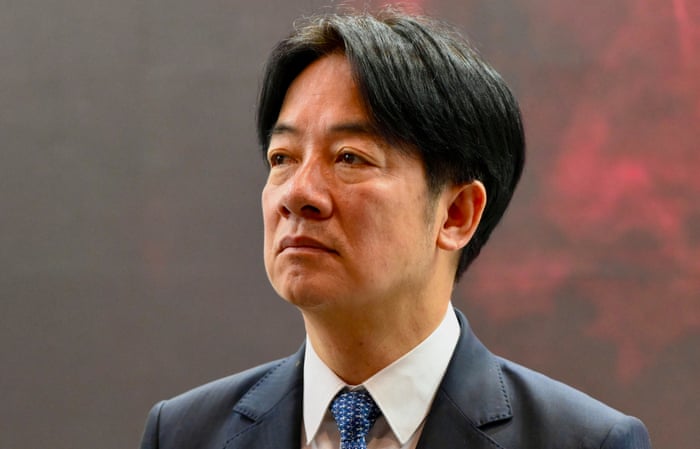
The spending package proposed by President Lai Ching-te is designed to fund missiles, air defense systems, drones, and reserve force training. The proposal has been blocked ten times by opposition parties controlling the legislature, creating a deepening standoff that has alarmed defense analysts and U.S. policymakers monitoring Taiwan Strait stability.
Lai and his Democratic Progressive Party have pledged to increase defense spending to more than 3% of gross domestic product in 2026 and 5% by 2030, targets that Washington has openly welcomed. A senior Trump administration official confirmed the U.S. position: “We welcome President Lai’s announcement on Taiwan’s intent to spend over 3 percent of GDP on defense in 2026 and 5 percent by 2030.”
The opposition Kuomintang and Taiwan People’s Party, which together hold a majority in the Legislative Yuan, have advanced a scaled-down counterproposal that funds only a portion of the weapons systems Lai’s government considers essential. Both parties insist they support increased defense spending in principle but argue they have a constitutional duty to scrutinize all budget proposals and will not approve what they describe as blank checks.
Their resistance has produced a deadlock that Lai addressed publicly in a news conference Wednesday, warning that the legislature’s failure to advance the full package “risks causing the international community to question Taiwan’s resolve to defend itself.” Taiwan’s defense minister echoed the concern, saying the delay risks a “rupture” in the joint defensive posture against China.
The U.S. lawmakers acknowledged frustration in Washington over longstanding delays in arms deliveries from the American side, pledging to address what they described as a massive backlog of approved but unfulfilled weapons sales to Taiwan. “For our part, the U.S. must address the massive backlog in weapons deliveries to Taiwan,” the letter stated. “You have our commitment to ensure Taiwan gets the capabilities it needs, faster. Likewise, we need Taiwan to step up with us.”
The Trump administration recently notified Congress of its intent to sell Taiwan an $11.1 billion arms package, described as Washington’s largest-ever such sale to the island. The package includes rocket systems and anti-tank missiles. The Department of Defense said the sale supports Taiwan’s ability to maintain a credible defensive capability.
Read Also: China Vows To Crush Taiwan Separatists, Back Reunification
The DPP issued a statement Friday saying it agreed with the contents of the U.S. letter and expressing hope that its recipients would read it “thoroughly.” Neither the KMT nor the TPP issued an immediate response.
The ruling party’s loss of its parliamentary majority in the 2024 legislative elections created the conditions for the current impasse. Lai’s government cannot pass significant legislation without opposition cooperation, a structural constraint that has complicated his administration’s security agenda and frustrated allies watching from Washington.
Political analyst Lyle Goldstein, director of the Asia Program at Defense Priorities, said the divisions in Taiwan run deep. “The president, William Lai, his party has suffered quite a few setbacks over the last year, and so this has kind of strengthened the hand and the will of the opposition, which is feeling emboldened,” he said.
Under the Taiwan Relations Act, the United States is legally committed to providing Taiwan with defensive arms but maintains a policy of strategic ambiguity regarding direct military intervention in any conflict. That ambiguity means Taiwan’s own defense capacity remains the primary variable in deterrence calculations, adding urgency to the spending debate.
China has never renounced the use of force to reunify with Taiwan, which it regards as sovereign territory. Lai has repeatedly offered unconditional dialogue with Beijing but has been rebuffed each time. His administration maintains that only Taiwan’s people hold the authority to decide the island’s political future.
The legislature has not scheduled a date for renewed consideration of the defense budget proposal. The opposition’s position has not shifted in response to previous U.S. expressions of concern, raising questions about whether Thursday’s letter will produce different results.