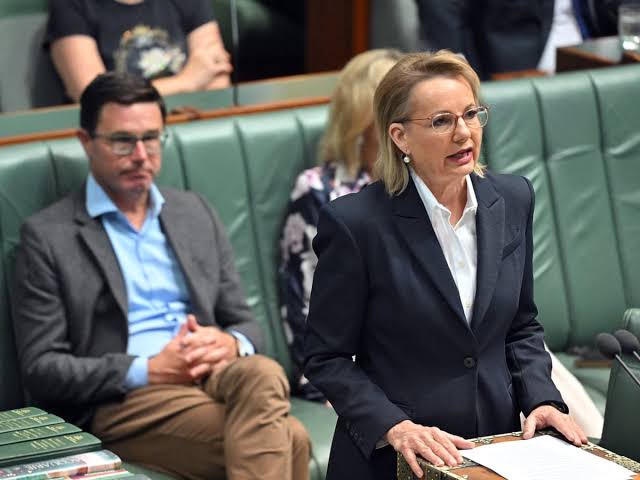
Australian opposition leader Sussan Ley is facing a formal challenge to her leadership of the Liberal Party, after her shadow defence minister, Angus Taylor, announced his intention to contest the position.
Taylor resigned from the front bench on Wednesday and confirmed his leadership bid on Thursday, citing what he described as the country’s “trouble” and the party’s loss of direction.
Taylor, who represents the conservative faction of the Liberal Party, narrowly lost to Ley in last year’s leadership vote following the party’s worst electoral defeat on record. Ley, the first woman to lead the Liberals, has since struggled with low public approval ratings and ongoing internal divisions within the conservative Liberal-National coalition.
The coalition, which has governed in various forms since the 1940s, has twice split and reformed under Ley’s leadership, a dynamic that has added strain to her tenure.
Most recently, the partnership briefly fractured in January over hate speech legislation proposed by Ley following a violent incident at Bondi Beach.
Nationals leader David Littleproud at the time said his party could not serve in a shadow cabinet under Ley, highlighting tensions over policy and strategy within the coalition. In announcing his leadership bid, Taylor told reporters: “We have failed to hold a bad Labor government to account.”
Read Also: Venus Williams Australian Open Return Confirmed With Wildcard
He added that the party needed to “protect Australians’ way of life” and “focus on restoring their standard of living.” He also questioned Ley’s capacity to lead, stating he did not believe she was “in a position to be able to lead the party as it needs to be led from here.”
Following Taylor’s announcement, several Liberal frontbenchers submitted their resignations in solidarity. These included shadow home affairs minister Jonno Duniam and shadow finance minister James Paterson.
According to local media reports, Taylor’s allies have requested a special party room meeting to consider a spill motion, which would trigger a leadership vote. Ley has discretion over whether such a meeting will occur and has yet to make a public statement. Sources told Australian media that Ley is reviewing the request.
A victory for Taylor would conclude months of speculation about Ley’s leadership, which has been perceived as insecure.
Since assuming the top role, she has navigated internal disagreements over policy, factional tensions, and declining popularity, particularly among urban voters.
Political analysts note that the coalition’s instability has been compounded by the rising support for the populist One Nation party.
In recent polling, One Nation, which secured only six percent of the national vote in the previous election, has overtaken the Liberals in some areas to become the second-most popular party after Labor.
Read Also: Australian Politician Floors Google In Defamation Suit
The surge has intensified pressure on the Nationals, who represent rural constituencies and lean further right, to adopt a harder line in order to retain support, while the Liberals attempt to appeal to centrist urban voters.
The coalition’s struggles trace back to its electoral collapse last year, when the Liberals lost ground across major cities and were nearly wiped out in metropolitan electorates. Disagreement over the causes of the defeat has persisted within the party, with divisions over climate and energy policy being particularly acute.
Immediately after the election, the coalition briefly split over the Liberals’ commitment to a net-zero emissions target by 2050. Under pressure from the Nationals and the party’s conservative wing, the Liberals subsequently abandoned the net-zero policy.
Ley’s leadership has also been complicated by factional rivalry. She is aligned with the party’s moderate wing, while Taylor is a prominent figure in the conservative faction.
Their policy and strategic disagreements, amplified by electoral setbacks, have intensified internal debate about the party’s direction and capacity to challenge the Labor government effectively.
The leadership challenge unfolds at a moment when the coalition is attempting to present a united front following its most recent reconciliation, just days prior, after the fallout over the Bondi Beach-related legislation. However, the party’s internal divisions, combined with weak polling, have left the Liberals struggling to regain political traction.
If a spill motion is approved and Taylor secures enough support among party room members, he could replace Ley as party leader.
The timing of any vote remains uncertain and would depend on Ley’s decision regarding the special meeting. Until then, the party is likely to remain in a state of heightened internal tension, with additional resignations and public statements possible.
Political observers note that the outcome of this leadership contest will have implications for the coalition’s strategy ahead of future elections, particularly in balancing policy positions between urban and rural constituencies and managing the growing influence of minor parties such as One Nation.
Ley’s next steps, including whether she will convene the party room to consider the spill motion, are expected to determine the immediate course of the Liberal Party’s leadership and its capacity to challenge the federal Labor government.