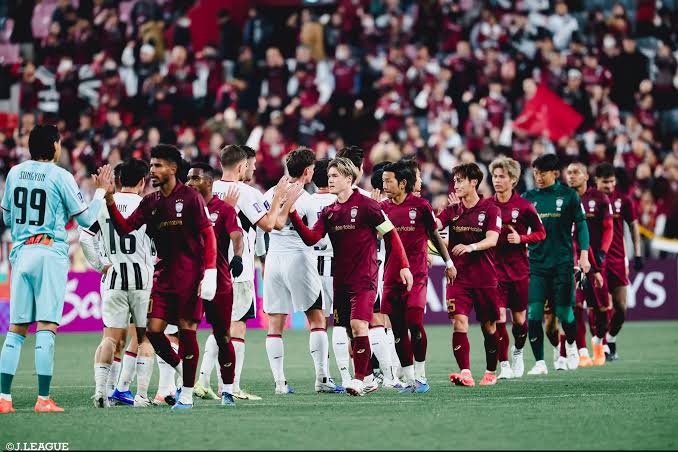
— The Japanese professional football league has unveiled a significant change to its competition format, announcing that all matches that finish level after regulation time will now be decided by a penalty shootout.
Under the revised system adopted at the start of the season, traditional league scoring has been adjusted to place greater emphasis on decisive results. Teams that secure a win in the standard 90 minutes still receive the full three points, with the defeated side earning none. However, if a match ends in a draw at the final whistle, both sides will advance immediately to a penalty shootout to determine how points are allocated.
In the event of a tied scoreline, the winning team in the ensuing shootout will be awarded two points, while the team that falls short will receive one point. The adjustment marks a departure from the conventional format used in most domestic leagues, where points are shared equally after draws.
League officials said the change was designed to enhance the competitiveness and entertainment value of fixtures, pushing teams to contest matches intensively until the closing moments and preserving fan engagement throughout each 90‑minute contest.
“The J‑League aims to create dynamic and compelling matches,” a league statement said. “By introducing penalty shootouts to decide drawn games, we hope to encourage teams to seek results and reward winning performances while maintaining the excitement for spectators.”
The new format was put into immediate effect on opening day, and several matches were decided by shootouts as supporters witnessed the first iteration of the system in action.
Read Also: CBN: Nigeria Reserves Hit $49bn From $3bn In 2023
FC Tokyo and Kashima Antlers played out a 1–1 draw before FC Tokyo emerged 5–4 winners in the spot‑kick contest. In another fixture between regional rivals, Gamba Osaka and Cerezo Osaka remained deadlocked at 0–0, with Gamba prevailing 5–4 on penalties. Meanwhile, Avispa Fukuoka and Okayama drew 1–1, with Okayama securing victory 6–5 in the shootout.
The results demonstrated how the new structure can produce drama well beyond the final whistle, with fans at several stadiums experiencing the unpredictability of penalty shootouts determining league points rather than national knockout progression.
Coaches and players have reacted with mixed views to the change. Some managers welcomed the incentive to play for victory, believing it encourages a more attacking style throughout matches. Others have expressed caution, noting that shootout outcomes can be unpredictable and may introduce volatility into the standings.
Statisticians and analysts have also begun reassessing how league tables will be interpreted under the updated scoring model, with its potential to reshape strategies around squad rotation, substitutions and late‑game tactics.
Fans have taken to social media to discuss the innovation, comparing it to systems used in other competitions — such as shootout determinations historically employed in some North American soccer leagues — and debating its potential long‑term impact on the domestic game.
Supporters’ reactions ranged from excitement at the added spectacle to scepticism over whether penalties should decide league points. Some observers point out that shootouts add an element more commonly associated with cup competitions rather than round‑robin, home‑and‑away league formats.
The J‑League’s opening day shootouts highlighted the unique dynamics of the new system, illustrating both its potential to create late‑game tension and its capacity for delivering unexpected bonus points to teams that hold out for a draw.
Read Also: Zayn Malik Gave Daughter $680 From The Tooth Fairy
Officials indicated that they will continue monitoring the format’s reception and statistical effects over the course of the season, with the possibility of future adjustments based on feedback from clubs, players and supporters.
The league’s decision positions the J‑League among a small number of professional competitions worldwide experimenting with alternatives to traditional draw outcomes, reflecting a broader trend in global sport toward innovation aimed at sustaining fan engagement and competitive intensity.
Fans and analysts alike will be watching closely to see how the revised points structure influences the race for domestic honours and continental qualification spots as the campaign progresses.