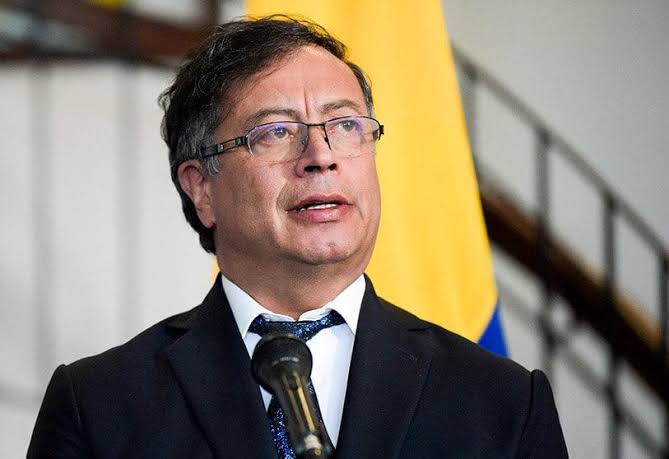
Colombian President Gustavo Petro said Tuesday he escaped an assassination attempt the previous night after his helicopter was unable to land on the Caribbean coast because of intelligence warning that gunmen planned to shoot down the aircraft carrying him and his daughters.
Petro told a cabinet meeting broadcast live that his helicopter diverted over open sea for approximately four hours before the Colombian navy helped guide it to an alternate landing site, forcing drastic changes to his security plans and travel routes. “Last night, I couldn’t land because I was informed that they were going to shoot at the helicopter I was travelling in with my daughters,” Petro said in remarks carried by public broadcaster Radio Nacional de Colombia. “They didn’t even turn on the lights where I was supposed to land.”
Speaking from Córdoba Department in northern Colombia, where heavy rains and flooding have created a humanitarian emergency requiring presidential attention, Petro said the threat level has kept him in permanent alert status and linked the incident to other actions he says have been occurring since October. He did not identify who authorities believe was responsible or provide specifics about the intelligence that prompted the evasive maneuvers, though he has repeatedly claimed drug trafficking organizations have targeted him for assassination since he assumed office in August 2022 as Colombia’s first leftist president.
“I’m trying to escape being killed,” Petro said. “That’s why I couldn’t arrive on time last night, because I couldn’t land where I had said. This morning, I couldn’t land where I was supposed to either, because there was information that the helicopter was going to be shot at.”
The president said his helicopter “headed out to open sea for several hours” until his aircraft, with support from the Colombian navy, reached a different landing point after changes were made to security protocols. “We headed out to open sea for four hours and I arrived somewhere we weren’t supposed to go, escaping from being killed,” he told ministers during the televised meeting. Radio Nacional de Colombia reported that “the head of state affirmed that these events keep him in a state of permanent alert, and linked them to other actions that, according to him, have been occurring since October of last year.”
Read Also: Clan del Golfo Leader Death Raises Questions Over Peace Talks
Petro’s claim came amid a surge in violence months ahead of Colombia’s presidential elections scheduled for May, in a country scarred by decades of conflict among guerrilla groups, right-wing paramilitaries, drug traffickers, and government forces that has killed more than a quarter-million people over six decades.
The security situation has deteriorated sharply in recent months, with multiple attacks on political figures including the assassination of senator and presidential candidate Miguel Uribe Turbay, who was fatally shot during a campaign event in June 2025.
Hours before Petro’s announcement Tuesday, authorities rescued Senator Aida Quilcue after armed men kidnapped her and two bodyguards Monday in Cauca Department. Defense Minister Iván Velásquez said the senator and her security personnel were freed safely following a military operation, with images of the freed lawmaker shared widely on Colombian military social media accounts. Petro had warned the kidnappers to release Quilcue or risk crossing “a red line,” according to reports, an unusual presidential intervention that underscored the government’s concern about escalating political violence.
Last week, gunmen killed two bodyguards of a senator in an attack on his convoy in Arauca region near the Venezuelan border, though the legislator was not in the vehicle at the time. The incidents reflect a pattern of violence targeting politicians, activists, and government officials as Colombia approaches elections that will determine who succeeds Petro, who is constitutionally barred from seeking a second term. Security analysts say criminal organizations and armed groups view the electoral period as an opportunity to eliminate adversaries, influence outcomes through intimidation, or demonstrate power by attacking high-profile targets.
Petro previously reported another alleged attempt on his life in 2024 and has repeatedly claimed that drug-trafficking cartels have had him in their sights since he took office. In June 2025, he criticized authorities’ description of rocket launchers discovered in Bogotá as “obsolete” weapons, arguing their presence indicated a plot to target his life and suggesting meetings had occurred to coordinate attacks against him, though he provided no public evidence. Colombian security forces acted on intelligence about an alleged assassination plot in 2025, killing a suspect accused of planning to murder the president during an operation in Valle del Cauca that targeted a member of the Gulf Clan trafficking gang and resulted in seizure of weapons and ammunition.
The president’s claims have drawn skepticism from political opponents who question whether specific threats are as serious as Petro portrays or whether he exaggerates dangers for political advantage, a charge his supporters reject while pointing to Colombia’s long history of assassinating leftist leaders and presidential candidates. Whether Monday night’s incident constitutes a genuine foiled assassination attempt or represents standard security precautions based on general threat assessments remains unclear, as Colombian authorities have released limited details beyond Petro’s remarks and no formal investigation findings have been disclosed.
Read Also: Trump: Warns Colombian President Petro After Hurting Remarks
Colombia’s government has not issued a formal threat assessment related to the helicopter incident, and national security officials have provided minimal detail about the intelligence that prompted the evasive action or the specific groups suspected of planning an attack.
Investigations into the reported attempt are ongoing as authorities work to confirm the nature and origin of the threat, according to officials familiar with the matter who spoke anonymously because they were not authorized to discuss security operations publicly.
Petro spoke at the Colombian embassy in Washington earlier this month during a visit aimed at repairing relations with the United States after months of tensions with President Donald Trump, who had threatened military action in Colombia over disagreements about drug trafficking cooperation and deportations. The two leaders reached a fragile détente during a White House meeting in early February that produced commitments to closer cooperation against criminal networks operating along the Colombia-Venezuela border, though significant friction persists between the governments on multiple policy fronts.
On the international stage, Petro has positioned himself as a vocal critic of Trump and U.S. interventionism in Latin America, reflecting deep political differences between Washington and Bogotá despite shared interests in combating drug trafficking. Tensions sharpened in January after the United States launched military strikes in Venezuela and captured President Nicolás Maduro in an operation widely condemned across the region, with Trump also signaling possible action in Colombia that fueled unease about American military intervention. The phone call between Trump and Petro that followed cooled rhetoric and produced the White House meeting, though the relationship remains strained.
Colombia has experienced relative reduction in political violence since the Revolutionary Armed Forces of Colombia, the country’s largest guerrilla organization, agreed in 2016 to disarm and transition into a political party as part of a peace agreement that ended five decades of armed conflict. However, dissident factions that rejected the accord, along with the National Liberation Army guerrilla group that did not participate in the peace process, continue operating in multiple regions alongside criminal organizations controlling drug production and trafficking routes.