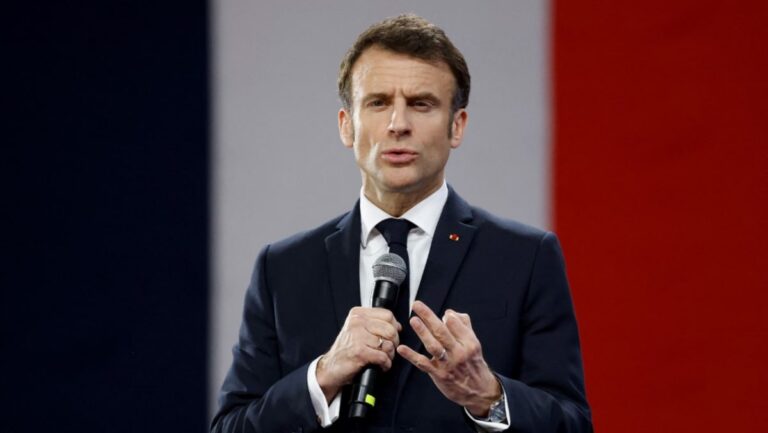
Emmanuel Macron used coordinated interviews published Tuesday across multiple European outlets to argue that the European Union must accelerate delayed reform measures and treat what he termed the “Greenland moment” as impetus for greater strategic autonomy. The French president characterized recent friction with Washington as symptomatic of deeper policy divergence rather than isolated incidents.
Speaking to Le Monde, the Financial Times and other publications, Macron rejected what he described as months of attempted accommodation with the Trump administration, saying that approach had failed to yield lasting results. He urged the bloc to abandon strategies centered on de-escalation when faced with what he called clear acts of aggression.
The remarks come ahead of a European Council summit where economic resilience and the union’s capacity to navigate competition with both the United States and China will dominate the agenda. Officials in Brussels have been working to finalize proposals aimed at boosting investment capacity and reducing external dependencies, though consensus on funding mechanisms remains elusive. Macron’s reference to Greenland alluded to recent U.S. commentary on the Danish territory that stirred unease across European capitals. While specific diplomatic exchanges over Greenland have subsided in recent weeks, the French leader argued that underlying tensions persist and that any appearance of normalization should not distract from structural challenges.
The president warned that the current U.S. administration would likely target European digital regulation in coming months, citing the bloc’s Digital Services Act as a probable flashpoint. That legislative framework, which entered into force last year, imposes transparency and content moderation requirements on large technology platforms operating within EU markets.
Read Also: Greenland U.S. Talks Hit Red Lines As Arctic Tensions Rise
Macron suggested Washington could deploy trade measures, including tariffs, in response to enforcement actions under the act. The regulation has already prompted compliance concerns among U.S.-based technology firms, and American officials have previously signaled discomfort with extraterritorial application of European standards.
The French position described the U.S. posture as overtly opposed to European integration. Macron characterized the approach as seeking the bloc’s fragmentation, a claim that reflects broader anxiety in some member states about external pressure on internal cohesion.
Central to the French agenda is renewed advocacy for joint European debt issuance. Macron reiterated his call for instruments comparable to eurobonds, arguing such mechanisms would enable the union to finance large-scale investment without relying on fragmented national budgets. He linked that proposal to efforts to diminish reliance on the U.S. dollar in international transactions and to build financial infrastructure capable of supporting industrial and technological development. The proposal for common borrowing has divided member states since it was first advanced in earlier forms. Northern European governments, including those in the Netherlands and Germany, have historically resisted shared debt obligations, citing concerns over fiscal discipline and liability distribution. The COVID-19 pandemic prompted temporary acceptance of joint borrowing through the Next Generation EU recovery fund, but making such arrangements permanent has proven contentious.
Thursday’s summit agenda includes discussion of competitiveness measures, defense industrial capacity, and trade strategy. European Commission President Ursula von der Leyen has been working with member state representatives to develop a framework for industrial policy that addresses gaps in critical sectors, including semiconductors, clean energy, and advanced manufacturing.
Read Also: Greenland: Trump Tariffs Trigger European Backlash
The meeting takes place against a backdrop of shifting global trade dynamics. European exporters face potential tariff adjustments from Washington, while competition from Chinese manufacturers in key sectors has intensified. Officials have sought to balance trade openness with protective measures aimed at preserving domestic industrial bases.
Macron’s intervention reflects a broader French effort to position Paris as a leading voice on strategic autonomy. That doctrine, which emphasizes reduced dependence on external actors for security, technology, and economic stability, has gained traction in some quarters but remains contested in member states with different threat assessments and alliance priorities.
Diplomatic sources indicated that France would push for concrete commitments on defense spending and industrial coordination during the summit. Paris has advocated for accelerated procurement of European-manufactured defense systems and greater coordination on technology standards to reduce reliance on foreign suppliers. But without agreement on shared borrowing or alternative revenue mechanisms, the union’s ability to execute large-scale investment programs will depend on national contributions and existing budget allocations. Some officials have proposed reallocating funds from current programs, though such measures would require unanimous approval and face resistance from beneficiaries of existing spending priorities.
Summit conclusions are expected Friday, with leaders set to issue formal statements on economic policy and external relations. Whether member states will endorse binding commitments on debt instruments or settle for aspirational language remains uncertain as delegations prepare negotiating positions.