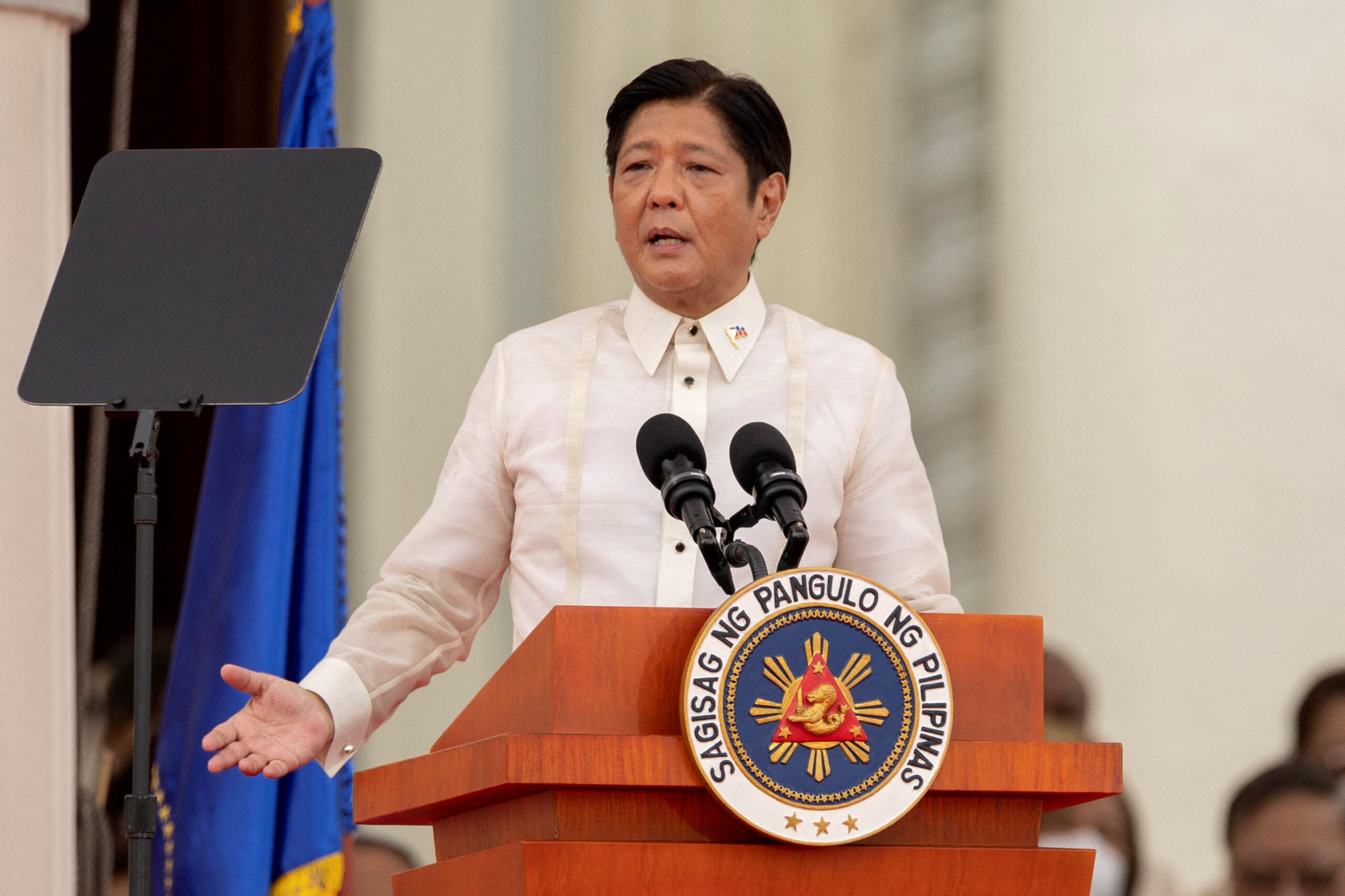
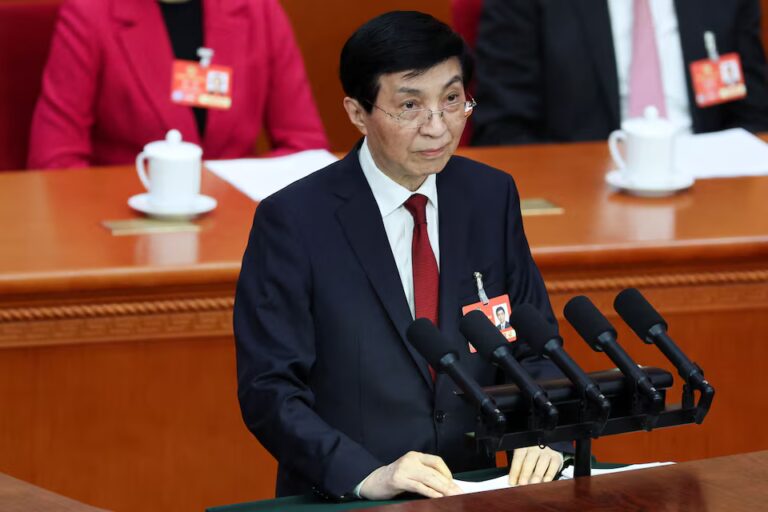
Senior Chinese officials have pledged stronger support for groups favoring unification with Taiwan while threatening a severe crackdown on independence movements, in remarks that underscore Beijing’s hardening stance toward the self-governed island. Wang Huning, the fourth-ranked leader in China’s ruling Communist Party, delivered the warning during this year’s Taiwan Work Conference, an annual closed-door meeting that shapes Beijing’s policy on the island it claims as sovereign territory.
Wang told officials they must push forward the “great cause of national reunification,” according to state news agency Xinhua, which published excerpts from his address on Tuesday. He called for firm backing of what he described as patriotic forces supporting unification on the island, while demanding decisive action against separatists. “It was necessary to firmly support the patriotic pro-unification forces on the island, resolutely strike against ‘Taiwan independence’ separatist forces, oppose interference by external forces, and safeguard peace and stability in the Taiwan Strait,” Xinhua paraphrased Wang as saying.
The conference represents a significant moment in China’s annual policy calendar. Attended by officials from departments handling Taiwan affairs, military leaders, and provincial representatives, the gathering sets strategic priorities that guide Beijing’s approach to cross-strait relations throughout the year.
Taiwan’s government quickly dismissed the statements as routine propaganda. The Mainland Affairs Council, which oversees policy toward Beijing, said Wang had simply repeated familiar talking points about opposing separatism and asserting eventual control. “China’s ultimate goal is to eliminate the Republic of China and advance unification,” the council said in a statement, using Taiwan’s official name.
Read Also: Xi-Trump Phone Call About Taiwan Raises Tensions
China’s defense ministry went further, issuing an explicit military threat. Spokesperson Jiang Bin told reporters in Beijing on Tuesday that any armed provocation by Taiwan independence forces would lead to their annihilation. “If the ‘Taiwan independence’ armed forces dare to provoke a conflict, they will inevitably be wiped out,” Jiang said.
Beijing has never ruled out using force to bring Taiwan under its control, despite maintaining that peaceful reunification remains its preference. The island’s government insists only Taiwan’s 23 million people have the right to decide their future. The democratically-governed island has operated with its own government, military, and currency since 1949, when Nationalist forces fled there after losing a civil war to Mao Zedong’s Communists. Despite this separation lasting more than seven decades, Beijing insists Taiwan has no right to independent existence. China has long proposed a “one country, two systems” arrangement similar to Hong Kong’s governance model, but no major Taiwanese political party supports the idea.
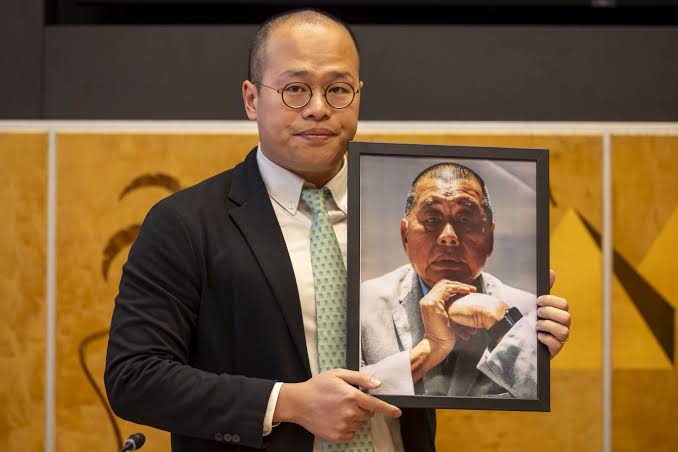
Taiwan President Lai Ching-te on Tuesday pointed to the sentencing of Hong Kong media tycoon Jimmy Lai to 20 years in prison as evidence of Beijing’s repressive rule. “Jimmy Lai’s sentencing exposes the Hong Kong national security law for what it is, a tool of political persecution under China’s ‘one country, two systems’ that tramples human rights and freedom of press,” Lai wrote on X.
The 77-year-old media mogul was convicted under Hong Kong’s national security law, legislation imposed by Beijing in 2020 following months of pro-democracy protests. His case has drawn international condemnation from Western governments and press freedom organizations, who view the prosecution as politically motivated.
Beijing has intensified military and political pressure on Taiwan in recent years, conducting large-scale military drills around the island and cutting off official communication with Taipei. Chinese military aircraft regularly cross the median line of the Taiwan Strait, an unofficial boundary that once served as a buffer zone. The frequency and scale of these incursions have increased significantly since Lai took office in May last year. Beijing views him as a dangerous separatist due to his past statements supporting Taiwan’s distinct identity, though Lai has pledged to maintain the status quo in cross-strait relations.
Read Also: Taiwan Defense Budget Standoff Triggers U.S. Concern
The Chinese president recently raised the Taiwan issue during a phone call with U.S. President Donald Trump. Xi Jinping told Trump that Taiwan represents the most critical matter in U.S.-China relations and urged Washington to handle arms sales to the island with caution.
China has repeatedly warned foreign governments, particularly the United States, against what it calls meddling in its internal affairs. Washington maintains unofficial ties with Taiwan and is legally bound under the Taiwan Relations Act to provide the island with defensive weapons.
The United States switched diplomatic recognition from Taipei to Beijing in 1979 but has maintained robust unofficial relations with Taiwan through the American Institute in Taiwan. Recent arms packages have included advanced fighter jets, missile defense systems, and naval equipment.
Beijing refuses to engage with Lai, whom it labels a separatist, and has rejected his repeated offers for dialogue. Chinese officials insist he must first accept that Taiwan is part of China before any talks can proceed.
Wang’s remarks came just days after he met with a delegation from Taiwan’s main opposition Kuomintang party, which visited Beijing for a think-tank forum. KMT Vice Chairman Hsiao Hsu-tsen told reporters in Taipei on Tuesday that the delegation’s discussions with Wang focused on tourism and artificial intelligence, not political matters. The Kuomintang historically favors closer economic and cultural ties with mainland China, though it also opposes immediate unification and supports Taiwan’s democratic system. The party lost Taiwan’s presidency to Lai’s Democratic Progressive Party in elections held in January last year.