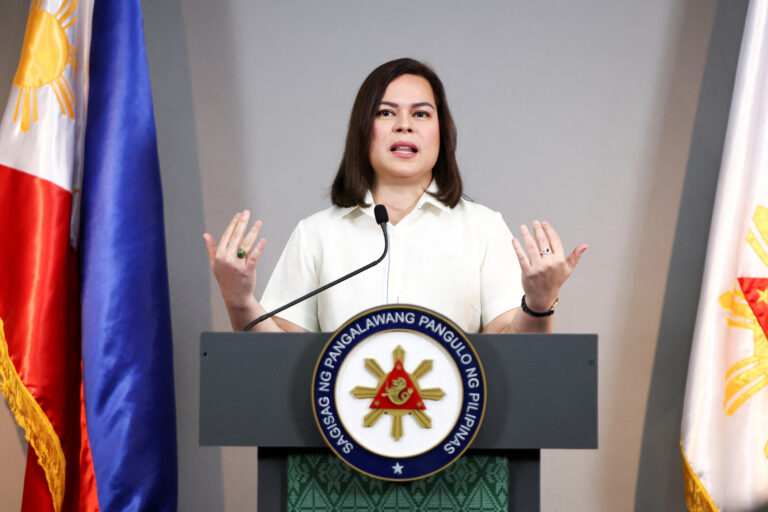
Members of the Philippine clergy on Monday filed a new impeachment complaint against Vice President Sara Duterte, intensifying political pressure on the country’s second-highest official just over a week after similar petitions were lodged by civil society and left-wing groups.
The complaint, accuses Duterte of misusing public funds and making an alleged threat against President Ferdinand Marcos Jr., charges her office disputes.
The filing marks the third impeachment complaint against Duterte in a little more than a week and revives a process that could, if it advances, lead to a Senate trial with far-reaching consequences for the Philippines’ political landscape. Under the constitution, conviction would remove Duterte from office and permanently bar her from holding public office, potentially ending any bid for the presidency in 2028.
The complaint brought by clergy members accuses Duterte of bilking taxpayers of at least US$8.5 million during her time in office. It also cites an alleged death threat against President Marcos made during a late-night press briefing—remarks Duterte later said were misinterpreted and taken out of context.
According to the complainants, the alleged misuse of funds constitutes a serious breach of public trust, one of the constitutional grounds for impeachment in the Philippines. The petitioners argue that accountability at the highest levels of government is essential, particularly given the vice president’s national profile and potential future ambitions.
Read also: 100,000 Philippines Evacuated As Typhoon Fung-wong Nears
Duterte has not publicly responded to the clergy-led complaint as of Monday, but she has previously denied wrongdoing in related allegations and rejected claims that her remarks about the president amounted to a threat.
Impeachment proceedings in the Philippines begin in the House of Representatives, which has the sole power to initiate cases. Once a complaint is found sufficient in form and substance and gains the required support of lawmakers, it is transmitted to the Senate for trial. Senators then sit as jurors, with the Senate president presiding.
A guilty verdict requires a two-thirds vote of the Senate. Conviction results in removal from office and disqualification from future public service, while acquittal allows the official to remain in post.
Duterte was impeached by the House last year, but the Supreme Court later threw out the case on procedural grounds, a ruling that underscored how technical compliance can determine the fate of politically charged complaints. The current filings are being watched closely to see whether they address the deficiencies cited by the court.
The renewed push against Duterte reflects widening political and civic opposition. Last week, Philippine civil society leaders and members of a left-wing coalition filed separate impeachment complaints raising similar allegations, including the purported misuse of public funds and the controversial remarks about President Marcos.
Read also: Philippines Ferry Accident Kills 15 As Search Continues
Together, the filings signal a coordinated effort by disparate groups to force accountability mechanisms back into motion. While clergy involvement adds moral weight in a predominantly Catholic country, legal analysts caution that impeachment remains a political process that depends heavily on lawmakers’ calculations rather than public sentiment alone.
The timing also matters. Duterte, the daughter of former President Rodrigo Duterte, remains one of the most prominent figures in Philippine politics. Although she has not formally declared plans to run for president in 2028, her name frequently appears in early discussions about potential contenders. An impeachment trial—even without conviction—could reshape alliances and blunt momentum.
Duterte has consistently denied allegations of financial impropriety. In earlier responses to similar claims, she maintained that spending under her watch complied with existing laws and regulations. Regarding the alleged death threat, she said her remarks during the late-night briefing were misinterpreted, a position echoed by her allies.
The Supreme Court’s earlier dismissal of a House-backed impeachment on procedural grounds remains a pivotal reference point. That ruling did not address the merits of the accusations, focusing instead on whether lawmakers followed constitutional requirements. Supporters of the new complaints say they have learned from that outcome and structured their filings to withstand legal scrutiny.
The complaints land amid a complex relationship between the Marcos and Duterte political camps. The alliance that propelled both leaders to victory in the last national elections has shown signs of strain, and critics say the impeachment drive reflects deeper rifts within the ruling coalition.
Impeachment in the Philippines is rare and difficult to carry through. Past attempts against presidents and vice presidents have often stalled in Congress or ended in acquittal. Still, the process can consume political oxygen, distract from governance, and test institutional checks and balances.
For lawmakers, the decision to advance or shelve the complaints will likely hinge on public reaction, legal assessments, and shifting political loyalties. For Duterte, the stakes are existential: a conviction would end her political career; survival could reinforce her standing as a formidable national figure.
House leaders will review the new complaint to determine whether it meets constitutional thresholds. If consolidated with earlier filings, lawmakers could face pressure to act swiftly—or to delay amid concerns about legal pitfalls and political fallout.
As the process unfolds, attention will focus on whether the House moves the case to the Senate and whether senators appear willing to take on a trial with profound implications for the country’s future leadership.