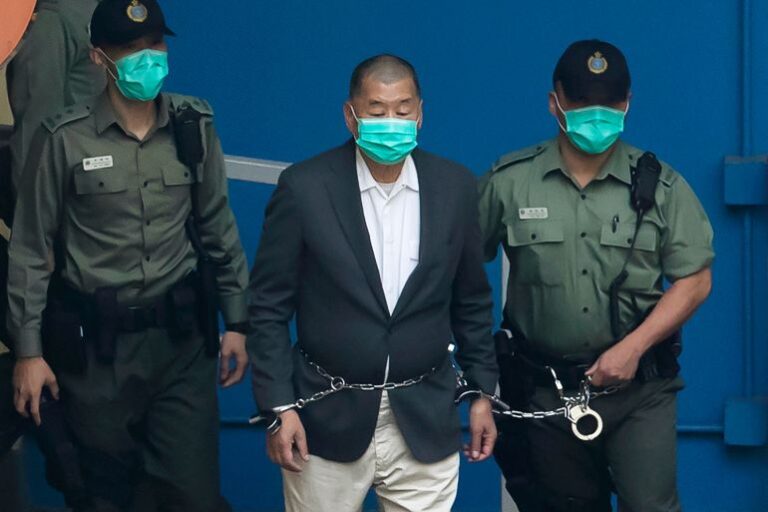
Media entrepreneur and pro-democracy figure Jimmy Lai was sentenced to 20 years in prison on Monday after being convicted of colluding with foreign forces under Hong Kong’s national security law, marking the most severe punishment handed down under the legislation since it was introduced in 2020.
A panel of judges said Lai’s actions constituted “serious and grave criminal conduct” and placed him in the “most serious” category of offences under the law, which Beijing imposed following mass protests in 2019. Authorities in Hong Kong and mainland China said the verdict underscored the territory’s commitment to national security and the rule of law, while rights groups and several foreign governments expressed concern about the implications for press freedom and political dissent.
Read Also: Hong Kong Tycoon Jimmy Lai Sentenced To 20 Years In Jail
Lai, 78, has been in custody for more than five years following earlier convictions related to fraud and participation in unauthorised assemblies. Monday’s sentence adds to existing jail terms and makes him one of the highest-profile figures prosecuted under the sweeping security framework. Six former Apple Daily executives and two activists were also sentenced, receiving prison terms ranging from six years and three months to 10 years.
The courtroom proceedings drew heavy security, with police deployed around the building as supporters gathered outside. Some people queued for days to secure seats inside. One supporter said he wanted to greet Lai in person because he believed it might be the last time he would see him. Inside the court, Lai acknowledged relatives and supporters as the sentence was delivered, while family members appeared visibly emotional as they left the building.
Lai has consistently denied the charges, saying his actions reflected advocacy for Hong Kong’s values, including free speech and the rule of law. The case centred partly on his contacts with senior U.S. officials during the 2019 protests, including meetings with then–Vice President Mike Pence and then–Secretary of State Mike Pompeo. During testimony last year, Lai said he had “never” used foreign connections to influence overseas policy, describing his communications as efforts to explain developments in Hong Kong rather than coordinate action.
The national security law criminalises acts deemed to involve secession, subversion, terrorism or collusion with foreign forces. Chinese and Hong Kong officials say the legislation restored stability after months of unrest that challenged Beijing’s authority over the territory. Critics argue it has curtailed civil liberties and reshaped Hong Kong’s once-vibrant media and political landscape.
Hong Kong’s leader described the outcome as “deeply gratifying,” while China’s foreign ministry said the case was an internal matter and defended the city’s judicial process. A spokesperson said the central government “firmly supports the HKSAR government in maintaining national security and punishing criminal acts which endanger it.”
International reaction was swift. The United Kingdom, Australia, the European Union and Japan have expressed concern over Lai’s prosecution, and United Nations human rights chief Volker Türk has called for his release, citing his age and health. Lai holds British citizenship, and his family has urged London to take stronger action on his behalf.
“It is incredibly heartbreaking,” his son Sebastien Lai said in an interview, adding that he had raised the issue with British officials repeatedly. He criticised recent diplomatic engagement between the UK and China, saying opportunities to advocate for his father had been missed.
Read Also: South Korea Birth Rate Remark Sparks Party Expulsion
Press freedom organisations condemned the ruling, with the Committee to Protect Journalists describing the decision as a major setback for independent journalism in Hong Kong. Human Rights Watch said the case reflected Beijing’s determination to silence critics, while members of Lai’s international legal team called for coordinated international pressure. Hong Kong authorities have rejected such criticism, saying the courts operate independently and that defendants are prosecuted based on evidence.
Lai founded the pro-democracy newspaper Apple Daily and the magazine Next, publications known for their outspoken coverage of Beijing and support for democratic movements. The outlets were shut down in 2021 after police froze company assets under national security provisions, leaving hundreds of journalists without work and marking a turning point for Hong Kong’s media industry.
Born in Guangzhou, mainland China, Lai arrived in Hong Kong as a teenager after stowing away on a fishing boat. He began working in factories before building a business empire that included the clothing brand Giordano and later expanded into publishing. His political activism intensified after China’s 1989 Tiananmen Square crackdown, and he became a frequent participant in pro-democracy demonstrations.
Legal analysts say the severity of Monday’s sentence reflects the courts’ interpretation of national security offences as carrying heightened risks to the state. Supporters argue Lai’s prosecution demonstrates a narrowing space for dissent, while officials maintain the law targets only acts that threaten national stability.
With the trial concluded, Lai’s legal team is expected to consider further appeals, while international attention is likely to remain focused on how the national security law continues to reshape Hong Kong’s political and media environment.