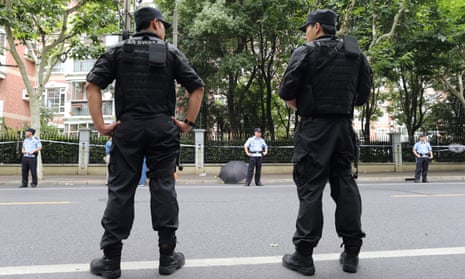
Six people were arrested in Milan after clashes between police and protesters on the opening day of the Winter Olympic Games, underscoring rising tensions in Italy over public dissent, security laws, and the social cost of hosting global sporting events. Authorities said the arrests followed isolated violence during largely peaceful demonstrations in the northern city, one of the main Olympic host venues.
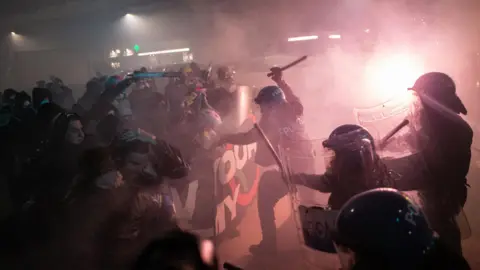
Thousands of protesters gathered in central Milan to voice anger over a mix of grievances, including the cost-of-living crisis, environmental concerns, and opposition to the Olympics themselves. While most marchers remained peaceful, a small group set off fireworks and threw stones at police, prompting officers to respond with water cannons to disperse the crowd.
The Milan Winter Olympics protests came just days after Italy’s government pushed through tougher public order laws in response to violent unrest at a demonstration in Turin last weekend. That protest left more than 100 police officers injured, according to official figures, and has since reshaped the national debate on protest rights and security ahead of the Games.
The protest unfolded as Milan marked the first day of Olympic competition, drawing global attention to the city. Police said six people were detained on charges linked to public disorder and violence against officers. No serious injuries were reported in Milan, but authorities said they were on high alert given the broader security climate.
Read Also: Italy Raises Doubts Over Trump Gaza Peace Board
Deputy Prime Minister Matteo Salvini, a key figure behind the new security measures and also Italy’s transport minister, condemned those involved in the confrontations. He described them as “criminals” and said the government would not tolerate attacks on law enforcement.
“Just days after the shameful violence in Turin, more clashes, more attacks on law enforcement,” Salvini said in a statement. “We’re proud to have pushed for a new security package that will allow for even more effective interventions against thugs and criminals.”
Italian police emphasized that the majority of demonstrators in Milan marched peacefully and exercised their right to protest without incident. Officers said their response was targeted at small groups responsible for violence and vandalism.
The Milan Winter Olympics protests took place against the backdrop of newly tightened protest laws adopted by the government on Thursday. The measures were fast-tracked after last weekend’s violence in Turin, where a demonstration initially organized to oppose the eviction of an unofficial social center spiraled into clashes between police and armed groups.
More than 30 people were arrested in Turin after protesters confronted officers with improvised weapons. One police officer was attacked with a hammer, an incident Prime Minister Giorgia Meloni later described as attempted murder. The violence shocked the country and accelerated political support for stronger policing powers.
Under the new security package, police are allowed to detain individuals deemed likely to cause unrest for up to 12 hours before a demonstration begins. The aim, according to the government, is to prevent organized violence from spreading and to protect major public events such as the Olympics.
Read Also: Italy’s PM Meloni: Jokes She’d ‘Kill Someone’ To Quit Smoking
Critics, including civil liberties groups and opposition lawmakers, have labeled the measures repressive. They argue the law risks criminalizing peaceful dissent and granting police excessive discretion to detain protesters without clear evidence of wrongdoing. Several human rights organizations have warned that the rules could face legal challenges once enforced.
According to reporting by the BBC and Reuters, similar debates have unfolded in other European countries hosting large-scale international events, where governments have struggled to balance security concerns with the right to protest.
Many demonstrators in Milan said their opposition went beyond security laws, focusing instead on the broader impact of the Winter Olympics. Protesters argue that the Games, spread across multiple regions in northern Italy, have imposed heavy financial and environmental costs while delivering limited long-term benefits to local communities.
“The Olympic Games are no longer sustainable from an environmental or a social point of view,” said Francesca Missana, a protester who spoke to AFP. “Their time is up.”
Organizers said the Games were initially promoted as sustainable and cost-neutral, but the reality has been far different. Alberto di Monte, one of the protest organizers, told AFP that billions of euros had been spent on new roads and infrastructure rather than on protecting fragile mountain ecosystems.
The Winter Olympics will run until February 22, with competitions held across northern Italy, including Milan, Cortina d’Ampezzo, Predazzo, Tesero, Livigno, and Bormio. Italian authorities have deployed thousands of security personnel to protect venues, transport networks, and public spaces throughout the duration of the Games.
According to AFP and AP, officials say security planning has been ongoing for months, but recent protests and suspected sabotage have added urgency to those efforts. Police say they are prepared for further demonstrations but hope to avoid escalation by distinguishing between peaceful protesters and violent groups.
As athletes compete and spectators arrive from around the world, Italy faces a delicate balancing act: showcasing the Games while managing public anger over economic pressures, environmental concerns, and civil liberties. How authorities handle future protests may shape not only the remainder of the Olympics, but also the broader debate over dissent and security in Italy.