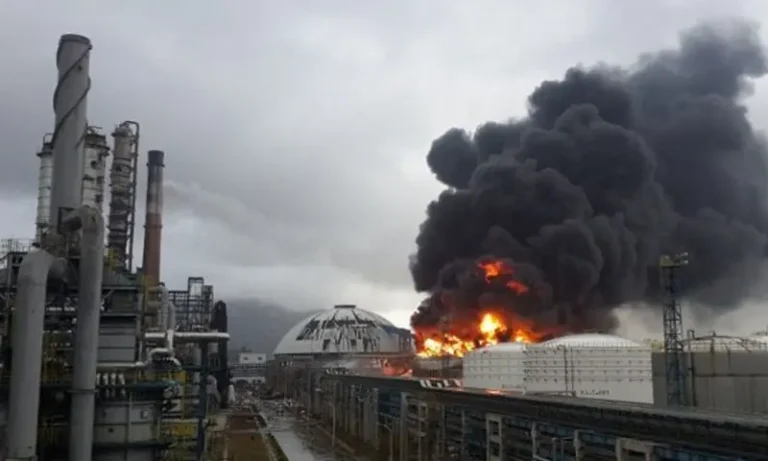
BEIJING — A deadly explosion at a biotechnology factory in northern China has killed eight people, state media reported Sunday, prompting authorities to detain the company’s legal representative and launch a full investigation into the cause of the blast. The incident occurred at Jiapeng Biotech in Shanyin County, Shanxi province, west of Beijing.
China’s official Xinhua News Agency said the death toll rose after one person previously reported missing was confirmed dead, bringing the total number of fatalities to eight. Emergency responders continued clean-up operations at the site as investigators worked to determine what triggered the explosion.
The blast underscores persistent concerns over industrial safety in China, where factory accidents remain common despite years of regulatory reforms and high-profile crackdowns following major disasters.
According to Xinhua, the explosion tore through facilities at Jiapeng Biotech on Saturday morning, sending thick, dark yellow smoke into the air. Reporters at the scene observed smoke still rising from the site hours later as fire crews and emergency teams worked to secure the area.
Local authorities initially said seven people had been killed and one was missing. That figure was later revised when rescue teams completed search efforts and confirmed the eighth fatality. No updated information was immediately provided on the number of injured, though authorities said emergency medical services were dispatched promptly after the blast.
Read Also: China Visa Free Travel For British Citizens Agreed In Beijing
The factory is located in Shanyin County, a largely industrial area within Shanxi province, a region long associated with heavy industry, mining, and manufacturing. While biotech facilities are generally considered less hazardous than coal mines or chemical plants, explosions can still occur if volatile substances, gas build-ups, or equipment failures are involved.
Officials have not yet disclosed what materials were being handled at the time of the incident or whether safety violations had been identified.
In a subsequent update, Xinhua reported that the company’s legal representative had been taken into custody. Detentions of senior executives or legal representatives are common in China following fatal industrial accidents and typically signal a serious criminal investigation.
Authorities have established a special investigative team to determine the cause of the explosion and assess whether negligence, regulatory breaches, or illegal operations were involved. The team is expected to examine safety protocols, equipment maintenance records, and compliance with national workplace safety laws.
Chinese regulators often emphasize accountability after such incidents, particularly when fatalities occur. In recent years, factory owners and managers have faced fines, long prison sentences, or bans from operating businesses if investigations uncover safety lapses.
Reuters and the Associated Press have previously reported that detaining company executives has become a standard step in probes of major industrial accidents, reflecting pressure on local officials to demonstrate swift enforcement and deterrence.
Read Also: China Executes Telecom Fraud Criminals in Myanmar Crackdown
Industrial accidents remain a recurring problem across China, especially in sectors such as mining, chemicals, construction, and manufacturing. Despite stricter regulations and public pledges to improve workplace safety, enforcement can vary widely between regions.
According to past reporting by the BBC and AFP, rapid industrial expansion, cost-cutting pressures, and weak oversight at smaller firms continue to contribute to workplace hazards. In some cases, companies are accused of ignoring safety rules to meet production targets or reduce expenses.
Shanxi province, in particular, has a long history of industrial accidents, especially in coal mining. While authorities have closed thousands of unsafe mines over the past decade, other industrial facilities have also come under scrutiny.
The Chinese government has repeatedly called for “zero tolerance” toward safety violations. After several deadly incidents in recent years, Beijing ordered nationwide inspections of factories, warehouses, and industrial parks, urging local governments to identify hidden risks before accidents occur.
Still, critics argue that penalties often come only after tragedies, rather than preventing them through consistent enforcement.
Local authorities said clean-up operations at the Jiapeng Biotech site were ongoing, with teams working to remove debris and secure potentially hazardous materials. Environmental monitoring was also underway, though officials did not report any immediate risk to nearby residents.
Investigators are expected to release preliminary findings once forensic examinations and safety inspections are completed. In similar cases, final investigation reports can take weeks or months, particularly if criminal charges are considered.
State media did not indicate whether production at the facility had been suspended indefinitely, but factories involved in fatal accidents are typically shut down during investigations.
The incident is likely to prompt renewed scrutiny of biotech and pharmaceutical manufacturing safety, an industry that has expanded rapidly in China as the country invests heavily in life sciences and medical innovation.
As investigators work to determine what went wrong at Jiapeng Biotech, the explosion adds to mounting pressure on regulators and companies alike to ensure that safety standards are enforced before, not after, lives are lost.