Pakistan on Saturday began burying the victims of a deadly suicide bombing at a Shi’ite Muslim mosque in Islamabad, as thousands of mourners gathered under heavy security and authorities warned that further militant attacks could not be ruled out.
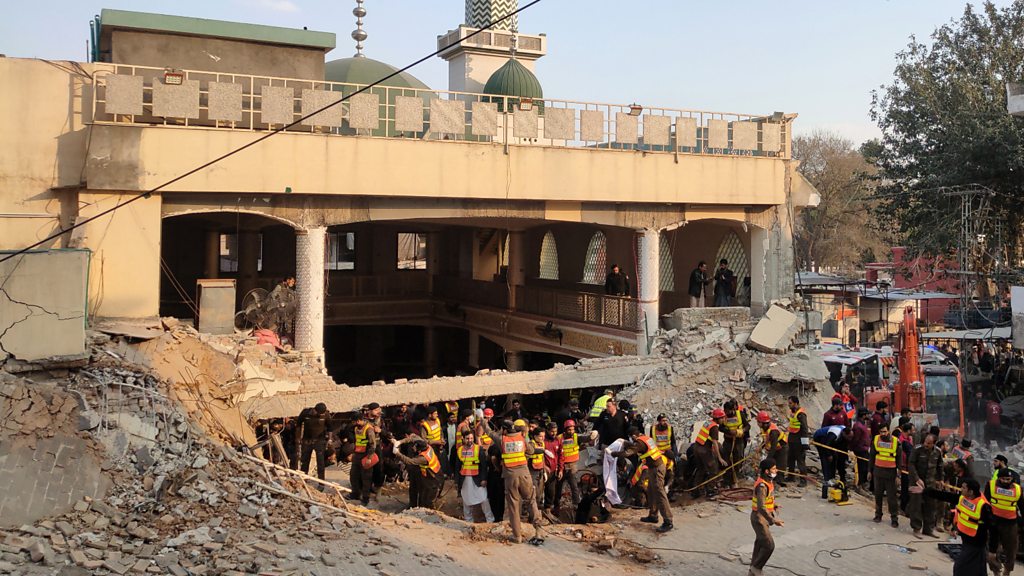
At least 31 people were killed and more than 170 injured when an attacker opened fire inside the Khadija Tul Kubra Imambargah, a Shi’ite place of worship on the outskirts of the capital, before detonating an explosive device, according to government officials. The bomber was also killed in the blast.
The Islamic State group (IS) claimed responsibility for the attack in a statement released on the Telegram messaging platform, marking one of the deadliest assaults in Islamabad in recent years and raising alarm about a potential resurgence of urban militancy.
Bombings are uncommon in Islamabad, one of Pakistan’s most heavily guarded cities and home to key government institutions and diplomatic missions. However, this attack marked the second major bombing in the capital in three months, fueling fears that militant groups may be expanding their reach beyond traditional conflict zones in the country’s northwest.
The assault targeted worshippers during a religious gathering, amplifying concerns over sectarian violence in a country where Shi’ite Muslims, estimated to make up between 10 and 15 percent of Pakistan’s population of roughly 241 million, have long faced attacks by extremist groups.
Security officials said the attacker entered the mosque compound, fired at worshippers, and then detonated the explosive, causing mass casualties in a confined space.
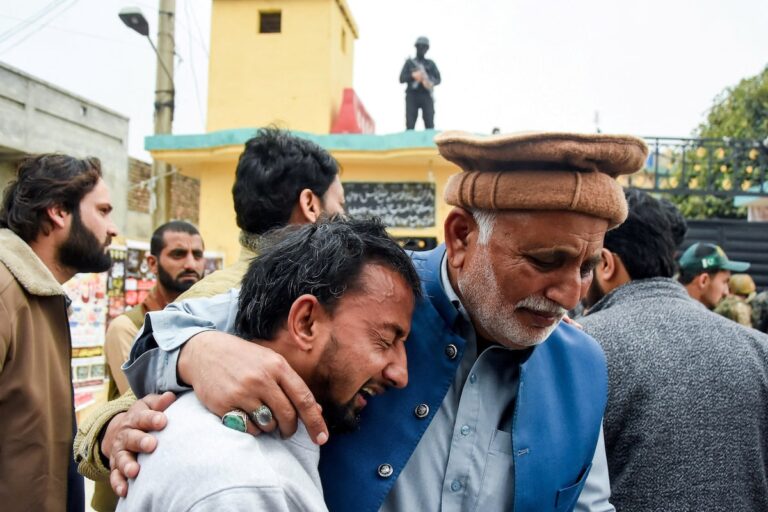
On Saturday morning, funeral prayers for several of the victims were held in an open area near the mosque, with police, paramilitary forces, and elite commandos deployed across the neighborhood. Roads were blocked, checkpoints erected, and surveillance increased as authorities sought to prevent any follow-up attacks.
Mourners, many visibly grieving and shaken, gathered in large numbers. Some beat their chests in mourning before lifting coffins wrapped in cloth and carrying them toward burial grounds.
Read Also: Pakistan Joins Trump Gaza Peace Board In Ceasefire Push
Addressing the crowd, a prayer leader condemned the violence in stark terms, saying, “Whoever did this terrorism, may God burn them in hell and turn them to ash.” The remarks were met with anguished cries from worshippers, reflecting widespread anger and sorrow.
Pakistan’s Information Minister Attaullah Tarar said security agencies had launched a full investigation and were “tracing the facilitators and handlers” behind the bombing.
He confirmed that several of the injured remained in critical condition, adding that they were “being provided the best healthcare possible.” Hospitals in Islamabad were placed on emergency footing following the blast, with doctors working through the night to treat victims suffering from shrapnel wounds and burns.
Authorities have not released the identities of all the victims, but officials said the dead included men and women of varying ages.
In a post on social media platform X, Pakistan’s Defence Minister Khawaja Asif said the bomber had previously traveled to Afghanistan, a claim that has heightened scrutiny of cross-border militant movements.
Asif also accused India of sponsoring the attack, though he provided no evidence to support the allegation. Pakistan and India, nuclear-armed rivals, have a long history of mutual accusations over militancy and cross-border interference.
India’s Ministry of External Affairs swiftly rejected the claim and condemned the mosque attack. “It is unfortunate that, instead of seriously addressing the problems plaguing its social fabric, Pakistan should choose to delude itself by blaming others for its home-grown ills,” New Delhi said in a statement.
Read Also: Pakistan Afghanistan Border Clashes As Talks Press On
The Islamic State group has repeatedly targeted Shi’ite communities in Pakistan, particularly in recent years, despite sustained counterterrorism operations by Pakistani forces.
According to reporting by Reuters, the BBC, and AFP, IS has claimed responsibility for attacks on Shi’ite mosques, religious processions, and community gatherings across Pakistan, especially in Balochistan and Khyber Pakhtunkhwa provinces.
Pakistan has also faced violence from other militant groups, including the Tehreek-e-Taliban Pakistan (TTP), a Sunni Islamist organization distinct from but ideologically aligned with the Afghan Taliban. While TTP and IS are rivals, both have carried out attacks on civilians and security forces.
Shi’ite Muslims have frequently borne the brunt of sectarian attacks, with human rights groups warning that religious minorities remain particularly vulnerable despite official pledges to improve protection.
Security experts say the Islamabad bombing has reignited concerns that militant groups may be attempting to re-establish networks in major cities, reversing years of relative calm achieved through military operations and intelligence-led policing. “This attack challenges the assumption that the capital is insulated from large-scale terrorism,” said a senior security analyst, speaking on condition of anonymity. “It suggests gaps that need urgent attention.”
The government has not publicly detailed whether security protocols around religious sites will be revised, but officials confirmed that additional forces have been deployed to mosques and sensitive locations nationwide.
For residents of Islamabad, the attack has shattered a sense of security often taken for granted in the capital. Many expressed fear that sectarian violence could escalate if militant groups are not swiftly dismantled. “This was supposed to be a safe place,” said a local resident who attended the funeral prayers. “If this can happen here, it can happen anywhere.”