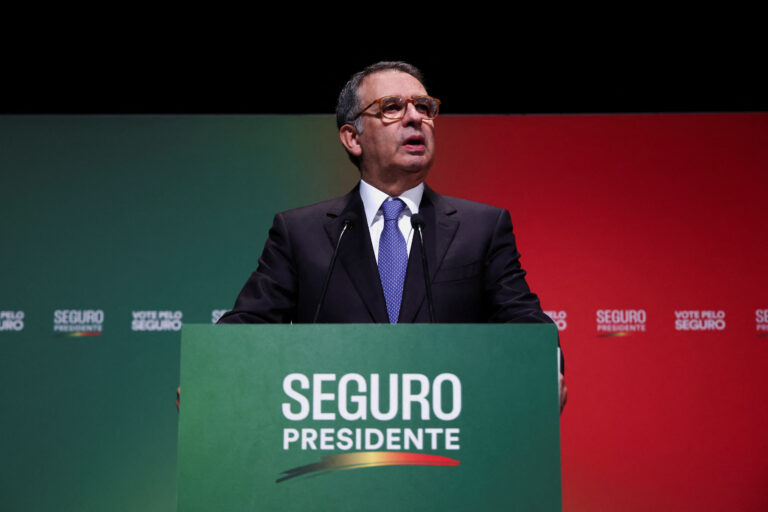
Portugal’s presidential runoff appears headed for a decisive outcome, with a new opinion poll showing moderate Socialist candidate António José Seguro holding a commanding lead over far right challenger André Ventura ahead of Sunday’s vote.
The survey, released late Tuesday by broadcaster RTP and conducted by researchers at Católica University, puts Seguro at 67 percent of voting intentions, compared with 33 percent for Ventura, leader of the anti establishment Chega party.
The contest marks only the second presidential runoff in Portugal since the 1974 Carnation Revolution ended decades of authoritarian rule. The last occurred in 1986, underscoring how the rise of the far right has reshaped the country’s political landscape and fragmented traditional voting blocs.
Analysts say the runoff reflects growing frustration with mainstream parties, even as polling suggests a strong majority of voters are rallying behind a centrist figure seen as a stabilizing force.
Portugal’s presidency is mostly symbolic, but the office carries significant influence during political crises, including the power to veto legislation and dissolve parliament.
Read Also; Portugal Presidential Election Runoff Looms As Far Right Gains
Seguro, a former leader of the Socialist Party, has pledged to act as a unifying figure above party politics. He has said he would be a moderate president who would not interfere with the government’s daily work or behave as a “shadow prime minister.”
Ventura has offered a starkly different vision. He has described himself as an “interventionist president,” promising to challenge what he calls decades of corruption by established parties and to pursue a hard line on immigration.
Ventura has also faced repeated criticism over remarks widely viewed as discriminatory toward Roma communities and immigrants from South Asia, drawing concern from rights groups and political opponents.
Read Also: Portugal Faces Intense Forest Fires Amid Heatwave
Founded less than seven years ago, Chega has rapidly become a major political force. In parliamentary elections last May, the party secured 22.8 percent of the vote, emerging as the largest opposition group in the legislature.
Critics argue Ventura is using the presidential campaign to expand Chega’s national profile rather than as a realistic bid for the presidency. Supporters, however, see the race as proof that the party has moved from the fringes into the political mainstream.
The poll was conducted between January 29 and February 2 among 1,601 respondents and carries a margin of error of 2.4 percent, according to RTP.