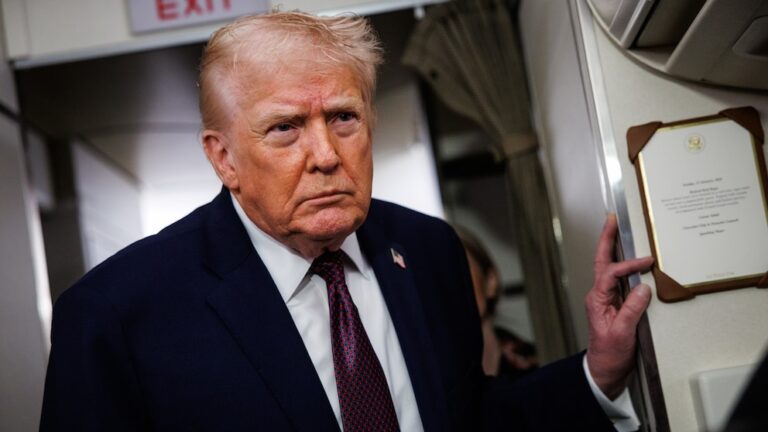
U.S. President Donald Trump is considering a range of military and strategic options against Iran, including targeted strikes on security forces and senior figures, as Washington explores ways to pressure Tehran following a deadly crackdown on nationwide protests, according to multiple officials briefed on the discussions.
The deliberations reflect a sharp escalation in U.S. posture toward Iran, with sources saying the White House is examining actions intended to weaken Iran’s leadership and embolden internal opposition — even as regional and Western officials warn that military force alone is unlikely to bring political change in Tehran.
Two U.S. officials familiar with internal discussions said Trump is seeking to create conditions for what aides described as “regime change” after Iranian authorities crushed protests earlier this month, leaving thousands dead, according to regional estimates cited by diplomatic sources.
According to those officials, options under review include targeted strikes against commanders, security institutions, and government infrastructure that Washington holds responsible for the violence. The goal, they said, would be to undermine state control and give protesters confidence to challenge government and security buildings.
Read Also: Breaking: Iran, Saudi Arabia Leaders Tout Unity For Peace
One official said broader military action is also being examined, including potential strikes on Iran’s ballistic missile systems — which can reach U.S. allies in the Middle East — and its nuclear enrichment infrastructure.
Another U.S. source said no final decision has been made, stressing that Trump has not committed to a specific military course and continues to weigh diplomatic and military pathways.
The arrival of a U.S. aircraft carrier group and supporting warships in the Middle East this week has significantly expanded Washington’s operational capabilities, following repeated threats by Trump to intervene after Iran’s violent suppression of protests.
Read Also: Iran Warns U.S. Assets Could Be Targeted After Trump Threat
However, four Arab officials, three Western diplomats, and a senior Western source said their governments were concerned that limited strikes could backfire — weakening an already traumatized protest movement rather than strengthening it.
Alex Vatanka, director of the Iran Program at the Middle East Institute, said the opposition movement faces overwhelming force. Without major defections from Iran’s military, he said, the protests remain “heroic but outgunned,” highlighting the imbalance of power on the ground.
Publicly, Trump has continued to press Tehran on nuclear negotiations. On Wednesday, he urged Iran to return to talks, warning that any future U.S. attack would be more severe than the June bombing campaign against three Iranian nuclear sites.
He also described U.S. naval deployments in the region as an “armada” positioned near Iran.
In response, a senior Iranian official told Reuters that Tehran is “preparing itself for a military confrontation, while at the same time making use of diplomatic channels.” The official added that Washington has shown little openness to diplomacy despite public statements.
Iran’s foreign ministry, the U.S. Department of Defense, and the White House did not respond to requests for comment. Israel’s prime minister’s office also declined to comment. Sources in the story requested anonymity due to the sensitivity of the discussions.
Israeli and Arab officials briefed on the talks have privately expressed skepticism that air power alone could destabilize Iran’s clerical leadership, warning that limited military action could harden state control rather than weaken it.