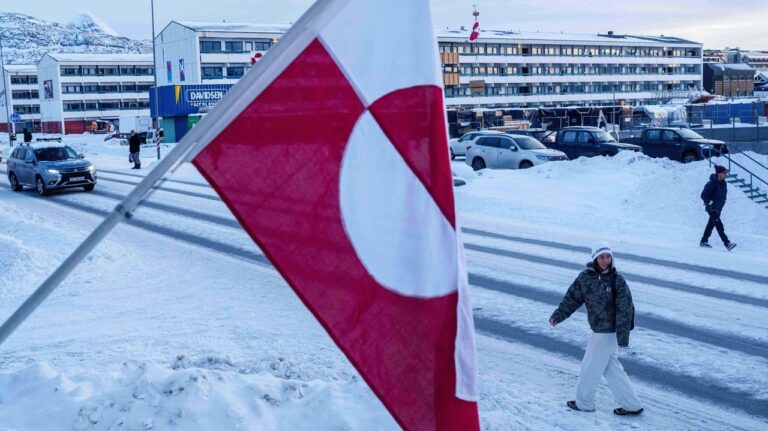
Greenland’s prime minister said Wednesday that negotiations with the United States over the Arctic island’s future must respect clear “red lines,” even as he acknowledged the need to strengthen regional security amid growing Russian military activity.
Jens-Frederik Nielsen made the remarks during a visit to Paris alongside Danish Prime Minister Mette Frederiksen, where the two leaders met French President Emmanuel Macron to rally European backing in response to U.S. President Donald Trump’s renewed push for greater American control over Greenland, a Danish territory for centuries.
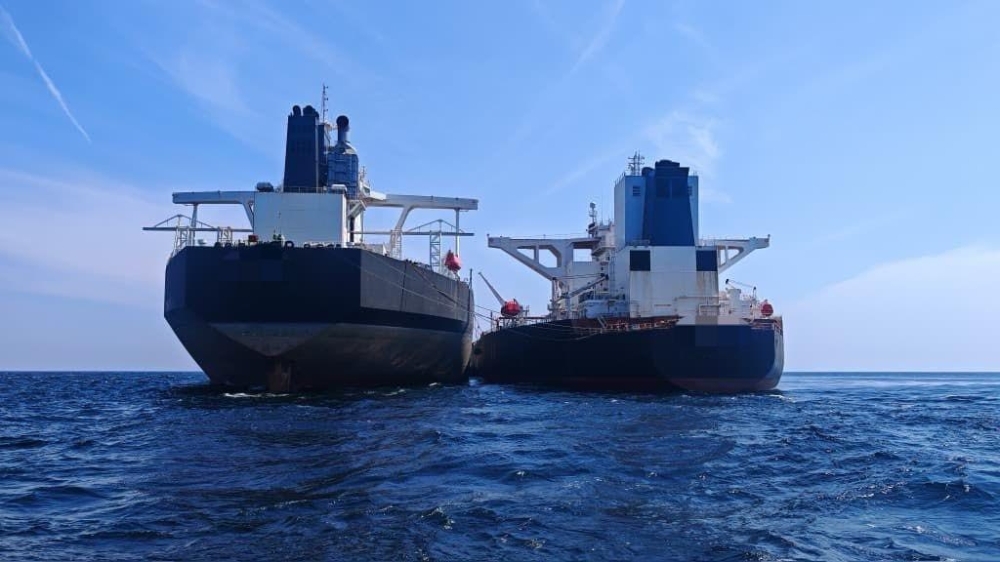
The dispute has sharpened global attention on the Arctic’s strategic importance, where melting ice has opened new shipping routes and access to natural resources, while Russia has expanded its military footprint across the region.
Speaking after talks at Sciences Po University, Nielsen said Greenland was facing mounting external pressure as discussions with Washington continue.
“We are under pressure — serious pressure,” Nielsen said, describing concerns among Greenland’s population. “We are trying to handle our people who are afraid, scared.”
“We need to do more surveillance and security in our region because of the way Russia acts now,” Nielsen added.
Talks involving Greenland, Denmark, and the United States are expected in the coming weeks, though Nielsen did not specify which demands Greenland considers non-negotiable.
Read Also: Trump Rules Out Force For Greenland Control
Macron said France shared the view that Europe must reinforce its defense presence in the Arctic, citing Russia’s posture in the Far North and China’s expanding economic footprint.
“Given Russia’s stance in the Far North, China’s economic presence, and the strategic consequences of this rapprochement, we agree on the need to strengthen our defense posture in the Arctic,” Macron said.
He added that France supports increased NATO vigilance and operations in the region and is prepared to participate.
According to Reuters, roughly half of the Arctic’s landmass lies within Russian territory. Since 2005, Moscow has reopened and modernized dozens of Soviet-era military bases across its Arctic mainland and nearby islands.
Read Also: Greenland: Trump Tariffs Trigger European Backlash
Trump’s demands regarding Greenland have strained relations between Washington and Copenhagen, despite both being founding NATO members. While Trump last week ruled out taking Greenland by force and withdrew tariff threats against Europe, the episode has accelerated efforts by European leaders to reduce reliance on the United States for security.
Frederiksen said the situation had revealed a growing sense of unity among European countries.
“I think there are some lessons learned in the last couple of weeks for Europe,” she said at a joint press conference with Macron and Nielsen.
She warned that the global order was undergoing lasting change and stressed the importance of European resilience — while still emphasizing transatlantic cooperation.
“If we allow Russia to win in Ukraine, they will continue,” Frederiksen said. “The best way forward for the United States and Europe is to stick together.”
While diplomatic channels remain open, the Greenland dispute underscores broader geopolitical tensions reshaping the Arctic, where NATO allies, Russia, and China are increasingly competing for influence.