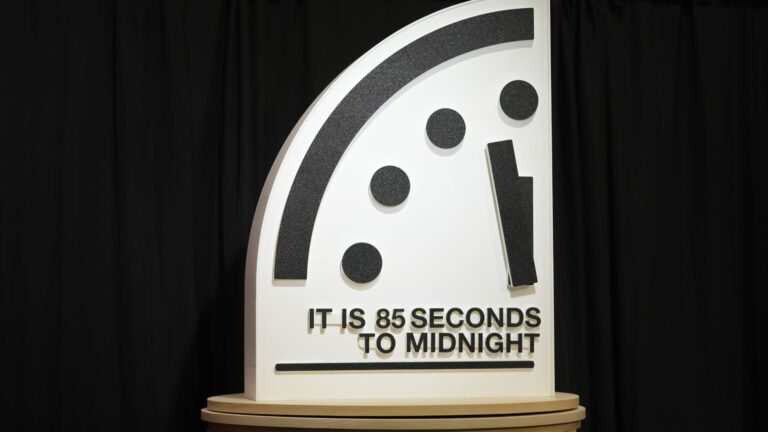
Scientists behind the Doomsday Clock have moved the symbolic timepiece closer to midnight, citing escalating nuclear dangers, unchecked use of artificial intelligence in warfare, and intensifying geopolitical tensions, according to a new assessment.
The shift marks the third time in four years that the clock has edged nearer to catastrophe, reflecting what experts describe as a worsening global security environment driven by leadership failures and weakening international safeguards.
Alexandra Bell, president and CEO of the Bulletin of the Atomic Scientists, said the latest adjustment reflects more than military risks alone.
“The Doomsday Clock is about global risks, and what we have seen is a global failure in leadership,” Bell told Reuters, warning that rising authoritarianism and neo-imperial ambitions are accelerating the world’s movement toward crisis.
She added that an “Orwellian approach to governance” and growing geopolitical rivalry are steadily eroding systems meant to prevent large-scale conflict.
Read Also: Trump Orders Resumption Of U.S. Nuclear Weapons Testing
Beyond nuclear weapons, scientists also flagged concerns over the unregulated integration of artificial intelligence into military systems, including the possibility of AI being used to assist the creation of biological weapons or spread disinformation at scale. Climate change, they noted, remains an unresolved and compounding global threat.
“Nothing in 2025 trended in the right direction,” she said, pointing to deteriorating diplomatic frameworks, renewed threats of explosive nuclear testing, and rising proliferation risks.
She also highlighted that “the risk of nuclear use is unsustainably and unacceptably high,” as multiple military conflicts unfold under the shadow of nuclear escalation.
Read Also: Trump Urges Putin To Stop Ukraine War After Missile Test
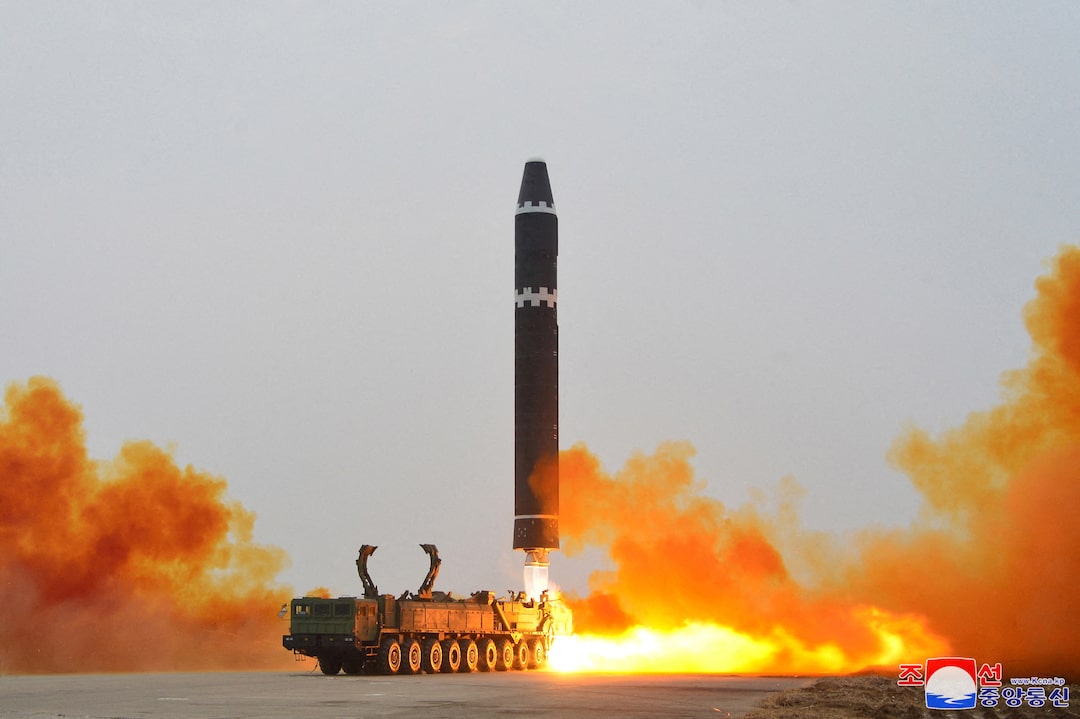
According to the Bulletin, active nuclear-related flashpoints now include Russia’s war in Ukraine, U.S. and Israeli strikes on Iran, and border clashes between India and Pakistan. Ongoing tensions in East Asia — particularly involving North Korea and China’s stance toward Taiwan — were also cited as major risk factors.
One of the most pressing concerns raised by scientists is the impending expiration of the New START treaty, the last remaining nuclear arms control pact between the United States and Russia.
The agreement, which limits each country to 1,550 deployed nuclear warheads, is set to expire on February 5. Russian President Vladimir Putin proposed in September extending the treaty’s limits for another year, but U.S. President Donald Trump has not formally responded.
Western security analysts remain divided on whether accepting Russia’s proposal would meaningfully reduce risks or simply delay a broader arms race.
Further heightening anxiety, Trump ordered the U.S. military in October to restart preparations for nuclear testing, ending a halt that has lasted more than three decades.
No nuclear power — aside from North Korea in 2017 — has conducted an explosive nuclear test in over 25 years. Bell warned that a renewed testing era could destabilize global nonproliferation efforts and trigger similar moves by other powers.
She added that China would benefit most from a return to full-scale testing, given its ongoing expansion of its nuclear arsenal, a concern echoed by multiple Western security analysts.
As arms control frameworks weaken and emerging technologies reshape warfare, scientists say the world faces a narrowing window to reverse current trends.