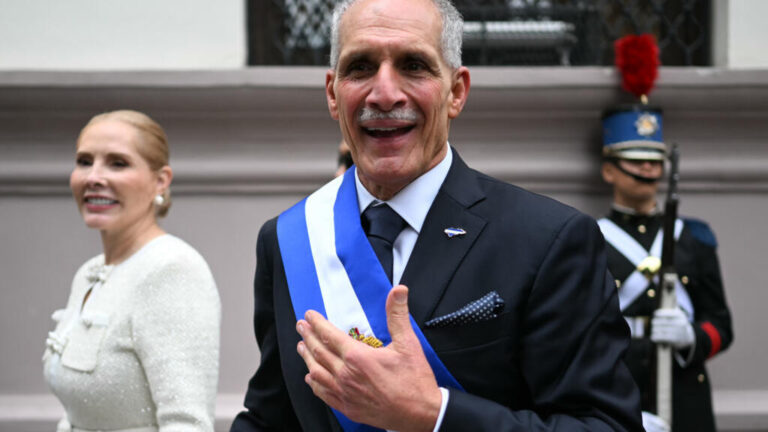
Nasry Asfura was sworn in as president of Honduras on Tuesday, taking office after a closely contested election that unfolded amid political turmoil, fraud allegations, and diplomatic tensions involving the United States.
The conservative politician and businessman, 67, will serve a four-year term ending in January 2030, assuming leadership of one of Central America’s poorest and most politically fragile nations at a time of economic strain and institutional distrust.
Asfura’s inauguration at the National Congress comes after months of uncertainty following a razor-thin election victory, with a margin of just 26,000 votes over centrist challenger Salvador Nasralla.
According to Reuters, the vote-counting process was repeatedly delayed and contested, while U.S. President Donald Trump’s last-minute endorsement of Asfura injected further controversy into the race.
Opposition figures alleged irregularities in the tally, fueling protests and deepening polarization in a country already grappling with democratic fragility.
Read Also: Trump Pardon Juan Orlando Hernández, Sparks Political Storm
In his inaugural address, Asfura pledged swift action on Honduras’ most pressing challenges, including poverty, corruption, and violent crime.
“The clock has started ticking — there is no time to waste,” he said, stressing that his administration would focus on delivering tangible improvements to daily life.
“We have to get to work; work with humility and with the total commitment required to bring real solutions to every corner of our beloved Honduras,” he added.
His campaign slogan, “work and more work,” centered on attracting investment, creating jobs, and enforcing austerity in public spending.
One of Asfura’s most consequential early policy signals is his pledge to restore diplomatic ties with Taiwan, reversing a 2023 decision by his predecessor Xiomara Castro to recognize China.
Read Also: Honduras Election Crisis Sparks Protests And Fraud Claims
Such a move would represent a significant diplomatic setback for Beijing in Central America, a region where China has steadily expanded its influence by persuading countries to drop formal recognition of Taipei.
If carried out, the shift could reshape Honduras’ foreign relations and alter its access to development financing and trade partnerships.
Meanwhile, Washington has indicated it plans to begin negotiations “as soon as possible” on a bilateral trade agreement with Honduras, signaling a potential reset in U.S.–Honduras economic ties.
While his party controls a simple majority in Congress, it lacks the supermajority needed to amend the constitution or ratify major international treaties. This means he will have to negotiate with rival parties — including those that challenged the legitimacy of the election — to advance key reforms.
Analysts say this dynamic will test his ability to govern effectively while maintaining political stability.
Local political analyst Luis León told Reuters that Hondurans will judge Asfura’s presidency by progress in two areas above all others.
“In Honduras, everything is urgent,” León said. “But two issues will determine whether people feel the government is responding: public health and investment to generate jobs.”
Those concerns are particularly acute after last year’s month-long strike by government health workers, who protested unpaid wages and shortages of medicines and basic medical supplies.
A recent joint report by the World Bank, the Pan American Health Organization, and The Lancet warned that Honduras’ public health system suffers from deep structural weaknesses, leaving it highly vulnerable to future health crises.
Asfura begins his presidency with high expectations but limited political room to maneuver, in a country where public trust in institutions remains fragile and social demands are growing.