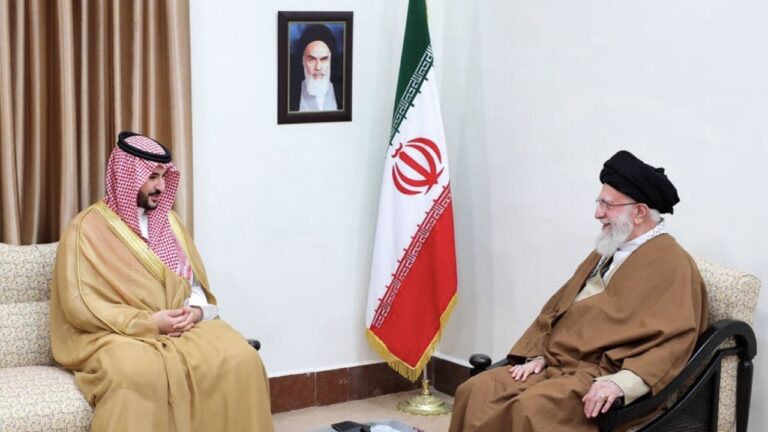
Iranian President Masoud Pezeshkian and Saudi Arabia’s Crown Prince Mohammed bin Salman spoke by phone on Tuesday in a call that underscored efforts by two of the Middle East’s most influential leaders to promote regional stability and avert further conflict.
According to Iranian state media and international reporting, Pezeshkian stressed that “unity and cohesion among Islamic nations are essential” for peace and security across the region. He reiterated Tehran’s readiness to support any diplomatic initiative that prevents war, promotes de-escalation, and avoids conflict, as long as it aligns with international law.
The call came amid heightened tensions in the Middle East, with rivalries involving Iran, Saudi Arabia, and other regional actors set against the backdrop of broader geopolitical disputes — including concerns about nuclear issues, regional alliances, and ongoing conflicts involving Israel.
In his comments, Pezeshkian framed regional instability as something that harms all countries in the Islamic world, warning against political and psychological tactics that could undermine security. He also expressed appreciation for support from Muslim nations and emphasized the value of diplomatic engagement to reduce tensions.
Crown Prince Mohammed bin Salman, speaking from Riyadh, echoed several of those points. Saudi officials said the crown prince rejects aggression or escalation against Iran and reaffirmed Riyadh’s willingness to work with Tehran and other regional states toward lasting peace and security.
Read Also: Frozen Doors: Understanding America’s New Visa Reality—Part 7
The conversation reflects a broader pattern of cautious engagement between Tehran and Riyadh, whose relations — frozen for years — were formally restored in 2023 after wide diplomatic breaks. Since then, both countries have repeatedly emphasized the importance of multilateral cooperation among Muslim nations to tackle shared challenges, whether in security, economics, or crisis management.
Analysts say such exchanges — though largely cautious and conditional — signal a mutual interest in reducing hostilities while maintaining each nation’s strategic priorities. However, deep mistrust and competing regional ambitions mean significant obstacles remain before Tehran and Riyadh can translate shared statements of unity into concrete, lasting peace.