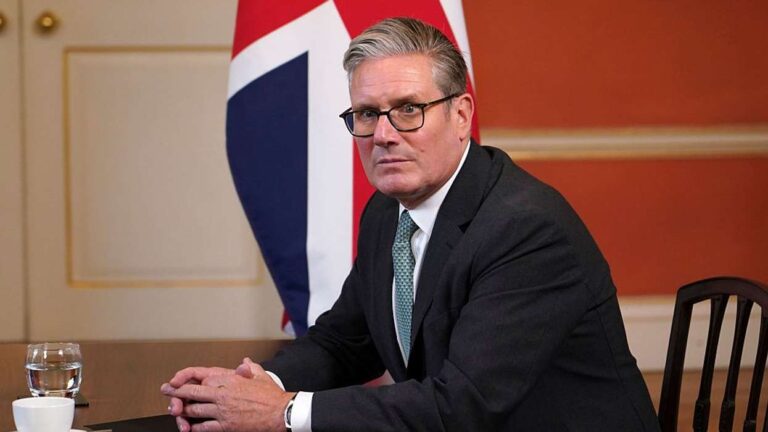
Britain is weighing a social media ban for children as Prime Minister Keir Starmer signals a tougher approach to protecting young people from online harms, including addictive design features and rising mental health risks.
The government said it is examining whether restricting access to social media for children under a certain age — alongside limits on features such as infinite scrolling — could reduce exposure to what Starmer described as “a world of endless scrolling, anxiety and comparison.”
In comments published Tuesday, Starmer said ministers were prepared to take decisive steps if evidence supports stronger regulation.
“This is a hugely complex issue — so it’s important it’s properly considered,” Starmer wrote on Substack, emphasizing that any intervention must be effective and enforceable.
The review follows a government announcement earlier this week confirming it would study international models, including Australia’s recent decision to ban social media access for children under 16 — the first nationwide policy of its kind.
British ministers are expected to visit Australia to assess how the ban is being implemented and enforced, according to a government statement. Officials said Britain has not yet set a specific age threshold and is instead exploring multiple options.
These include stricter age-verification requirements, reassessing whether the current digital age of consent is too low, and potentially limiting platform features that encourage compulsive use.
The proposals reflect a broader international push to address the impact of social media on children’s development and mental health. Regulators worldwide are grappling with how to reduce screen addiction, harmful content exposure, and online exploitation.
Read Also: Australia Under 16 Social Media Ban Removes 4.7m Accounts
Concerns have intensified amid the rapid spread of AI-generated content, including a public backlash this month over reports that Elon Musk’s Grok AI chatbot generated non-consensual sexual images, some involving minors, according to reporting by Reuters and the BBC.
Britain has already moved to strengthen online safeguards through its Online Safety Act, one of the world’s most stringent digital regulation regimes. The government said enforcement of the law has increased the proportion of children encountering age checks online to 47%, up from 30%, while visits to pornography websites have dropped by about one-third.
Officials also confirmed plans to ban AI-powered nudification tools outright and to prevent children from taking, sharing, or viewing nude images on their devices.
Technology Secretary Liz Kendall said the government views these measures as a foundation, not a final solution.
“These laws were never meant to be the end point, and we know parents still have serious concerns,” Kendall said.
The government said it will continue gathering evidence before deciding whether a formal ban is the best course of action or whether alternative safeguards would be more effective.